



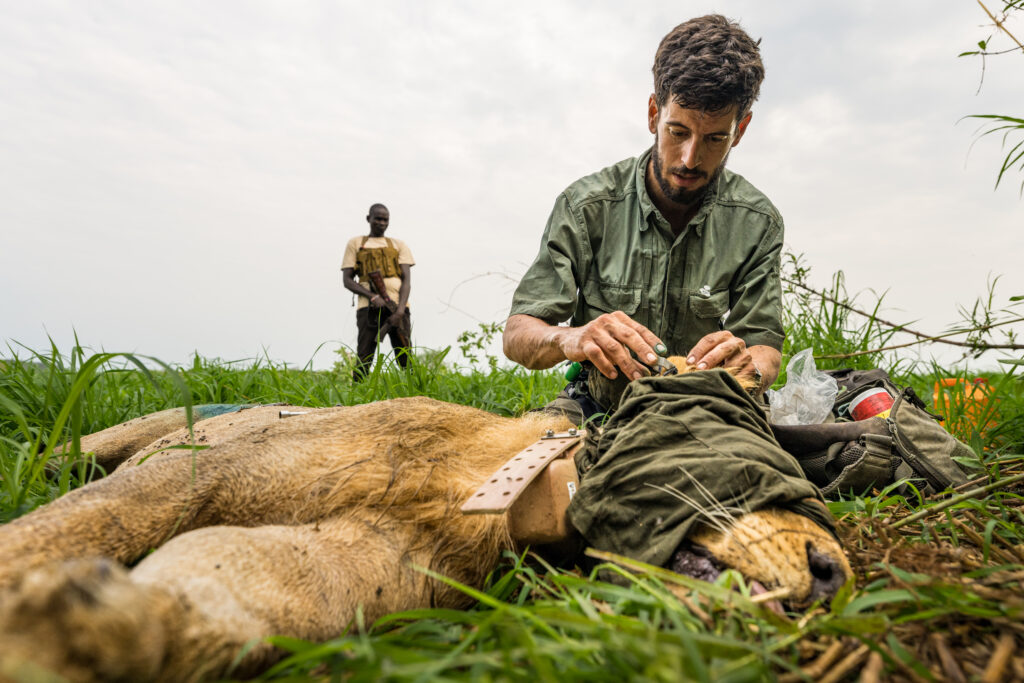
Recurrent detections of lions in South Sudan’s Boma–Badingilo Migratory Landscape suggest a potentially substantial big cat population may still survive there, an African Parks official told Radio Tamazuj on Monday.
Majak Mangar Majak, a data technician with African Parks in South Sudan, said staff from African Parks and the South Sudan Wildlife Service frequently hear lions roaring and have repeatedly observed them from the air.
“These observations indicate that a significant lion population may still exist in this landscape, suggesting real hope for conservation,” he said.
Boma-Badingilo is home to millions of antelope, which Mangar said provide an important prey base for lions and other large predators.
He said African lion populations across the continent have suffered severe declines, largely because of habitat loss, declining wild prey populations and conflict between people and wildlife.
As part of ongoing conservation efforts, African Parks teams are using camera traps to better understand wildlife movement across the vast landscape.
Mangar said the programme is being carried out in partnership with the Wildlife Conservation Network’s Lion Recovery Fund.
He said the detection of lions through camera traps is particularly important because the images provide information about their presence and distribution.
“This helps our crucial work with local communities to build locally legitimate protection measures,” he said.
According to Mangar, conservation efforts seek to incorporate the protection of lions and other large mammals into traditional and customary laws while ensuring they are aligned with South Sudan’s national laws.
He said African Parks, in partnership with the Ministry of Wildlife Conservation and Tourism, is also using aerial surveys and data from collared animals to understand where lions move, breed and hunt.
“We are not just saving lions; we are saving the land they protect,” he said.

 and then