



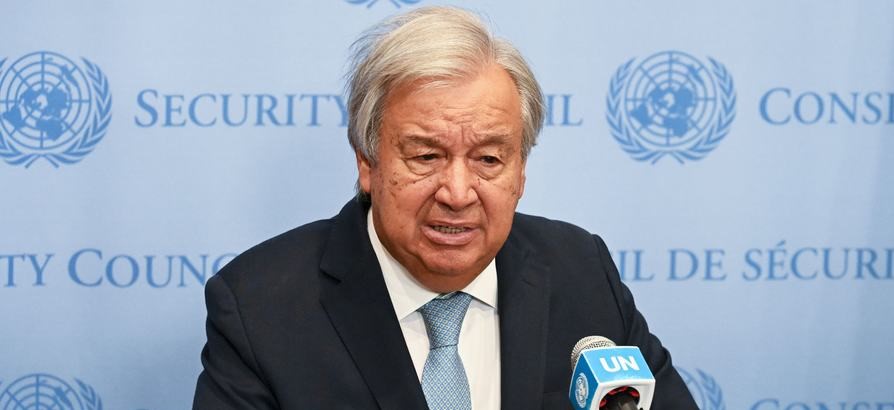
The United Nations has warned that South Sudan’s plan to include the disputed Abyei region in its December 2026 general elections could heighten tensions with Sudan.
In a report to the UN Security Council covering the period from April 16 to October 1, Secretary-General António Guterres said Sudan had objected to South Sudan’s decision to include Abyei in its electoral districts, arguing that the move violates agreements signed by the two countries.
South Sudan plans to hold general elections in December 2026, its first national polls since gaining independence in 2011.
According to the report, Sudan formally protested South Sudan’s announcement on July 13, while Juba reaffirmed its right to conduct elections in the disputed territory and confirmed its intention to proceed on July 17.
“The stated intention of the Government of South Sudan to include Abyei in its electoral districts for the December 2026 elections, which the Government of the Sudan considers contrary to signed agreements, is likely to significantly increase political tensions as the elections approach,” Guterres said.
The UN report said the absence of progress on Abyei’s final status and governance arrangements remained a major source of uncertainty, warning that unilateral actions could undermine efforts to reach a negotiated settlement.
Guterres urged the governments of South Sudan and Sudan to address election-related issues and Abyei’s final status through the Joint Political and Security Mechanism, while refraining from unilateral measures that could affect the territory’s status.
The report noted some progress in bilateral engagement after the two governments resumed meetings of the Joint Political and Security Mechanism in Juba on August 10, the first such meeting since January 2023.
The meeting reviewed developments in Abyei, bilateral security cooperation and the future of the Joint Border Verification and Monitoring Mechanism.
Both governments agreed to consider proposals presented by the UN Interim Security Force for Abyei (UNISFA) on reorganising support for the border-monitoring mechanism.
However, disagreements over Abyei’s political status and security arrangements continued to impede progress, the report said.
The report also raised concerns about the presence of unauthorised armed groups in the territory, including elements affiliated with Sudan’s paramilitary Rapid Support Forces (RSF).
It said the RSF had reportedly announced on August 3 the appointment of a representative as co-chair of the Abyei Joint Oversight Committee, a position designated under the 2011 agreement between the two governments.
Guterres warned that the development could further complicate Abyei’s political and security situation.
Security concerns
The UN report also highlighted persistent security challenges, including violence involving the Ngok Dinka and Misseriya communities.
Despite a decline in recorded security incidents, the UN said the overall security situation remained fragile.
UNISFA recorded 191 security incidents by October 1, compared with 282 during the corresponding period in 2025, representing a decline of about 32%.
The mission also reported that the South Sudan government had committed to withdrawing its army from southern Abyei, although the withdrawal had not begun by the end of the reporting period.
The UN said progress towards resolving Abyei’s status remains essential to lasting stability.
Dispute over voting rights
Abyei’s final status was supposed to be determined through a referendum in 2011, held alongside South Sudan’s independence vote. However, the referendum was postponed because Sudan and South Sudan could not agree on voter eligibility, particularly whether members of the Misseriya community should be allowed to participate.
The Ngok Dinka community, whose members identify with South Sudan, organised a unilateral referendum from October 27 to 29, 2013, in which participants voted on whether Abyei should join South Sudan.
Results announced on October 31 showed that 99.99% of participants had voted in favour of joining South Sudan.
Neither Sudan nor South Sudan recognised the vote, which was also not endorsed by the international community.
Abyei remains disputed between the two countries, with a key point of disagreement being who should be eligible to vote in a referendum on the territory’s future. The Ngok Dinka consider Abyei their ancestral homeland, while the Misseriya, an Arab pastoralist community that identifies with Sudan, seasonally migrate through the area with their livestock.
The disagreement over voting rights has remained a central obstacle to resolving the dispute, leaving Abyei without an agreed final status more than 15 years after the planned referendum.

 and then