



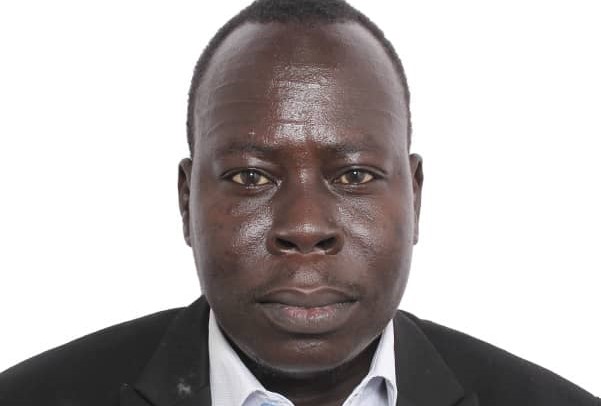
A renowned South Sudanese human rights activist, Ter Manyang Gatwech, on Monday announced plans to transition from frontline civil society activism to academia after 13 years of advocating for human rights, peacebuilding and social justice in the country.
Manyang, the Executive Director of the Nile Institute for Human Rights Studies (NIHRS), told Radio Tamazuj that he had decided to pursue a new professional direction following the completion of a Master of Arts in Transformational Leadership, specializing in Gender Studies and Women’s Rights, at the University of Juba.
He graduated on 21 November 2026, but said he was unable to attend the ceremony in person due to “security concerns.”
Reflecting on his journey since 2013, Manyang said his work in human rights advocacy had involved significant personal and professional challenges, including security threats and risks associated with speaking out against human rights violations and demanding accountability.
“I feel that I have spent many years in civil society work, particularly in human rights advocacy, since 2013,” he said. “It has been a challenging journey, with numerous risks and sacrifices.”
He said his academic achievement had prompted him to reconsider how best to contribute to social transformation, adding that academia would provide an opportunity to engage more deeply with societal challenges.
“Following my academic achievement, I have decided to transition from frontline civil society activism to academia,” he stated. “I believe this transition will provide me with an opportunity to deepen my understanding of society and the world through academic research, teaching, knowledge production, and intellectual engagement.”
Manyang’s work over the past 13 years has focused on human rights advocacy, peacebuilding, transitional justice, gender equality, and the promotion of fundamental freedoms in South Sudan.
However, he said the move to academia should not be misconstrued as abandonment of those causes, but rather as a shift in the approach through which he intends to pursue them.
He said research, education, and evidence-based policy engagement could provide additional avenues for addressing social and governance challenges while complementing the work of civil society organizations.
Meanwhile, the Nile Institute for Human Rights Studies is expected to continue operating as an independent research institution, with a renewed focus on research, capacity building and advocacy.
According to Manyang, the institute will prioritize evidence-based research, policy analysis, documentation and publications covering human rights, transitional justice, gender equality, governance, democracy and peacebuilding.
It also plans to provide professional training, workshops, seminars and educational programmes for civil society organizations, human rights defenders, government institutions and other stakeholders.
On advocacy, the institute intends to use research findings to promote policy dialogue, engage relevant stakeholders and make recommendations aimed at strengthening human rights protection and democratic governance.
Manyang expressed appreciation to fellow human rights defenders, civil society colleagues, development partners, academic institutions and individuals who supported him throughout his years of advocacy.
The Nile Institute for Human Rights Studies is an independent research institution working to promote human rights, justice, gender equality, peacebuilding and democratic governance through research, capacity building and evidence-based advocacy.

 and then