



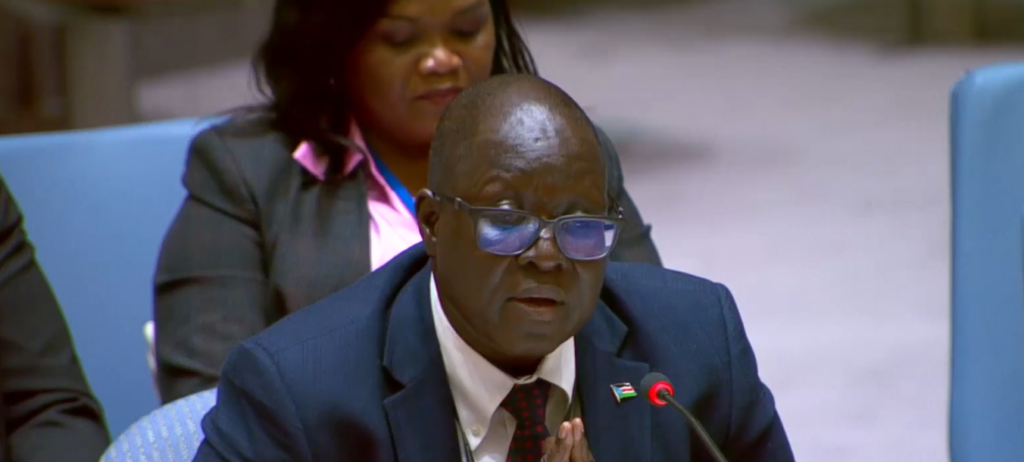
South Sudan told the U.N. Security Council on Friday that decisions on governance and national political matters remain the sovereign responsibility of its government, pushing back against what it described as overreach in a recent U.N. report.
Speaking on April 17, South Sudan’s deputy ambassador to the United Nations, Sabino Edward Nyawella Amaikwey, said his government remains committed to cooperating with the United Nations Mission in South Sudan while rejecting recommendations that go beyond its mandate.
“Decisions related to governance and national political matters remain the sovereign responsibility of the government,” he told the council, adding that such decisions are undertaken through interparty dialogue and consultations.
Amaikwey said references in the secretary-general’s report to “unilateral actions” do not reflect realities on the ground and dismissed what he called “unwarranted emphasis” on allegations against the government.
He reaffirmed South Sudan’s commitment to working with the mission, known as UNMISS, particularly in areas such as strengthening the rule of law, supporting mobile courts and addressing climate-related challenges. At the same time, he urged the mission to maintain impartiality, especially on issues related to national security.
The ambassador also emphasized the government’s responsibility to protect civilians across the country, including in conflict-affected areas such as Nasir and Akobo, blaming continued insecurity on armed opposition groups and other non-state actors.
South Sudan remains committed to the 2018 peace agreement and is working toward holding general elections in December 2026, Amaikwey said.
He warned that prolonged transitional arrangements could undermine stability, adding that citizens are eager for democratic governance and lasting peace.
The government also called for improved coordination with UNMISS, including timely information-sharing, to avoid misunderstandings and enhance operational effectiveness.
The statement comes amid criticism from the United States over South Sudan’s slow implementation of the 2018 peace deal and ongoing violence in parts of the country.

 and then