



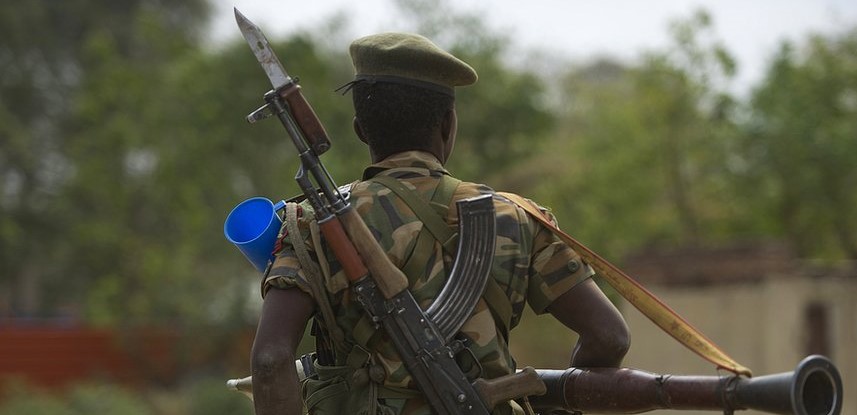
More than 50 survivors of conflict-related sexual violence gathered in the capital Juba on Wednesday to demand accountability, two years after filing South Sudan’s first war crimes complaint, as pressure mounts on authorities to prosecute alleged abuses committed during the civil war.
The survivors, alongside religious leaders, government officials and civil society representatives, marked the country’s National Remembrance Day by renewing calls for justice and recognition of sexual violence linked to the conflict.
“We have suffered from rape, and we are still suffering from stigma in the community because of what we endured. It has been too long. We need justice,” said Elisabeth, 23, who said she was abused by members of the Sudan People’s Liberation Army (SPLA) in 2017.
Pauline, also 23, said she welcomed the opening of investigations but expressed frustration over delays in accountability.
“I was happy when the case was opened by the South Sudanese legal authorities, but the results of the investigation and accountability for those who shattered our lives are long overdue,” she said.
The commemoration event was organised by Legal Action Worldwide (LAW), the Centre for Inclusive Governance, Peace and Justice (CIGPJ) and the South Sudan Survivors Network (SUNS), to highlight survivors’ continuing pursuit of justice.
In October 2024, LAW and CIGPJ filed South Sudan’s first war crimes criminal complaint on behalf of three women who said they were subjected to rape, gang rape and beatings during the 2017 conflict. Two of the complainants were 14 years old at the time.
The organisations say survivors continue to await accountability nearly a decade after the alleged crimes.
In March 2026, the Directorate of Public Prosecutions accepted the case for investigation, a move rights groups described as a significant step toward addressing widespread sexual violence in the country.
Human rights groups estimate that more than 70% of women in South Sudan have experienced some form of gender-based violence, placing the country among the most dangerous places in the world for women and girls.
“We applaud the Ministry of Justice and the Directorate of Public Prosecutions for opening an investigation, offering an opportunity for justice for all survivors of sexual violence,” said Antonia Mulvey, executive director of LAW.
“But victims have been waiting and suffering for too long. Their pain and trauma must be acknowledged, and South Sudan must now move forward with prosecutions of those responsible,” she added.
South Sudan ratified the Geneva Conventions in 2012, enabling domestic courts to prosecute war crimes, including those allegedly committed by military personnel, though rights groups say implementation has remained limited.
Pseudonyms were used to protect survivors’ identities.

 and then