



South Sudan said on Friday it remained free of Ebola after laboratory tests showed that seven suspected cases reported across the country were negative, as authorities stepped up surveillance following outbreaks in neighbouring Uganda and the Democratic Republic of the Congo.
The suspected cases included four in Juba and one each in Yei, Yambio and Nimule, the Ministry of Health said. Six samples were tested at the National Public Health Laboratory in Juba, while one was analysed at a mobile laboratory in Nimule.
Health officials said the investigations formed part of heightened preparedness measures rather than a response to any confirmed outbreak in South Sudan.
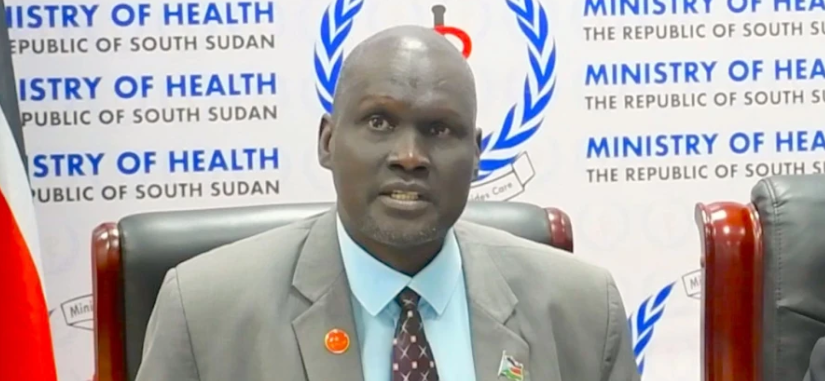
“Our current activities are strictly precautionary,” Undersecretary in the Ministry of Health Dr. Francis Oromo told a joint news conference with the World Health Organization (WHO) in Juba.
“They reflect the government’s commitment to protecting the health of its people through early preparedness and risk reduction, and should not be interpreted as evidence of active Ebola transmission within South Sudan,” he said.
Oromo said the government had strengthened surveillance, laboratory capacity, rapid response teams and screening at priority border entry points, while increasing coordination with neighbouring countries and international partners.
He said South Sudan activated its national Ebola preparedness and response plan after outbreaks were reported in the region, deploying response teams to high-risk states and counties. The country’s overall preparedness level has risen from 29% to 46% in recent weeks, he added.
Although South Sudan has recorded no confirmed Ebola cases, officials said the country remains at risk because of frequent cross-border movement and trade with neighbouring countries.
WHO Representative to South Sudan Humphrey Karamagi said the investigation of the suspected cases showed the country’s surveillance system was functioning effectively.
“The presence of these multiple alerts is very good. It shows that the surveillance system is working. We are able to pick up the suspected cases and investigate them,” Karamagi said.
He reaffirmed that South Sudan remains free of Ebola despite outbreaks in neighbouring countries and said WHO was supporting the government to strengthen preparedness, particularly in high-risk counties.
Karamagi also said WHO does not recommend border closures or travel restrictions during Ebola outbreaks, urging countries instead to strengthen surveillance and response systems to rapidly detect and contain suspected infections.
Ebola is a viral disease that causes fever, fatigue, vomiting and diarrhoea and can be fatal if not detected and treated early.

 and then