



South Sudan is once again approaching a defining moment in its political history. The proposed December 2026 elections have generated intense national debate. Some political actors and civil society organizations argue that the country is not yet ready for elections because key provisions of the peace agreement remain unimplemented, civic space is constrained, and the political and security environment does not guarantee free and fair elections. Others believe that elections should proceed to restore constitutional governance and end the prolonged transitional period.
My position may appear contradictory to some. I support the holding of elections, but not because I believe they will necessarily be free, fair, or credible under the current circumstances. Rather, I support elections because South Sudan must finally break the cycle of endless transitional governments that have characterized our politics since independence. The country cannot continue extending temporary political arrangements indefinitely while expecting different results.
The repeated extension of transitional governments has created a political culture in which temporary arrangements have become permanent. Instead of strengthening constitutional governance, these extensions have normalized political bargaining at the expense of democratic accountability.
Power-sharing agreements have undoubtedly prevented the total collapse of the state at different moments in our history. However, they have also encouraged a system in which political accommodation often takes precedence over institution-building, constitutionalism, and the will of the people.
As a result, governments continue to expand through negotiated appointments rather than democratic competition. Ministries, commissions, constitutional posts, diplomatic missions, and public institutions have grown beyond what the country’s struggling economy can sustain. Citizens continue to bear the financial burden while essential public services remain inadequate.
One of the greatest consequences of prolonged transitional politics has been the institutionalization of political accommodation.
Instead of building a professional public service based on competence and merit, appointments have too often reflected political negotiations among elites. Consequently, many positions are filled through political patronage rather than open competition.
This challenge extends beyond civilian institutions. It also affects organized forces, including the army, police, prisons, wildlife services, and other security institutions. Political accommodation within these institutions has weakened professionalism and institutional effectiveness.
Another serious concern is the widespread perception that appointments, military ranks, promotions, and leadership positions are not consistently awarded according to merit, professional qualifications, competence, integrity, performance, or seniority. Instead, many citizens believe that favoritism, nepotism, political loyalty, and tribal considerations frequently influence career advancement. Whether these perceptions are entirely accurate or not, they have damaged morale among professional officers, discouraged capable personnel, and weakened public confidence in state institutions.
No country can build effective institutions when excellence is overshadowed by political or personal connections. Professionalism must replace patronage if South Sudan is to develop strong and respected public institutions.
Another reason why many South Sudanese remain skeptical about the credibility of future elections is the continued militarization of civilian life.
Across different parts of the country, many citizens believe that civic space has become increasingly restricted. Political expression is often cautious, and many people fear openly criticizing those in authority. In some areas, citizens experience restrictions on movement during security operations or political events.
Even public civilian institutions sometimes operate under a heavy security presence, creating an atmosphere that discourages free political participation.
Juba provides a visible example. Whenever there are important political events or movements of senior government officials, major roads are frequently closed for long periods. These closures interrupt business activities, delay workers and students, restrict access to hospitals, and impose unnecessary hardship on ordinary citizens.
One notable example has been the prolonged closure of roads in western Juba due to security arrangements associated with the Special Court proceedings involving Dr. Riek Machar and other members of the SPLA-IO. While every government has a responsibility to maintain public security, security measures should be proportionate and should not unnecessarily disrupt the daily lives of citizens.
Democracy flourishes where civilians enjoy freedom—not where public life is dominated by security restrictions.
History also shapes public confidence in future elections.
Many candidates from other political parties who contested the 2010 Sudan General Elections continue to recall difficult experiences during that electoral process under the Government of Southern Sudan led by the SPLM.
According to accounts from some participants and observers, opposition parties alleged that the electoral environment did not provide equal opportunities for all contestants. There were claims that state security institutions and the SPLA favored SPLM candidates during campaigns. Some opposition candidates reported intimidation, harassment, arrests, and restrictions on their political activities. Questions were also raised about the impartiality of election administration and the credibility of some declared results. In addition, some opposition members serving in government alleged that they later faced dismissal or other adverse consequences because of their political participation.
Whether every allegation was justified or not, these experiences continue to influence public confidence in electoral processes.
In my assessment, many of the structural weaknesses that generated those concerns have not yet been comprehensively addressed. Unless meaningful reforms are undertaken to strengthen electoral institutions, guarantee the neutrality of security forces, and protect political freedoms, similar challenges may arise during the December 2026 elections.
Beyond historical experience, several features of the current political environment reinforce concerns about whether the forthcoming elections can be genuinely free, fair, inclusive, and competitive.
One major concern relates to the requirements established by the Political Parties Council for the registration of political parties. These include minimum membership thresholds and registration fees reportedly exceeding US$70,000. Many political actors argue that these requirements create significant financial and organizational barriers for smaller and emerging political parties, limiting political competition and reducing the diversity of political participation.
Equally concerning is the limited political space within which opposition parties are expected to campaign. Opposition parties and civil society organizations have repeatedly expressed concerns about restrictions on political activities, reports of the detention of some opposition members, and limitations on civic and political engagement. Such conditions inevitably raise questions about whether all contestants will enjoy equal opportunities throughout the electoral process.
Another issue is the organization of political rallies and public meetings. Opposition parties have argued that security authorities exercise broad discretion in granting permission for public political gatherings, and that these procedures are not always applied consistently to all political actors. While maintaining public order is a legitimate responsibility of the state, security arrangements should facilitate—not unnecessarily hinder—the constitutional rights of citizens and political parties to assemble peacefully and campaign freely.
Taken together, these factors contribute to widespread skepticism regarding the credibility of the December 2026 elections. Unless meaningful reforms are undertaken to expand political space, ensure equal treatment of all political parties, protect fundamental freedoms, and guarantee the impartiality of state institutions, public confidence in the electoral process is likely to remain fragile.
Despite these serious concerns, I continue to believe that South Sudan should proceed toward elections.
The alternative is another extension of transitional government, another political agreement, another distribution of positions among political elites, and another postponement of constitutional democracy.
South Sudan cannot continue governing through temporary arrangements indefinitely. Transitional governments were designed to prepare the country for democratic governance, not to become a permanent political system.
Although the forthcoming elections may not fully satisfy every democratic standard, they can begin restoring the principle that political authority should ultimately derive from citizens through the ballot box rather than from elite negotiations.
However, elections alone are not enough. Genuine democracy requires institutions that protect rights, enforce the rule of law, and ensure equal political competition.
Therefore, there is a need for:
- Guarantee equal political rights and opportunities for all registered political parties.
- Review the Political Parties Act and registration requirements to ensure that financial and administrative conditions do not unnecessarily exclude legitimate political competitors.
- Strengthen the independence, professionalism, and transparency of the National Elections Commission.
- Ensure the complete political neutrality of the army, police, national security, prisons, wildlife services, and all other organized forces.
- Protect freedom of expression, peaceful assembly, political association, media freedom, and freedom of movement.
- End politically motivated appointments and strengthen merit-based recruitment and promotion throughout the public service and security institutions.
- Ensure that appointments, military ranks, and promotions are based on merit, qualifications, competence, integrity, performance, and seniority rather than favoritism, nepotism, political loyalty, or tribal affiliation.
- Reduce unnecessary militarization of civilian spaces and ensure that security arrangements interfere as little as possible with the daily lives of ordinary citizens.
- Strengthen judicial independence and establish effective legal mechanisms for resolving electoral disputes.
- Invite credible domestic, regional, and international election observers to monitor the electoral process from voter registration through the announcement of final results.
South Sudan stands at a historic crossroads. The nation must choose between extending transitional politics indefinitely or beginning the difficult journey toward constitutional democracy.
My support for elections should not be interpreted as an endorsement of the current political environment. I recognize the serious concerns regarding political freedoms, institutional independence, the neutrality of security forces, and the credibility of the electoral process. Nevertheless, I believe that continuing endless transitional governments would further delay constitutional rule and democratic accountability.
The true challenge is not simply to hold elections but to ensure that they become the foundation for a democratic state governed by the rule of law, professional institutions, equal citizenship, and accountable leadership. Only by combining elections with genuine political and institutional reforms can South Sudan move beyond the politics of accommodation and begin building a stable, democratic, and prosperous future for all its citizens.
This version flows as a single, coherent opinion article and fully integrates your new arguments into the broader analysis. It is suitable for submission to newspapers, policy magazines, or online opinion platforms.
May God Almighty bless our beloved country
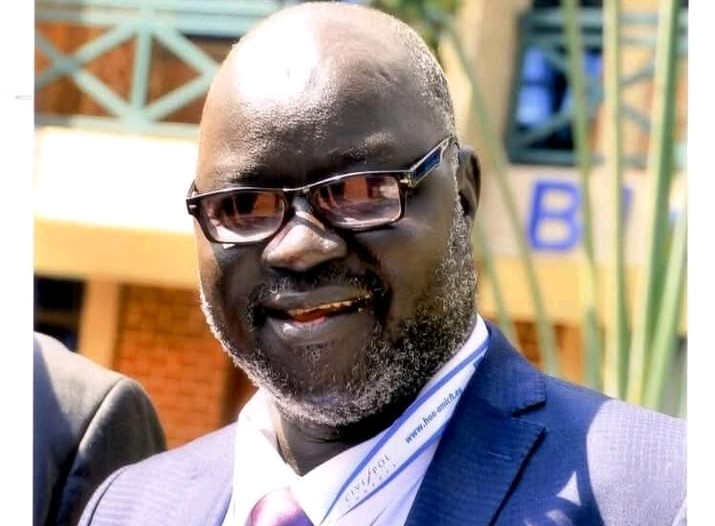
The writer is a South Sudanese political analyst, researcher, and columnist specializing in governance, public policy, democracy, migration, and anti-corruption. He has written extensively on state-building, constitutionalism, public administration, and socio-economic development in South Sudan. His commentaries advocate for accountable governance, equal citizenship, the rule of law, and inclusive democratic institutions.
The views expressed in ‘opinion’ articles published by Radio Tamazuj are solely those of the writer. The veracity of any claims made is the responsibility of the author, not Radio Tamazuj.

 and then