



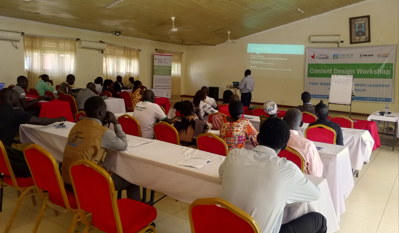
A high-level three-day workshop on sexual and reproductive health rights, women’s voices and midwifery leadership has kicked off in Torit, with government officials, health professionals and media practitioners calling for an end to cultural taboos and misinformation that prevent communities from accessing life-saving health information.
The workshop, under the theme “TRUST: Women’s Voices, Midwifery Leadership for Resilient Health,” is organized by the Association for Media Development in South Sudan (AMDISS) in partnership with the Canadian Association of Midwives, CAM/ACSF, Farm Radio International and Canada.
The workshop brought together media and health and gender stakeholders to develop culturally appropriate radio programmes to address sexual and reproductive health, gender equality and women’s health.
Elia John Ahaji, the Eastern Equatoria State Minister of Information and Communication, speaking at the opening of the workshop, said the media has a major responsibility to break the silence surrounding sensitive health issues.
He warned that traditional taboos and reluctance to discuss sexual and reproductive health are contributing to serious consequences, including increased health costs, deaths, and the growing number of orphans and widows in communities.
“It is time for us to say yes; it is the right thing. We should talk about sex issues with our teenagers, with our children,” he stated. “Let them be given the right information so that they make the right choices in their life.”
The minister also emphasized that people should be able to communicate openly with health workers about sensitive medical conditions so that they receive the correct treatment.
For his part, Dr. Amin Gordiano, State Director General for Health, said the media has a major role in disseminating health information but warned that inaccurate or poorly communicated messages can have serious consequences.
“Women must have greater opportunities to participate in health communication,” he said. “It is important to provide both women and men with the correct information about their health rights and responsibilities.”
Dr. Gordiano also highlighted the importance of protecting health workers and advocating for their rights.
Meanwhile, Juma Peter Maya, AMDISS Advocacy and Communication Manager, said the workshop is not simply about training participants but about allowing communities and media practitioners to directly contribute to the content that will eventually be broadcast.
“The project could result in approximately 15 or more radio programmes, depending on the ideas generated during the workshop,” he said. “Participants should be able to recognize their own contributions in the final programmes.”
He said the project will also pay particular attention to language, explaining that the content must be communicated in terms that communities understand and accept.
During the three-day workshop, participants are expected to identify myths, misconceptions and barriers that prevent communities from accessing sexual and reproductive health services.
Maya said particular attention will be placed on culturally appropriate content, noting that some sexual and reproductive health terms can be difficult to communicate within local communities. He said the participants will work together to identify appropriate terminology in English, Juba Arabic and local languages so that health messages are neither misunderstood nor offensive.
The expected outcomes include improved understanding of sexual and reproductive health rights, stronger collaboration between media and health professionals, inclusive storytelling, and stronger women’s participation in health communication.
The initiative is also expected to strengthen the capacity of media practitioners to report and broadcast sensitive health issues responsibly.

 and then