



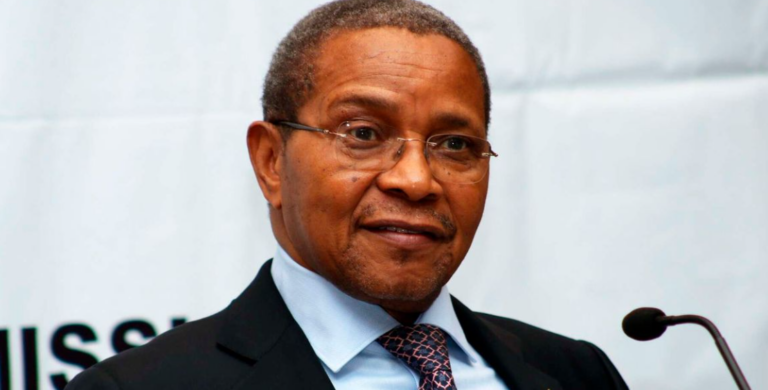
South Sudan appears to lack the financial resources to fund its planned December 22 elections, the African Union’s top envoy to the country, Jakaya Kikwete, told the United Nations Security Council on Tuesday, appealing for international assistance to help avert a deeper political and security crisis.
Kikwete, Tanzania’s former president, said the government cannot finance the elections on its own and needs support from international partners to ensure the vote proceeds peacefully.
“The government does not seem to have enough resources to be able to finance these elections,” Kikwete told the council in a video address.
“That’s why they need support from some countries. Some have expressed readiness, but some have not yet,” he said, urging countries to provide assistance to the government.
“Whatever can be done to assist the government of South Sudan, so that at least we have peaceful elections under the circumstances, so that we don’t have to end up with a bigger political and security crisis,” he added.
Kikwete also called for security sector reforms and dialogue among political parties after the elections, saying these are necessary to “help heal the nation”.
Warning of the potential consequences of a flawed or violent vote, he said: “If the vote is not conducted properly and peacefully, you cannot contemplate what would happen.” He cautioned that the country could face an even “bigger political and security crisis”.
South Sudan has repeatedly postponed elections since gaining independence from Sudan in 2011. A civil war erupted in 2013, killing about 400,000 people before a 2018 peace agreement brought President Salva Kiir and his rival Riek Machar into an interim power-sharing government.
Kiir dissolved the transitional government on 22 September, removed his deputies and appointed a caretaker administration. The national legislature and state governments were also dissolved.
Machar remains under house arrest and is standing trial on charges including treason over an attack on a military garrison that authorities allege he helped orchestrate. His allies deny the allegations.
The December 22 elections are increasingly drawing concern from diplomats and analysts, who question whether the fragile country is politically, financially and institutionally prepared to hold a credible vote.
Murithi Mutiga, Africa director at the International Crisis Group, said a rushed election could deliver “a final blow” to the 2018 peace agreement and “would open the door to a return to sustained large-scale violence”.
Last month, U.N. Secretary-General António Guterres told the Security Council in a report that changes to the electoral framework could “alter the foundations of the transition” agreed by the signatories of the peace deal.
“This increases uncertainty at a time when confidence-building and inclusive engagement are essential to safeguard the transition and prevent wider conflict,” Guterres said.

 and then