



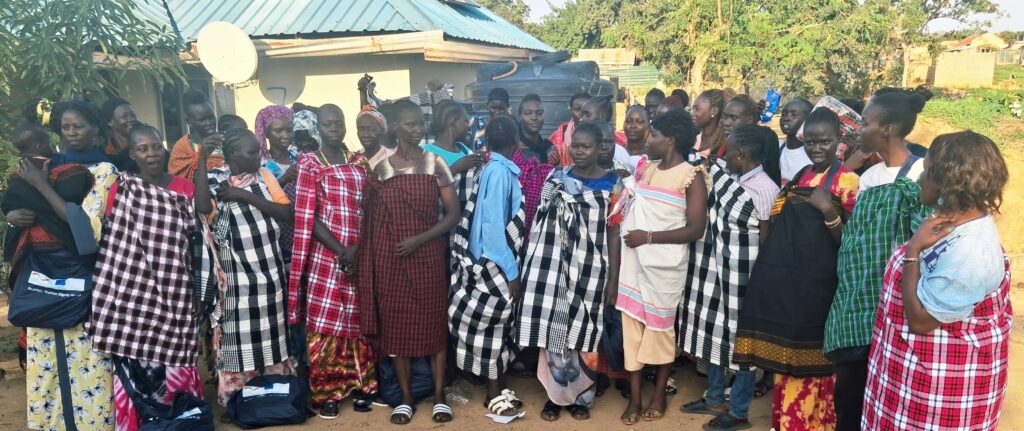
Women and girls in a Juba neighborhood received reusable sanitary pads on Wednesday as rising prices make disposable menstrual products increasingly unaffordable for many families in South Sudan.
The Women Foundation for Humanity distributed reusable sanitary pads, soap and torches to women and girls in Jebel Dinka (Mere Lotor), saying the initiative was aimed at reducing the financial burden of menstrual hygiene and helping girls remain in school.
Beneficiaries said the support came at a time of severe economic hardship, with a packet of disposable sanitary pads costing about 7,000 South Sudanese pounds (SSP).
“It is very difficult to buy sanitary pads because they have become very expensive,” said Aluel Tito Alphonse, 22, a University of Juba student and resident of Jebel Dinka.
She said reusable pads could be used for a month or longer, reducing the need for repeated purchases.
“With the current economic situation, this support will help many girls who cannot afford disposable pads,” she said.
Alphonse said the high cost of menstrual products had made managing her period difficult, particularly for women who require several pad changes each day.
Another beneficiary, Awan Dhieu Kuac, said it was the first time she had received reusable sanitary pads.
“Sometimes we struggle to get money to buy the things we need, including sanitary pads,” she said. “This support will help many girls and women in our community.”
Kuac said the reusable pads would help reduce her monthly expenses and allow her to spend money on other household needs.
Dorothy Drabuga Ambrose, executive director of the Women Foundation for Humanity, said the organization launched the program after observing that some girls resorted to using cloth or other improvised materials during menstruation.
“We do not want to see girls dropping out of school because they cannot afford sanitary pads,” Ambrose said.
She said the reusable pads were intended to provide a longer-lasting alternative to disposable products, particularly for vulnerable households affected by South Sudan’s economic crisis.
According to the organization, similar distributions have been carried out in Gondokoro, Gumbo, Nyakuron West, Jebel Dinka and Jebel Yesua.
South Sudan has been facing high inflation and a sharp rise in the cost of basic goods, putting increasing pressure on household budgets and access to essential items, including menstrual hygiene products.

 and then