



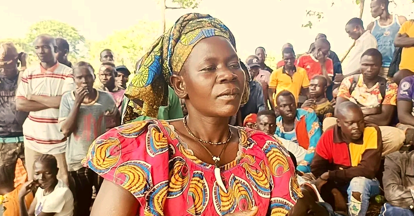
The Relief and Rehabilitation Commission (RRC) in Central Equatoria State’s Yei River County has said more than 6,000 South Sudanese who returned from refugee camps in Uganda and the Democratic Republic of Congo (DRC) have been registered in the county since January this year.
Speaking to Radio Tamazuj on Wednesday, Mabe Moses, RRC Coordinator in the county, said the returnees came from various camps, with women and children making up 70 percent of the arrivals and men accounting for 30 percent.
He said most of the returnees have integrated into communities across the county and are now engaged in farming and other activities to rebuild their livelihoods. He appealed to humanitarian partners and well-wishers to increase support, saying assistance is urgently needed to help returnees and to encourage more refugees to come home.
“Since January up to now, we have registered over 6,000 returnees who have come to our office. Most of them came from DRC and Uganda. Since it is the rainy season, some of them integrated themselves into the community and started farming,” he said. “I am appealing for support not only from humanitarian organizations, but these people need some support from hospitals, schools, and also in their farms. We need to provide a conducive environment for them to encourage those left behind to return home.”
Alemin Samuel Duku, a returnee from Imvepi Refugee Camp in Uganda, said restrictions on access to land, water and firewood and hostility from some members of the host communities in refugee camps made life difficult. He added that he now feels safer in South Sudan where he can freely cultivate and feed his family.
“Life was really hard; the natives in the refugee camps were hostile to some refugees, and we were restricted from collecting firewood from the bush, and sometimes fetching water was not easy,” he explained. “The first challenge that I experienced when I arrived there was adaptability. I spent five years in the camp and left my family behind. I am seeing some positive changes in my life compared to the first month I arrived here because I now have land and have access to the bush to cultivate freely.”
Another returnee from Uganda, Never Scovia, cited inadequate clean water, reduced food rations, and limited access to education as key reasons for returning, saying she feels better at home despite finding her house damaged.
“We came from a refugee camp called Rhino Camp; we had faced challenges with water, food, school, and good hospitals,” she narrated. “There was not enough water, the food rations have been reduced, and the schools need money, which we did not have. We feel good now, although we have lost our buildings.”
Felix Juma, another returnee from Swinga Refugee Camp, said he had to rent land for cultivation and was receiving reduced food rations, and that he found his house and other structures destroyed on return. He says he has no plans to go back to the camp.
“We faced a lot of challenges in the camp because we had to rent farmland from the host communities. So, I decided to come back to my country,” he said. “When I came back, I found that a lot of my properties had been destroyed. If there is conflict in this country again, I will not leave because I have no plans to go back and suffer in the camp.”
RRC Coordinator Mabe Moses encouraged more South Sudanese refugees to return home, citing the relative peace in Yei River County.
“I am encouraging those in the refugee camps to return because there is no one who can bring peace and develop their country apart from them. To live in your country is better than living in a foreign country, considering the challenges,” he said. “Let us forget the past; we are now in a new chapter where the roads are accessible. Keep returning home.”
Millions of South Sudanese remain in refugee camps in neighbouring Uganda, DRC and Kenya following the 2016 conflict.
Humanitarian actors say support with shelter, seeds, tools, water and health services will be critical to sustain reintegration in Yei and other areas.

 and then