



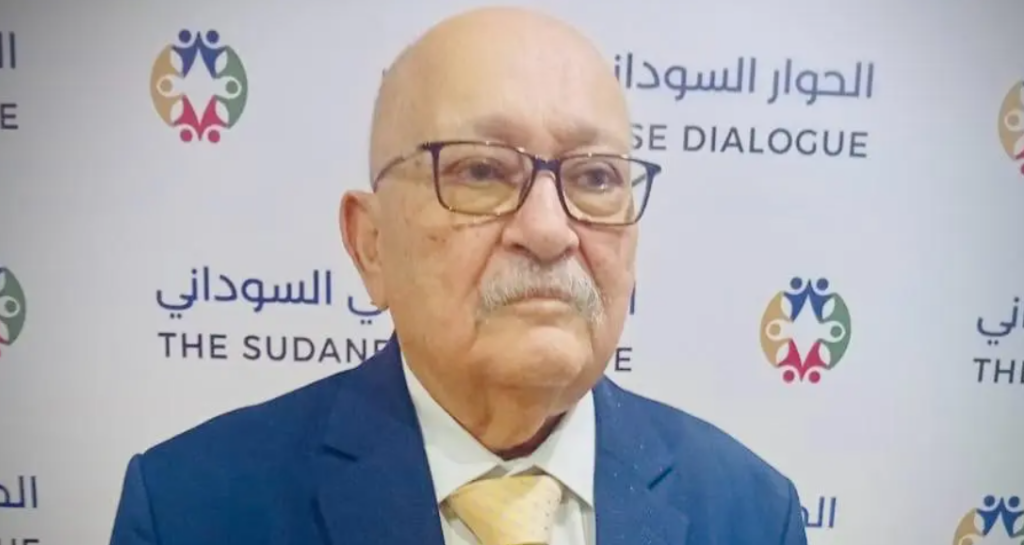
A decree issued by Sudan’s Sovereign Council chairman Abdel Fattah al-Burhan provides temporary legal protection for dissidents living abroad who return to participate in a proposed inter-Sudanese dialogue, but does not permanently extinguish underlying legal claims, legal expert Nabil Adeeb said on Sunday.
Adeeb, a member of the preparatory committee for the proposed “Sudanese-Sudanese” dialogue, said the decree, signed by Burhan on August 31, provides for the dismissal of criminal complaints filed by state institutions against returning participants when the allegations relate to their political opinions or statements.
The measure does not amount to an acquittal or blanket amnesty, Adeeb told reporters in Khartoum, saying its protection is limited to proceedings covered by the decree.
He distinguished the measure from Article 58 of Sudan’s Criminal Procedure Act of 1991, which gives the prosecutor general powers to halt criminal proceedings after an investigation has concluded and before a court delivers its judgment.
The decree establishes a separate procedure for complaints covered by its provisions, Adeeb said.
He said the protection begins when participants enter Sudan to take part in the dialogue and lasts until a deadline set by the Sovereign Council before the talks conclude. It does not permanently extinguish the underlying legal claims.
The decree also prohibits criminal proceedings over opinions expressed during the dialogue, provided they relate directly or indirectly to its subjects. It directs judicial, police and security authorities and other relevant institutions to implement its provisions.
The legal questions surrounding the decree come amid cases against prominent civilian politicians living abroad. In April 2024, Sudanese prosecutors filed cases against former Prime Minister Abdalla Hamdok and other politicians and journalists over allegations including inciting war against the state and undermining the constitutional order. Some charges carry the death penalty. Hamdok and other targeted political figures have rejected accusations of supporting the paramilitary Rapid Support Forces.
Justice Minister Abdallah Daraf said in September that Burhan had provided written assurances of procedural immunity and the dismissal of politically motivated cases to help create conditions for an inclusive political process.
The proposed dialogue inside the country faces opposition from Sudanese anti-war political and civil forces, which have rejected the initiative and said they would not recognise its outcomes, arguing that the process lacks independence.
The preparatory committee has held consultations with political and civil society groups to develop a framework for the talks, which aim to bring Sudanese together to discuss the country’s political future.
The initiative comes as Sudan remains engulfed in a war that erupted in April 2023 between the Sudanese army and the paramilitary Rapid Support Forces. The conflict has displaced millions and deepened political divisions, complicating efforts to reach a political settlement.

 and then