



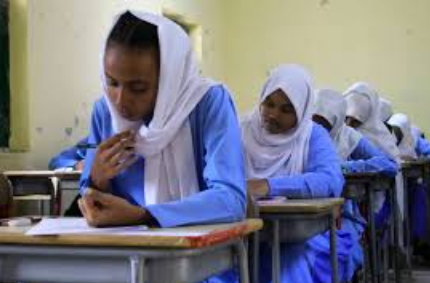
More than 1,000 students on Monday began sitting for the Sudan National Secondary School Certificate examinations in South Sudan’s capital, Juba, marking a continued effort to support education amid the ongoing conflict in Sudan.
The exams were officially launched during a bell-ringing ceremony at Buluk Secondary School, attended by Sudan’s Ambassador to South Sudan, Essam Mohammed Hassan, alongside education officials.
Ambassador Hassan praised the Government of South Sudan for facilitating the exams, noting that this is the third time the country has hosted Sudanese national examinations since the outbreak of conflict in Sudan.
“I appreciate the State Ministry of General Education for easing the process for students sitting these exams so they can achieve their goals,” he said. “This is the third Sudan secondary school certificate examination conducted in South Sudan since the conflict erupted, which shows the care and support from the government of the Republic of South Sudan.”
According to Yasir Abdel Rahman, Headmaster of Dream International School in South Sudan, a total of 1,030 candidates—both male and female—are sitting for the exams.
“We are happy with the start of the Sudan Secondary School Certificate examinations today,” he said. “About 1,030 male and female students are sitting. Among them are 859 South Sudanese students and 471 Sudanese students. Out of the 471 Sudanese students, 280 are from Eastern Darfur State, while 176 are currently residing in Juba.”
Yasir also revealed that the examinations have drawn candidates from across the region and beyond, reflecting the wide-reaching impact of the Sudan crisis on students.
“There are students who came from Uganda, Kenya, India, and Qatar to sit for these exams,” he said. “They are currently accommodated at Juba Technical School, where facilities have been arranged to host them.”
He added that all logistical preparations, including accommodation and exam arrangements, have been completed.
The continuation of Sudan’s national examinations in South Sudan highlights growing regional cooperation in education, as thousands of displaced students seek to continue their studies despite ongoing instability in their home country.

 and then