



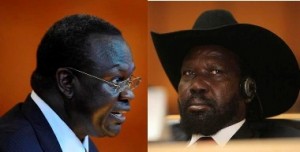
Eight South Sudanese opposition groups and civil society organisations have called on regional bloc IGAD to review the country’s peace agreement and convene an inclusive national political dialogue.
In a joint letter dated 23 September and addressed to IGAD Executive Secretary Workneh Gebeyehu and African Union Commission Chairperson Mahmoud Ali Youssouf, the groups said the Revitalised Agreement on the Resolution of the Conflict in South Sudan (R-ARCSS) had collapsed as the framework for governing the country’s political transition.
They said the transitional arrangements had reached 22 September without an agreed successor framework, creating what they described as a constitutional and political crisis.
The groups also criticised recent changes to the 2018 peace agreement and electoral laws.
They said amendments to the R-ARCSS in July had removed the link between elections and completion of a permanent constitution and national census.
They further said President Salva Kiir Mayardit had assented on 21 September to amendments to the National Elections Act that would keep the president in office during the electoral period while allowing for the removal of the first vice-president and other vice-presidents.
The signatories argued that the changes undermined the power-sharing structure established under the peace agreement, which provides for a president, first vice-president and other vice-presidents.
They said the R-ARCSS, signed in 2018, had also failed to deliver several of its key commitments, including security-sector unification, institutional reforms, transitional justice, a permanent constitution and credible elections.
The groups said they would not participate in or legitimise elections unless what they described as the minimum conditions for free, fair, peaceful, inclusive and credible elections were met.
Instead, they called for an inclusive national political dialogue involving the government, political parties, opposition movements, civil society, religious and traditional leaders, women, young people and other constituencies.
They proposed that the dialogue produce a binding constitutional settlement covering the system of government, the distribution and exercise of political power, rights and freedoms, institutional accountability, security governance and the framework for democratic transition.
The groups urged IGAD, working with the African Union, the United Nations, the Reconstituted Joint Monitoring and Evaluation Commission and other international partners, to convene an extraordinary summit to review the status of the R-ARCSS and initiate the proposed political process.
The letter was signed by Nathaniel Oyet Perieno, acting chairman and commander-in-chief of the Sudan People’s Liberation Movement/Army-In Opposition; Dr Goi Jooyul Yol, secretary-general of the SPLM/A-IO Kit-Gwang; Nhial Deng Nhial, chairman of the South Sudan Salvation Movement; and Changson Chang, chairman of the People’s Resistance Front.
It was also signed by Gen. Wilson Deng, chairman and commander-in-chief of the National Uprising Movement/Army; Dr. Deng Bol Aruai Bol, chairman and commander-in-chief of the South Sudan People’s Liberation Movement; Dr. Remember Miamingi, co-convener of the Reclaim South Sudan Campaign; and Rajab Mohandis, a founding member of the People’s Coalition for Civil Action.
The letter was copied to senior regional and international officials, including Djibouti’s President Ismaïl Omar Guelleh, UN Secretary-General António Guterres, UNMISS head Anita Kiki Gbeho, and representatives of the United States, United Kingdom and Norway.
The R-ARCSS was signed in September 2018 and established a power-sharing transitional government intended to lead South Sudan towards elections and a permanent constitutional order.

 and then