



The Unravelling of a Liberator’s Promise
When South Sudan gained independence in 2011, it was buoyed by the historic aspirations of a people who had endured decades of civil war. The Sudan People’s Liberation Movement/Army (SPLM/A) had successfully led the struggle for self-determination, promising a future of freedom, prosperity, and democratic governance. However, the post-independence era quickly unraveled into a tragic cycle of brutal conflicts and deep-seated ethnic feuds among its top leadership.
A decade of fractured peace deals and shaky coalitions has culminated in President Salva Kiir’s abrupt decision to dissolve the national government. Parliament has granted President Kiir the authority to steer a lean caretaker administration for three months until proposed elections are held. What is meant to be a transition to stability, however, may instead spark a severe domestic crisis.
The Health Crisis and the Rise of the Shadow State
A central catalyst for the current instability is the visibly declining health of President Salva Kiir. During his recent address to the Council of Ministers to announce the dissolution and the December 2026 elections, the President struggled significantly, barely able to read full sentences properly. This stands in stark contrast to his past public appearances when he was healthy, alert, and fully conscious of his delivery.
The physical and cognitive decline of the head of state raises critical questions regarding his capacity to manage national affairs. While the health of public figures is treated as a matter of vital public interest and transparency in advanced democracies, it remains heavily shrouded in secrecy within South Sudan.
Consequently, observers note that while President Kiir signs official dissolution and appointment letters, he is likely no longer the architect behind these decisions. Instead, an unelected, hidden inner circle is secretly managing state affairs. This concentration of covert power heavily risks mismanaging the transition, potentially steering the country into massive chaos.
From Liberation Movement to Family Monarchy
The transition from a collective liberation struggle to an autocratic system has deeply disillusioned the South Sudanese public. Rather than fostering a representative democracy, the presidency has increasingly taken the shape of a family-run monarchy:
- Key Security Sectors: The President’s son has been placed in charge of the elite Tiger Division, which provides presidential security, while his brother-in-law remains one of the most influential figures across the broader security sector.
- Diplomatic and Government Control: The President’s daughter serves as his special envoy, and numerous close relatives and immediate family members hold key portfolios throughout the government.
This consolidation of dynastic power ensures that while the vast majority of the political elite are pushed out of the caretaker administration, the state’s wealth and security infrastructure remain heavily monopolized by a single family line.
Possible Scenarios
The 2018 peace agreement previously stood as the supreme law of the land, given that no proper democratic elections have been successfully executed since independence. However, President Kiir’s administration effectively violated this pact by placing his primary partner in the peace process, Dr. Riek Machar, under house arrest. With the government now dissolved, the administration faces two distinct, equally dangerous political scenarios regarding its democratic legitimacy.
- Scenario 1: Proceeding with Limited Elections
Under this path, the government conducts a highly restricted presidential election on 22 December 2026. This voting process completely excludes parliamentarians and takes place only in the major regional capitals—specifically Juba (Equatoria), Wau (Western Bahr el Ghazal), Malakal (Upper Nile), and Aweil (Northern Bahr el Ghazal). As a consequence, the election will entirely lack international recognition due to its highly restricted, unsafe, and non-inclusive nature, leaving Kiir as an illegitimate president.
- Scenario 2: Cancelling the Elections
Alternatively, President Kiir utilizes his temporary three-month powers to cancel the vote entirely. In this scenario, he rules indefinitely by decree, independently appointing ministers and members of parliament without democratic oversight. This path similarly destroys the regime’s standing, as failing to hold an election entirely strips away any remaining constitutional basis, rendering the entire caretaker government completely illegitimate.
The Anatomy of a New Conflict: Internal and External Convergence
The abrupt downsizing of the government without a cohesive national plan will inevitably trigger a new, highly dangerous layer of political opposition. Unlike past rebellions led by groups like the SPLM-IO, which fought the regime from external strongholds and peripheral borders, this new wave of resistance will emerge directly from within Juba.
As the hidden inner circle intensifies its reliance on unlawful practices—including arbitrary detentions, the torture of dissidents, and targeted killings of internal critics—the domestic opposition is expected to solidify.
Crucially, this shift may alter the traditional dynamics of conflict in South Sudan:
- Decline of the Tribal Factor: Past conflicts were heavily divided along ethnic lines, primarily pitting Nuer factions against the Dinka-dominated establishment. Because the sudden government dissolution strips positions from officials representing all states and ethnic backgrounds, the new internal opposition will be multi-ethnic and geographically unified.
- Convergence of Resistance: The internal political opposition and external rebel groups are highly likely to unite indirectly toward a singular goal: regime change.
While this convergence faces a brutal, bloody, and high-casualty confrontation with state security, advocates for change emphasize that true liberation requires moving past tribal affiliations and embracing the nation’s diversity as its primary strength.
Conclusion: A Critical Window for Regional Intervention
South Sudan is currently heading down a perilous path toward structural collapse. To prevent the country from sliding fully back into a comprehensive civil war, immediate proactive steps are required from regional bodies like the Intergovernmental Authority on Development (IGAD), the African Union, and the broader international community. Ultimately, navigating this critical juncture will depend heavily on the unity of the South Sudanese people to reject manufactured tribal divides, preserve national cohesion, and demand a transition toward transparent governance.
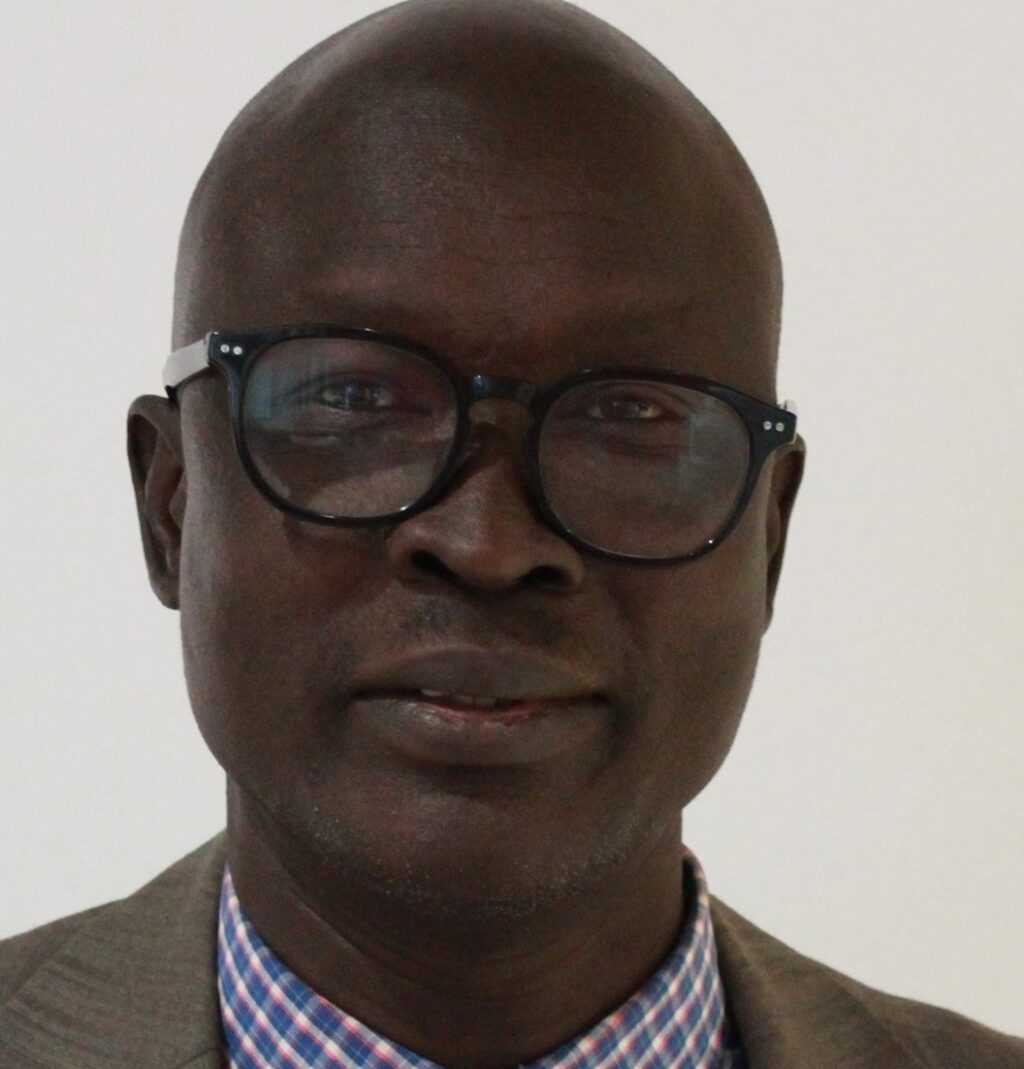
The writer, Dr. Gak Deng Woul, is a South Sudanese researcher and political analyst based in Australia. He holds a B.A. in Linguistics from University of Khartoum, B.Sc. in Sociology and Social Anthropology from University of Juba, master’s degrees in International Relations, International Development, and Education from Deakin University, Australia as well as a PhD in Migration Policy from Monash University, Australia. He can be reached via email at gakwoul@gmail.com
The views expressed in ‘opinion’ articles published by Radio Tamazuj are solely those of the writer. The veracity of any claims made is the responsibility of the author, not Radio Tamazuj.

 and then