



Section 16(2)(a) of the National Election Amendment Act, 2026 provides for the dissolution of the National Legislature, State Legislative Assemblies, and State Governments within three months of the announced election date.
Section 16(2)(b) of the National Election Amendment Act, 2026, further provides that, without prejudice to Section 16(2)(a), the President shall partially dissolve the Government and may appoint caretaker Governors.
Section 16(4)(a) of the National Election Amendment Act, 2026, provides that the incumbent President shall remain in office as President of the Republic of South Sudan during the election period until the next elected President assumes office.
Section 16(4)(b) of the National Election Amendment Act, 2026, provides that, without prejudice to Section 16(4)(a), the President shall, within three months of the announced election date, remove the First Vice President and the Vice Presidents in accordance with Article 104(2) of the Transitional Constitution of the Republic of South Sudan, as amended.
Article 104 of the Transitional Constitution of the Republic of South Sudan, as amended, provides that, in the event that the office of the First Vice President falls vacant during the Transitional Period, for any reason, including mental infirmity or physical incapacity of the office holder, the replacement shall be nominated by the top leadership body of the SPLM/A-IO as constituted at the signing of the Revitalized Agreement. The process of replacement shall not exceed forty-eight (48) hours. The successor to the First Vice President shall serve in office until the end of the Transitional Period.
Similarly, where the office of any of the Vice Presidents falls vacant during the Transitional Period, for any reason, including mental infirmity or physical incapacity of the office holder, the replacement shall be nominated by the top leadership body of the respective party as constituted at the signing of the Revitalized Agreement. The process of replacement shall not exceed forty-eight (48) hours. The successor shall serve as Vice President until the end of the Transitional Period.
Furthermore, Article 1.20.4 of the Revitalized Agreement on the Resolution of the Conflict in the Republic of South Sudan provides that sixty (60) days prior to the end of the Transitional Period, the National Elections Commission (NEC) shall organize elections in accordance with the provisions of the Permanent Constitution adopted pursuant to the Agreement and shall ensure that the outcome is broadly reflective of the will of the electorate.
Legal and Constitutional Implications
Having considered the foregoing provisions, it is apparent that the dissolution of the Executive, Legislature, and State Governments of the Revitalized Transitional Government of National Unity (RTGoNU) derives its purported authority from the National Election Amendment Act, 2026, rather than directly from the Transitional Constitution of the Republic of South Sudan, as amended.
The RTGoNU was established within a constitutional and political framework deriving its legitimacy from the Revitalized Agreement and the Transitional Constitution. Accordingly, any fundamental alteration to the constitutional structure, composition, tenure, or authority of the Government must be undertaken through the constitutionally prescribed process for amending the Constitution. A statute enacted by Parliament cannot, in itself, override or fundamentally alter constitutional provisions unless the Constitution expressly permits such an amendment and the prescribed constitutional procedure has been followed.
The National Election Amendment Act, 2026, cannot, therefore, purport to establish or create a new form of government known as a “Caretaker Government” without a corresponding constitutional basis. The fundamental purpose of electoral legislation is to facilitate, regulate, and administer the electoral process; it is not, by itself, to establish a new constitutional government or confer constitutional legitimacy upon an alternative governmental structure.
If a Caretaker Government is to exercise executive authority during the purported election period, its constitutional basis, mandate, powers, functions, composition, and limitations must be clearly established by the Constitution or by another legally valid instrument deriving its authority from the Constitution.
Of particular concern is the fact that the mandate and functions of the purported Caretaker Government were announced on national television, through the South Sudan Broadcasting Corporation (SSBC), pursuant to a Presidential Decree rather than through an express constitutional provision. A Presidential Decree cannot, by itself, create a constitutional institution or confer upon such an institution powers that are not otherwise authorized by the Constitution.
The Transitional Constitution of the Republic of South Sudan, 2011, as amended, does not expressly provide for the dissolution of the RTGoNU in the manner purportedly undertaken, nor does it expressly establish a Caretaker Government to replace the existing Transitional Government during the election period.
Moreover, where there is an inconsistency between an ordinary statute and the Constitution, the Constitution, as the supreme law, prevails. Consequently, the National Election Amendment Act, 2026, cannot validly override or supersede the Transitional Constitution of the Republic of South Sudan, as amended.
Conclusion
For these reasons, the dissolution of the Revitalized Transitional Government of National Unity (RTGoNU), including the dissolution or alteration of its constitutional organs and the establishment of a purported Caretaker Government, raises serious questions of constitutional validity.
In the absence of a clear constitutional provision authorizing the President to dissolve the Government and establish a Caretaker Government in the manner undertaken, the actions purporting to effect such dissolution are constitutionally questionable and, to the extent that they are inconsistent with the Transitional Constitution, are liable to be declared unconstitutional, null and void.
The Constitution must remain the primary source of governmental legitimacy and authority during the Transitional Period. Neither ordinary legislation nor a Presidential Decree should be used to create a governmental structure or confer powers that have no clear foundation in the Constitution.
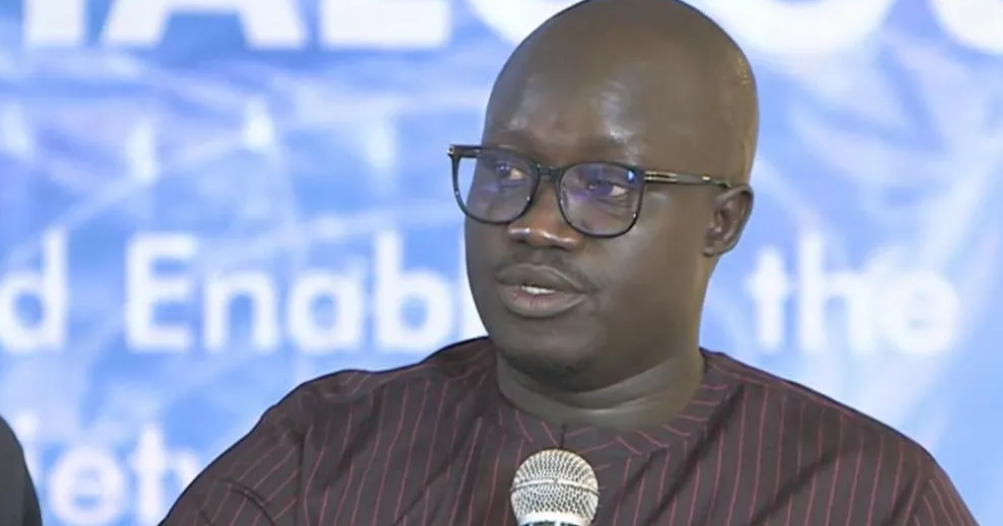
The writer, Wani Michael, is a lawyer, founder of the Foundation for Constitutional Governance and Election in South Sudan, and former member of the National Constitution Amendment Committee (NCAC).
The views expressed in ‘opinion’ articles published by Radio Tamazuj are solely those of the writer. The veracity of any claims made is the responsibility of the author, not Radio Tamazuj.

 and then