



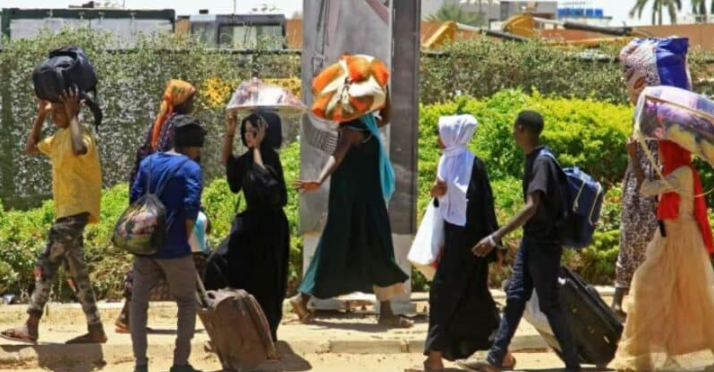
Millions of people displaced by Sudan’s nearly four-year war risk losing access to emergency shelter as humanitarian funding runs short, the United Nations refugee agency (UNHCR) and the International Organization for Migration (IOM) have warned.
Abubakarr Jalloh, UNHCR’s deputy representative in Sudan, said the conflict had forced millions from their homes, with many families fleeing repeatedly as fighting spread and front lines shifted.
Speaking from Khartoum, Jalloh recalled waking up to the sounds of war on April 25, 2023, as families fled within minutes, leaving behind their homes and belongings, including blankets and cooking utensils.
More than three years later, he said, the conflict continued to deepen suffering, with families fleeing for the first, second or even third time and arriving in areas with little assistance available.
Host communities were doing what they could to support the displaced but were struggling to meet growing needs despite having limited resources, he added.
Nearly 15 million people in Sudan had been uprooted by the conflict or were trying to rebuild their lives in areas devastated by the fighting. The figure included people displaced within the country, returnees and refugees who had previously fled Sudan but were forced to escape again.
Jalloh said the conflict had spread to a new front in Blue Nile State this year, displacing nearly 120,000 people since January. Many fled at night, arriving in relatively safer areas with nothing, while others continued to feel unsafe even after escaping the fighting.
Three in four displaced people in Sudan were women and children, he said, highlighting the urgent need for adequate shelter and protection.
He said tents provided more than protection from the elements, giving women and girls privacy and a measure of safety. Solar lamps allowed them to access latrines at night without walking in darkness, while cooking facilities enabled mothers to prepare meals without exposing themselves to unnecessary risks.
With winter approaching, Jalloh warned that displaced families faced increasingly difficult conditions. Although Sudan is known for extreme heat, winter nights in Darfur can be bitterly cold, while temperatures in northern Sudan can fall into single digits.
Blankets could be life-saving for newborn babies and older people, but many families were approaching winter with damaged or makeshift shelters, he said.
In Tawila, which was sheltering about 900,000 people, heavy rains during the summer destroyed hundreds of tents. Across displacement sites, two in five displaced families were living under plastic sheets, Jalloh said.
He also cited the impact of El Niño, which had brought less rainfall to Sudan this year, affecting harvests across Darfur, Kordofan and other conflict-affected areas.
Food prices remained high despite the harvest season, when staple foods would normally become more affordable. In September alone, the price of staple grains rose by as much as 40%, adding to the pressure on families already struggling with inflation.
For displaced households, money spent on food was money unavailable for blankets, essential supplies and safe shelter, he said.
Delivering humanitarian assistance had also become increasingly dangerous. Jalloh said drones had struck UNHCR trucks twice this year, destroying emergency shelter supplies intended for more than 1,300 families in attacks in White Nile State in April and July.
About 50 tonnes of blankets, sleeping mats and solar lamps were destroyed, depriving vulnerable families of essential assistance, he said.
Despite the challenges, UNHCR and its partners continued working to reach people in need. However, the agency’s collective shelter response required $179 million this year and had received only 35% of the funding, Jalloh said.
He cited the case of Amira, who fled Kurmuk in Blue Nile State on foot with her three children, travelling for days and using overcrowded trucks to reach Wad Madani.
By the time she arrived, displacement sites were already full. She told humanitarian workers she had been sleeping in the open until UNHCR provided her with a tent, allowing her children to sleep under a roof.
Jalloh said shelter meant safety and dignity for families who had fled violence, particularly women and children exposed to harsh weather and insecurity.
He warned that millions of displaced families could face the same conditions this winter unless more resources were made available.
Mohamed Refaat, IOM’s chief of mission in Sudan, said humanitarian access had improved over the past year following advocacy by humanitarian organisations, allowing aid workers to reach more people and better understand their needs.
However, he warned that Sudan’s displacement crisis could worsen despite a gradual decline in the number of internally displaced people, which stood at about 8.6 million, partly because of returns.
Returning home did not necessarily mean finding a place to live, he said, noting that many people were going back to destroyed or looted houses.
Refaat recounted the experience of an IOM colleague in Darfur who helped a 70-year-old woman erect a tent. The woman said she had gone a day without food, had lost one son in El Fasher and that another had left to look for work but never returned.
He warned that failure to provide assistance in Sudan could have consequences beyond its borders, with neighbouring countries likely to face increased pressure if the humanitarian crisis deteriorated further.
About 5.2 million people had returned to northern Sudan, many finding their homes destroyed or looted and lacking access to healthcare, electricity and clean water, Refaat said. Some could be forced to flee again because conditions remained too difficult for them to rebuild their lives.
He added that about 3.5 million people had been displaced in Sudan for more than a decade.
Refaat said an estimated 13.4 million people in Sudan urgently needed emergency shelter, but IOM could assist only about one in 10, reaching approximately 900,000 people with available resources.
The agency had distributed more than 40,000 tents this year, but its warehouses were now empty, he said.
IOM was continuing to move supplies into hard-to-reach areas and support displaced families and returnees. Sixteen trucks had arrived in Darfur a day earlier, but they were carrying the agency’s remaining stocks, he added.
Ongoing fighting and logistical difficulties were making it harder to reach vulnerable communities, while food shortages and severe malnutrition risked triggering further displacement.
Families urgently needed shelter, but IOM no longer had sufficient supplies to meet the growing demand, Refaat said.
He called for flexible international funding to replenish emergency supplies and enable humanitarian organisations to reach families before conditions deteriorated further.
After nearly four years of conflict, he said, Sudanese families continued to flee violence or return to destroyed homes, with their humanitarian needs showing little sign of easing.

 and then