



Letter three of seven letters to South Sudanese
Fellow South Sudanese,
Since 1955, we have lived through more years of war than of peace. Again and again, power has gone to those who command guns. A war of liberation against Khartoum was followed by wars among ourselves. Some of us now say, with a weariness I understand, that violence has become our culture and our culture has become violent. Before we accept that judgement, we must ask what else our history has left us.
While it is true that we have a long history of violence, it is equally true that we also have a rich history of settling disputes peacefully. When a killing threatened to become a feud, when neighbours quarrelled over cattle or needed to share land and water, our communities developed ways to restrain revenge, repair relationships and make life together possible again. These achievements are as much a part of our inheritance as the wars we have fought. We must draw on them as we decide how to live together as a nation.
In my first two letters, I set out what we must settle together: what does it mean to be a South Sudanese? What do we need to create a sense of belonging and on what terms, how can public power be in the service of the citizenry, and how our commonwealth should be used. We have voices of our own to guide that conversation.
Consider how Nuer communities sought to stop a killing from becoming an endless feud. In his account of Nuer life in the 1930s, Evans-Pritchard described the kuaar muon, the earth-priest outsiders called the leopard-skin chief, mediating between families and helping negotiate compensation in cattle. His authority rested on ritual standing, rather than the command of a ruler. Settlement required the living to face obligations arising from a death. Decades later, researchers working among western Nuer recorded how the prophet Gatdeang Dit sustained relations with Dinka neighbours through hospitality and shared cattle obligations. The word mar or maar means both kinship and peace. Across these different settings, peace involved work to make another family’s life matter to one’s own.
Francis Mading Deng’s account of Dinka values describes cieng as the way people live together and look after one another. Good cieng rests on care and persuasion. A related value, dheeng, joins a person’s dignity to the grace of their conduct. A man may be wealthy or feared, but he earns honour by how he treats others. Equatorian memory sets a similar standard. Among Kakwa communities around Yei, oral histories gathered by the historian Cherry Leonardi value chiefs for their “good speech”: the skill to negotiate with armed outsiders and shield their people from government and rebel violence. As one chief reportedly put it: “I am a chief, not a fighter: I receive people.”
Jok Madut Jok observes that in some traditional African political systems, an ordinary person could criticise a chief to his face and expect that criticism to be considered. Such practices carry a political lesson: those who lead have an obligation to hear the people who bear the consequences of their decisions. These ideas give us a standard by which to judge public power: a leader who rules through fear has failed a basic test of leadership. That test should apply to every leader, whatever community they come from. We can draw on these values to demand conduct that makes people safer and earns their trust.
A blood-brotherhood pact recorded among the Azande almost a century ago made two people bakure: partners bound by duties of mutual help, though neither was born owing anything to the other. Kinship can hold a family or a clan together. A country of many peoples also needs commitments deliberately made between people who are not kin. That is the idea my first letter found in our Constitution, which at independence described the Bill of Rights as a covenant among the people of South Sudan. The pact offers a political insight we can carry beyond its original setting: we can choose obligations to people to whom birth has given us none.
We are still making such bonds. When war drove families into the Protection of Civilians site at Bentiu, traders, fishing groups and women’s groups formed among people who had often never met, across clans and counties. Researchers who studied them in 2018 and 2019 found members agreeing to rules: no fighting among themselves or with the wider community, no revenge killings, debts repaid on time, and fines or expulsion for those who broke faith. Members lent one another nets, shared stalls with newcomers, pooled money to restart businesses after attacks and defended one another’s homes at night. The groups had their exclusions; many began as groups of men only. Still, they show that commitments chosen in hardship can carry real obligations.
Simon Simonse’s work on Bari-speaking communities and their neighbours adds a measure of what those obligations are for. Peace was bound up with rain, food and the well-being of the community. Coolness described a condition of peacefulness and non-violence.
South Sudanese today apply tests just as concrete. When researchers asked people in several parts of the country in 2020 how they would recognise peace in daily life, the measures that emerged included travelling safely on the roads between towns, going to market, joining dances and celebrations, and being able to leave home at night to help a neighbour in urgent need. A ceasefire matters because it should make those things possible. When we judge a peace agreement, we should ask whether a family that depends on it can now do them.
Our communities have long lived with danger: cattle to defend, grazing and water to share, feuds that could pass from one generation to the next. They also built ways to restrain violence, repair injury and make life together possible again. Those ways are political thought, and they remain resources for the country we must build.
Before the Wunlit peace conference of 1999, Dinka and Nuer chiefs visited one another’s communities. People who feared the other side could see their own leaders go there and return unharmed. These journeys helped make a larger meeting possible. At Wunlit, the discussion reached the things on which daily life depended: how displaced families could return, how neighbours could share grazing and fishing grounds, and how people held in captivity could regain their freedom. Dinka and Nuer women carried water and firewood, cooked for the gathering, led its peace songs and took part in the mabior cleansing ritual. The covenant provided for joint institutions to oversee the agreement. People were working out what they owed one another and who should answer when those obligations were broken. This experience gives us something concrete to build on: ways of establishing trust, bringing grievances into the open and negotiating the conditions under which neighbours can live together.
These ideas belong to histories that overlap and continue to change. Together they give us a language for the national conversation we need. Relationships create obligations. Injury must be faced and repaired. Persuasion helps people reach settlements they can live with. Bonds can be chosen beyond those we are born into. Peace is judged by whether life becomes possible again. We can recognise these ideas in our own histories while learning from anyone whose experience helps us. Their value lies in what they enable us to do for one another. They give us grounds to challenge the claim that only force can hold us together.
What, then, made violence so powerful in our politics? War did, and those who waged it. Colonial administrators, successive governments and armed movements reshaped customary authority and drew chiefs and prophets into their struggles. Working among Dinka and Nuer communities in the late 1990s, Jok Madut Jok and Sharon Hutchinson showed how leaders of armed movements mobilised ethnic identity for war and how older limits on fighting gave way. A Dinka community leader told them that “this war between us and the Nuer was no longer our usual war.” Researchers who followed Nuer communities through later wars describe efforts to persuade soldiers that killings carried out under government orders were morally, socially and spiritually “risk-free”. Some prophets held firm lines against killing; others did not. The cost our elders attached to taking a life was worn away by those who needed men willing to kill. That is what the doubters rightly name. Yet it proves the opposite of what they conclude. Violence was taught to us by our history. What a people has been taught, it can unlearn. That will not happen by wishing. It takes deliberate public work, and a national dialogue must be that work.
That work is already being done by people whose names seldom reach a national peace agreement. A 2024 study records how women in Bor helped organise settlement and food distribution when flooding displaced Twic East communities. Displaced women leaders and resident women leaders then worked together to prevent or reduce conflicts. The same study describes women mediating disputes over water points and responding to domestic violence in Bor, Torit and Wau. These women were making coexistence possible under pressure.
Nor is their role new. Winnie Bedigen’s research describes Honyomiji, a women’s institution long practised among the Lotuho, Lokoya and Lango and adopted by other communities, through which women lead, mediate, teach the young, support families and carry duties in religious and cultural ceremonies. Women have been makers and keepers of our peace practices, not only people those practices protect. Their work belongs in the account of our political inheritance, and their experience belongs in any national conversation about peace. We should seek out the people doing such work and give them a direct part in shaping the decisions that affect it.
Their right to speak follows from their equal citizenship. It does not depend on an elder granting permission. That recognition opens a necessary discussion about what a custom does to the person who must live under it. Jok Madut Jok, a former undersecretary in our Ministry of Culture, warned against romanticising tradition, reminding us that “culture is also part of the problem.” A woman should be able to tell an elder that a settlement leaves her unsafe. A young person should be able to question a decision about their future without being called disrespectful or disloyal. Respect for elders gives us reasons to hear their counsel. Equal citizenship requires that they hear others too. A settlement that protects a powerful family by silencing someone it has harmed is not peace. It is injustice with a ceremony attached.
Faith will guide many of us in this work, alongside the other commitments through which we understand our duties to one another. The Letter of James asks believers to be “quick to listen, slow to speak and slow to become angry”. The Qur’an praises mutual consultation and upholds the cause of those who have been wronged. These teachings can help us listen with patience and take injury seriously. Citizens of other beliefs or none bring their own reasons for doing the same. No sermon, ceremony or appeal to reconciliation should require a victim to forgive before being heard, or to surrender a legal claim.
One further step takes us from the village to the nation. Local agreements can help neighbours share land, water and grazing. A country also needs common rules for people whose customs differ. At the 2017 Juba Lecture Series, Kuyang Harriet Logo put the question in three words: “Whose custom prevails?” When neighbours from different communities dispute land in a town, when a couple marries across communities, or when a family returns from a refugee settlement with children who have never known a chief, no single custom can govern simply because it is respected at home. People in towns, those who belong to no chiefly network and those displaced by war remain citizens with an equal voice. No one should need an authority to certify their cultural loyalty before helping to decide our future.
What kinship and custom have helped people do locally, citizenship must enable us to do across the country. The rules governing belonging, public power and our commonwealth affect us all, so the people who live under them must have a part in shaping them. The 2011 Constitution already recognised customary law as a source of legislation while guaranteeing equality, women’s participation and protection against harmful customs. A national dialogue can help citizens give those written commitments practical meaning and hold public institutions to them.
This is the work I propose for a Citizens’ Assembly on South Sudan’s Future. It should bring citizens from different communities and circumstances together to explain their needs, hear objections and work out proposals for rules under which each can live with equal standing. Those proposals should be open to wider public discussion and taken forward through lawful constitutional and legislative processes.
For the Assembly to deserve that trust, people must be able to take part without intimidation. A refugee, a displaced farmer or a young woman should have a way to contribute without needing the endorsement of a party leader or chief. People need time to speak, languages they understand and ways to participate when distance, disability or the cost of leaving work would otherwise shut them out. Representatives must answer to the people they speak for. Those guiding the discussion should help people reach agreement without ordering them to accept it. Where agreement cannot be reached, the disagreement must be recorded and the reasons for decisions made clear. Before people are asked to take part, they should know how proposals will reach the bodies responsible for acting on them and how they can follow the response. Participation must give citizens a continuing claim on public decisions.
Making room for that claim is a political task. No elder’s blessing will disarm a commander who prefers power to peace. Citizens need protection when they speak, and public institutions must be required to answer for what they do with the proposals. The state must still protect people and courts must still hear their claims. My next letter confronts unequal power and accountability directly. Here we have a foundation on which to act: experience of restraining violence, creating obligations across differences and making decisions together. We can bring that experience into a national process in which every South Sudanese has an equal standing.
Those who came before us knew that killing carried a cost, that peace needed relationships and that honour was earned by how one treated others. South Sudanese who keep neighbours together today are adding to that inheritance. One day our children will ask what we did with the country we received. We should be able to tell them that, after so much blood, we brought our differences into the open and worked out how to live with them. Let them inherit the wisdom to repair a quarrel and the freedom to question an injustice. Let them know that they can belong to South Sudan without fearing another South Sudanese. That is the country a national conversation must help us build.
Yours,
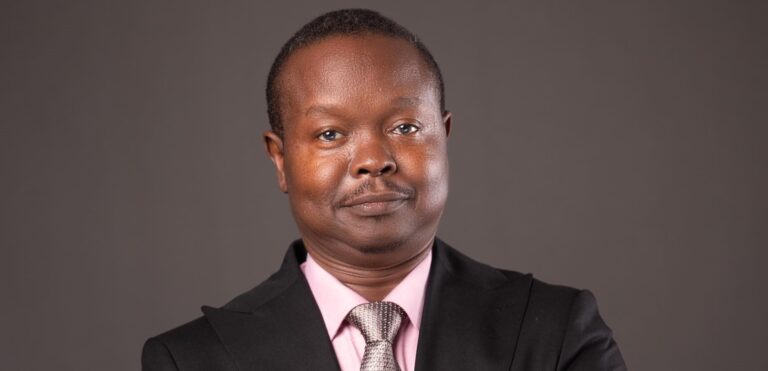
Dr. Remember Miamingi
The author is a South Sudanese human rights lawyer and governance specialist.
Sources
1. Sharon E. Hutchinson and Naomi R. Pendle, ‘Violence, legitimacy, and prophecy: Nuer struggles with uncertainty in South Sudan’, American Ethnologist 42(3), 2015, pp. 415–430: p. 418 on killings under government orders presented as “risk-free”; p. 422 on mar or maar and Gatdeang Dit; pp. 423–424 on nueer, purification and reconciliation. Open access article.
2. E. E. Evans-Pritchard, The Nuer: A Description of the Modes of Livelihood and Political Institutions of a Nilotic People, Oxford University Press, 1940, pp. 172–175, on the kuaar muon and feud settlement. Pitt Rivers Museum, Southern Sudan Project, on the leopard-skin priest’s ritual rather than political authority. Museum record.
3. Francis Mading Deng, The Dinka of the Sudan, Holt, Rinehart and Winston, 1972, pp. 12–18, on cieng, dheeng and their social context.
4. E. E. Evans-Pritchard, ‘Zande Blood-Brotherhood’, Africa 6(4), 1933, pp. 369–401, especially p. 370 and note 2, on bakure. Publisher record.
5. Simon Simonse, ‘The Burst and the Cut Stomach: The Metabolism of Violence and Order in Nilotic Kingship’, Nilo-Ethiopian Studies 1994(2), pp. 1–13, especially pp. 6–10. Open access article.
6. Cherry Leonardi, Making Order Out of Disorder: Customary Authority in South Sudan, Rift Valley Institute, 2019. Report. Diana Felix da Costa, Changing Power Among Murle Chiefs, Rift Valley Institute, 2018. Report.
7. Marjoke Oosterom, ‘Gendered (in)security in South Sudan: masculinities and hybrid governance in Imatong state’, Peacebuilding 5(2), 2017, pp. 186–202, especially pp. 190–194. Article. Nicki Kindersley and Alex Miskin, Women in Authority in South Sudan, Rift Valley Institute, 2024. Report. Printed pp. 18 and 22–23 document women’s mediation and cooperation between displaced Twic East women and resident women in Bor, based on 2022 fieldwork.
8. Rift Valley Institute, Cultures of Dialogue: Local and National Experiences in South Sudan, Juba Lecture Series 2017, published 2018, pp. 9–10, Kuyang Harriet Logo’s contribution. Report.
9. Transitional Constitution of the Republic of South Sudan, 2011, Articles 5, 9(1), 14 and 16, cited as adopted at independence. Constitution text.
10. James 1:19, New International Version, 2011 text. Passage. Qur’an 42:38–41, Dr Mustafa Khattab’s The Clear Quran translation. Passages.
11. John Ryle and Douglas H. Johnson (eds), What Happened at Wunlit? An oral history of the 1999 Wunlit Peace Conference, Rift Valley Institute, 2021, on the chiefs’ preparatory visits and the conference agenda. Oral history. Wunlit Dinka Nuer Covenant and Resolutions, 8 March 1999, on joint institutions. Covenant text.
12. Winnie Bedigen, ‘A Quest for Sustainable Peace in South Sudan: The Role of Everyday Religious Practices, Ceremonies and Rituals in Robust Peacebuilding’, Journal of the British Academy 10(s1), 2022, pp. 65–66, on the mabior ritual at Wunlit. Article. Winnie Bedigen, ‘Women’s indigenous institutions are key in South Sudan’s national peacebuilding’, Peace News Network, 6 November 2024, on women’s roles at Wunlit and the communities practising Honyomiji. Article. Winnie Bedigen, ‘Honyomiji: the local women’s peacebuilding institution in South Sudan’, Peacebuilding 9(4), 2021, pp. 457–476. Repository record.
13. Cherry Leonardi, ‘Violence, Sacrifice and Chiefship in Central Equatoria, Southern Sudan’, Africa 77(4), 2007, especially pp. 548 and 551–552, based on oral histories of two Kakwa chiefdoms in Yei County. Repository record.
14. Roxani Krystalli, Elizabeth Stites, Alex Humphrey and Vaidehi Krishnan, The Currency of Connections: The establishment and reconfiguration of informal livelihood groups in Bentiu, South Sudan, Feinstein International Center and Mercy Corps, 2019, especially pp. 7–15; fieldwork December 2018 to March 2019. Report.
15. David Deng, Sophia Dawkins, Christopher Oringa and Jan Pospisil, Perceptions of Peace in South Sudan: Longitudinal Findings, PeaceRep, 2022, pp. 17 and 32, on everyday peace indicators developed through interviews and focus groups in early 2020. Report.
16. Jok Madut Jok and Sharon Elaine Hutchinson, ‘Sudan’s Prolonged Second Civil War and the Militarization of Nuer and Dinka Ethnic Identities’, African Studies Review 42(2), 1999, pp. 125–145. Publisher record.
17. Jok Madut Jok, South Sudan: Do We Have a Culture of Peace?, Sudd Institute, 1 April 2013, p. 4. Paper

 and then