



By all indications, the international community is preparing to manage South Sudan’s collapse rather than prevent it. After years of failed peace agreements, corruption scandals, and political stagnation, many foreign governments appear increasingly tempted to scale down their engagement. Aid agencies are shifting toward long-term emergency management instead of state recovery, while some policymakers seem ready to accept deeply flawed elections simply because they offer an exit strategy.
Such thinking is not only morally shortsighted; it is strategically dangerous.
The warning signs are no longer hidden. South Sudan is witnessing the erosion of peace agreements, the militarization of politics, shrinking civic space, and a ruling elite increasingly determined to convert temporary power into permanent rule.
The latest signal came this week when opposition MPs walked out of a parliamentary session unilaterally convened by one party to the peace agreement in an attempt to amend key provisions of the Revitalized Agreement on the Resolution of the Conflict in South Sudan (R-ARCSS). The walkout exposed how fragile the political settlement has become. These amendments are not mere administrative adjustments; they reflect a broader effort to weaken the agreement while preserving its outward appearance. More importantly, the incident demonstrated that consensus politics in South Sudan is rapidly collapsing.
South Sudan is not simply another fragile African state drifting into authoritarianism. It sits at the center of a volatile region stretching from Sudan and the Horn of Africa to Central Africa and the Great Lakes. Allowing the country to slide into another full-scale war — or even fragmentation — would create a geopolitical vacuum with consequences far beyond its borders.
The irony is striking. The same democratic countries now contemplating disengagement spent decades supporting South Sudan’s independence. Western governments invested heavily in the 2005 Comprehensive Peace Agreement and backed the 2011 referendum that created the world’s newest nation. Since independence, billions of dollars have been spent on humanitarian operations, peacekeeping, governance support, and institution-building.
Yet after investing so much diplomacy, money, and credibility, many of those same actors now appear ready to walk away precisely when the country faces its most dangerous moment.
That withdrawal will not reduce costs. It will only delay them until they become catastrophic.
The dangerous illusion of stability
For years, international policymakers approached South Sudan through the lens of conflict management rather than democratic transformation. The priority was preventing outright state collapse, even if that meant tolerating authoritarian consolidation. But that strategy has reached its limits.
An election conducted under conditions of repression, intimidation, institutional weakness, and lack of political consensus cannot create legitimacy. Instead, it risks deepening instability.
If elections proceed without implementing critical provisions of the peace agreement — including security reforms, civic freedoms, constitutional guarantees, and political neutrality of state institutions — the opposition will almost certainly reject the outcome. That rejection will not remain confined to statements in Juba. It could quickly move into armed confrontation.
South Sudan’s history leaves little room for doubt. Political disputes in the country rarely remain political for long. They militarize rapidly because armed networks already exist, ethnic grievances remain unresolved, and the state itself remains heavily securitized.
Elections under authoritarian conditions may produce a government on paper, but not national legitimacy. Instead, they risk creating multiple centers of power: a government claiming constitutional authority in Juba while armed groups re-emerge elsewhere. The result could be the gradual disintegration of centralized authority into fragmented zones controlled by militias, ethnic commanders, and local strongmen.
Once that process begins, reversing it becomes exponentially more expensive.
A regional crisis in the making
The world should not assume that South Sudan’s crisis would remain within its borders.
South Sudan shares borders with Sudan, Ethiopia, Uganda, Kenya, the Central African Republic, and the Democratic Republic of the Congo — many of which are already struggling with insecurity or internal tensions.
Sudan is engulfed in civil war. Ethiopia remains fragile after the Tigray conflict. Eastern Congo continues to battle armed groups, while the wider Horn of Africa faces displacement crises, food insecurity, and cross-border instability.
A collapsing South Sudan would intensify this already volatile environment.
Refugee flows alone could overwhelm neighboring states. Millions more South Sudanese could flee toward Uganda, Kenya, Ethiopia, and Sudan. Arms smuggling, trafficking networks, and criminal economies would likely expand across porous borders. Extremist groups thrive in precisely these kinds of ungoverned spaces.
History shows that failed states rarely fail quietly. Libya’s collapse destabilized the Sahel and Mediterranean migration routes. Syria’s war reshaped European politics through refugee flows. Somalia’s prolonged collapse fueled piracy, terrorism, and regional insecurity for decades.
South Sudan risks becoming East Africa’s next long-term conflict economy.
The strategic vacuum
Western disengagement would also create a strategic vacuum that other powers are prepared to fill — particularly China.
Beijing already has deep interests in South Sudan’s oil sector. Unlike democratic governments, China does not condition engagement on governance reforms, democratic transition, or human rights standards. Its priorities are straightforward: strategic influence and access to resources.
If democratic countries retreat while maintaining criticism from afar, they will effectively surrender influence while China consolidates its economic and political leverage.
This matters because South Sudan’s natural resources remain strategically important despite years of mismanagement. Whoever dominates those networks will shape not only South Sudan’s future, but also wider regional alignments.
Abandonment creates openings — and those openings rarely remain empty.
Kenya and the region have much to lose.
Among regional actors, Kenya may be especially vulnerable to instability in South Sudan.
Kenyan banks, airlines, logistics firms, insurers, and investors have spent years building major economic interests in South Sudan. Juba became one of the largest destinations for Kenyan commercial expansion after independence. Much of South Sudan’s formal economy remains closely tied to Kenyan financial systems.
A descent into prolonged conflict would jeopardize those investments almost immediately.
Beyond economics lies the humanitarian burden. Kenya already hosts significant refugee populations from across the region. Another large displacement crisis would place additional pressure on infrastructure, public resources, and domestic politics.
Uganda, Ethiopia, and Sudan face similar risks.
Simply put, the cost of prevention today is far lower than the cost of regional containment tomorrow.
The cheapest solution is still political
The tragedy is that the tools to prevent catastrophe still exist.
A lack of resources alone does not cause South Sudan’s crisis. It is fundamentally a crisis of political will — both domestically and internationally.
There remains a narrow but real opportunity for democratic governments and regional actors to help avert the worst-case scenario. But that requires moving beyond rhetorical concern toward coordinated action.
First, democratic countries and regional organizations must make clear that electoral legitimacy cannot come merely from holding a vote. Recognition should depend on minimum democratic standards, including political freedoms, security reforms, credible electoral oversight, and genuine opposition participation.
Second, international engagement must become more coordinated. The United States, the European Union, regional organizations, and neighboring countries should establish a unified contact mechanism capable of delivering consistent pressure and messaging.
Third, targeted measures against individuals obstructing peace implementation — including financial restrictions, travel bans, and anti-corruption investigations — can increase pressure without worsening humanitarian suffering.
Finally, South Sudan’s elections cannot succeed without a broad political consensus. Inclusive dialogue involving opposition groups, civil society, youth representatives, women’s organizations, religious leaders, and regional stakeholders remains essential before any credible vote can take place.
The cost of cynicism
A growing number of policymakers now argue that South Sudan is simply too corrupt, too fragmented, and too difficult to save. That argument is becoming an excuse for strategic surrender.
But cynicism is not policy.
The collapse of South Sudan would not represent only a local failure. It would represent a historic failure of international diplomacy, regional leadership, and democratic commitment.
The world helped bring South Sudan into existence. It cannot now pretend that the country’s fate is irrelevant.
If authoritarian rule is legitimized through a hollow electoral process, opposition forces will reject the outcome. Violence could follow. Fragmentation may accelerate. Refugees will cross borders in large numbers. Criminal economies will expand. Foreign competitors will deepen their influence. And billions already invested by democratic countries will effectively be lost.
Years later, the same international actors now searching for a cheap exit may find themselves confronting a far more expensive disaster — militarily, economically, politically, and morally.
The choice is therefore not between engagement and disengagement. It is between paying a manageable political cost now or facing an uncontrollable strategic cost later.
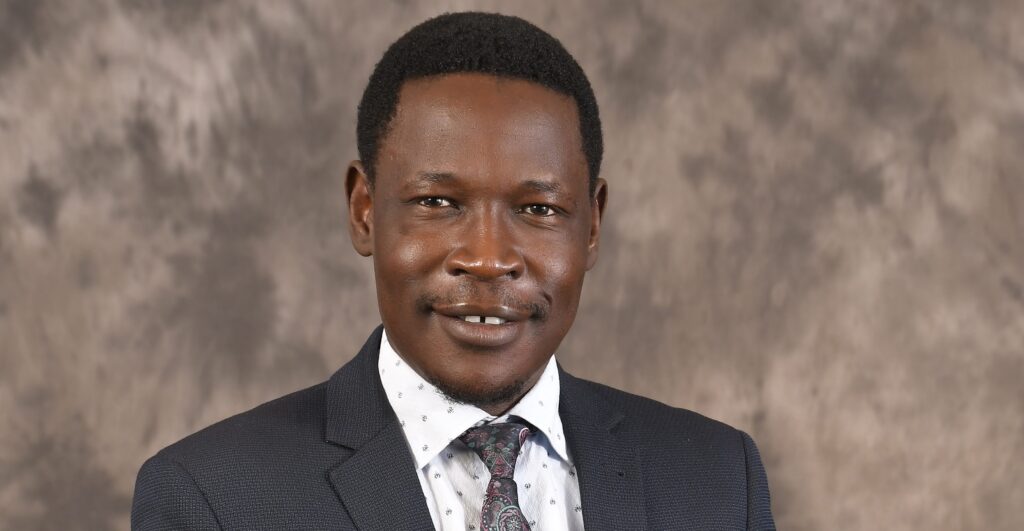
The writer is a South Sudanese political activist, former political prisoner, and presidential candidate. He is the co-founder and chairman of the 7 October Movement, a reform-oriented political movement advocating for democratic transition and accountable governance in South Sudan. He can be reached via diingmouaguer@gmail.com.
The views expressed in ‘opinion’ articles published by Radio Tamazuj are solely those of the writer. The veracity of any claims made is the responsibility of the author, not Radio Tamazuj.

 and then