



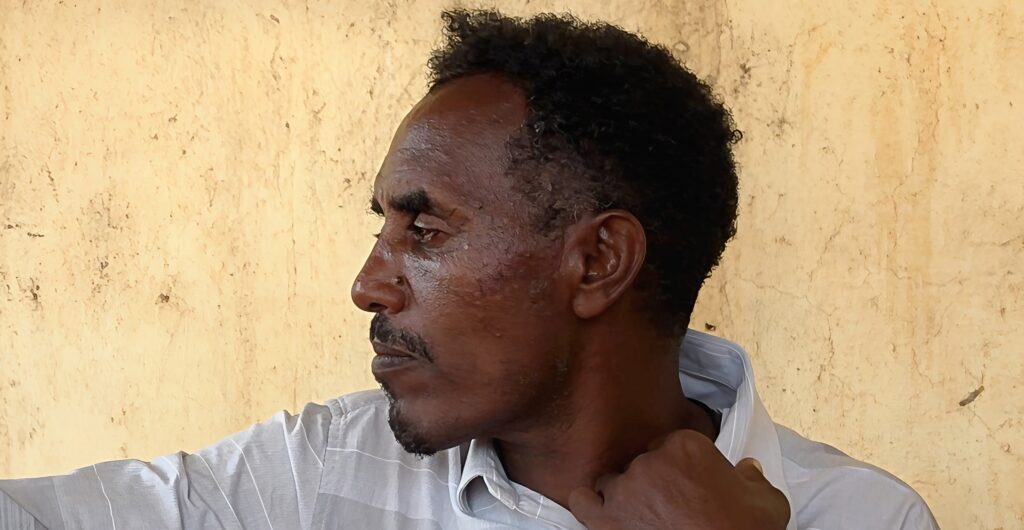
When the heavy iron gates of Juba Central Prison finally opened, Yonas Dawit Ghebremichael paused and looked out at a city he no longer recognized.
The Eritrean migrant entered the prison in 2014, only months after arriving in South Sudan in search of work. At the time, parts of Juba still bore the scars of civil war. The prison walls were lower. The roads outside were quieter.
Now glass fronted buildings rose above dusty streets. Motorcycles weaved through traffic. The prison gate itself had been rebuilt, taller, thicker and more imposing.
Yonas stood silently with a small bag in his hands, among the few possessions left after spending 12 years on death row.
“When I came here, this prison didn’t have a wall this big,” the 46-year-old said moments after his release. “The gate was very small. Everything has changed.”
Outside the prison, however, little awaited him.
No family. No passport. No home.
Only a church willing to take him in.
As he climbed quietly into a vehicle arranged by members of the Justice and Human Rights Observatory, he barely spoke. During the drive across Juba, he stared through the window at buildings and streets that had emerged while he was behind bars.
He had entered prison at 29.
Now he was leaving as a middle aged man in a country that no longer felt familiar.
“I stayed only five months in South Sudan before the incident happened,” he said softly.
Since then, he had never stepped outside prison walls.
A foreigner trapped in the system
Yonas was sentenced to death after killing his wife in what lawyers later described as a domestic dispute involving repeated adultery.
Rights advocates who fought for his release say the case reflected broader problems facing migrants navigating weak justice systems far from home.
According to lawyers involved in the appeal, the same man allegedly involved in the affair with Yonas’s wife also acted as translator during police interrogations and court proceedings.
“The interpreter was interpreting his own stories against Yonas,” said Godfrey Victor Bola, executive director of the Justice and Human Rights Observatory, using another version of Yonas’s name that appeared in court proceedings.
“He was telling his own version of the story, not what actually happened, leading to wrongful conviction and sentencing to death.”
For years, Yonas remained inside South Sudan’s overcrowded prison system with limited contact with the outside world.
“When people are called to prison, most times they come to collect the bodies of loved ones after execution,” Bola told journalists outside the prison gates. “Today we are not collecting a body. We are witnessing the restoration of justice.”
An appeals court eventually ruled that Yonas acted under severe provocation and reduced the conviction from murder to manslaughter, overturning the death sentence and ordering his immediate release.
But freedom brought another burden: uncertainty.
“I don’t have a house,” Yonas said quietly after stepping outside the prison compound. “I don’t know where to go.”
‘There was nobody asking about him’
For members of Juba’s Eritrean community, Yonas’s release closed a painful chapter that began more than a decade earlier.
One Eritrean church member recalled first meeting him during Easter prison visits organized by their congregation years ago.
“We did not even know there were Eritreans inside the prison,” he said. “We just went there as a church to pray for prisoners.”
Inside, they found three East African detainees, including Yonas.
“At that time, he had already spent around one year in prison,” the church member said. “There was nobody asking about him. No relatives. No support.”
Communication with Eritrea was extremely difficult during those years, he said. The community struggled to trace Yonas’s family or find anyone who could intervene on his behalf.
“We tried through the embassy,” he said. “But they said they had to follow government procedures.”
The church continued visiting him over the years, bringing prayers, food and companionship during holidays.
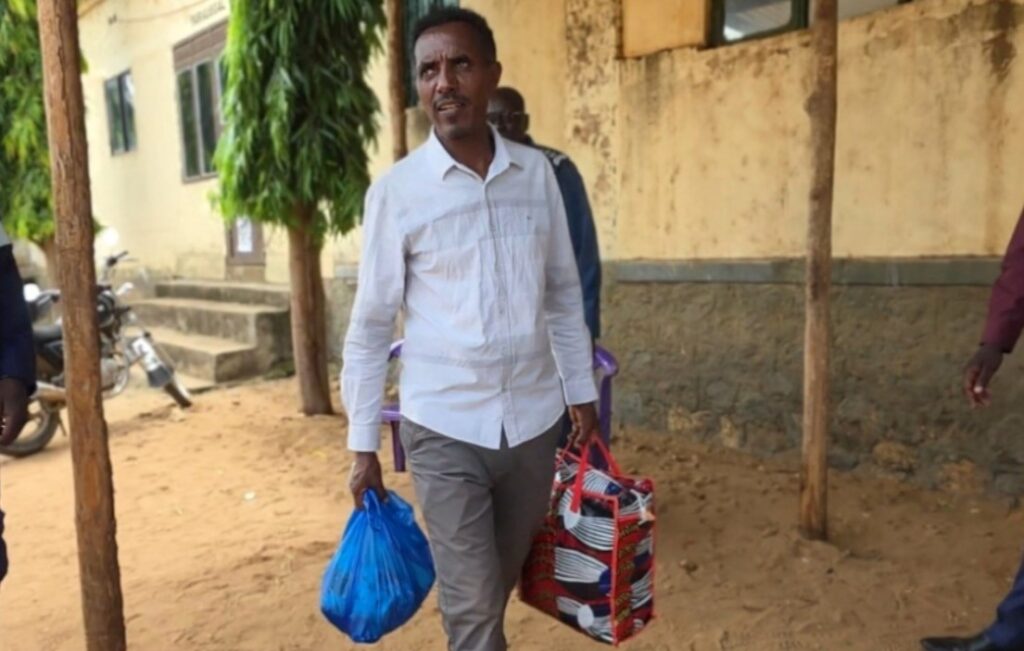
For many migrants detained abroad, religious communities often become substitute families, the only social support available inside foreign prisons.
“This problem continued with us up to now,” the church member said. “But this season, God helped us.”
On the day of Yonas’s release, community members escorted him directly from prison to church because he had nowhere else to stay.
Migrants disappearing behind bars
Across Africa, migrants and refugees frequently move through countries where legal systems remain overstretched by conflict, poverty and weak institutions.
For foreigners arrested abroad, the risks can be especially severe.
Without interpreters, lawyers, identification documents or diplomatic assistance, many become effectively invisible inside detention systems.
Human rights organizations working across East Africa say migrants often struggle to understand the charges against them or communicate during court proceedings. Some lose contact with relatives entirely.
For Eritreans, displacement often begins with escape.
Thousands flee indefinite military conscription, repression and economic hardship each year, moving through Sudan, Ethiopia, Libya and South Sudan in search of safety or work opportunities. Many travel without formal documentation, leaving them particularly vulnerable to arrest and statelessness.
By the time Yonas was released, he no longer had a passport or identity documents.
Rights advocates are now urging Eritrean authorities to help him obtain new papers.
“We recommend the Eritrean government facilitate him with identification and a passport,” Bola said. “He needs support to rebuild his life.”
A prison system under strain
Inside Juba Central Prison, officials say Yonas’s case also reflects broader pressures on South Sudan’s justice system.
Maj. Gen. Anthony Oliver Legge, director of Juba National Prison, said the facility currently holds nearly 2,850 inmates, far beyond its comfortable capacity.
“If there is any release happening, especially for condemned prisoners, it makes us happy,” Legge said.
According to prison authorities, more than 140 foreign inmates have passed through the prison system in recent years.
“We do not differentiate inmates according to nationality,” Legge said. “They are equal before the law.”
Still, he acknowledged that overcrowding, limited judicial resources and trial delays remain major problems.
“The number is big and the judges are not many,” he said. “It affects the issue of trials.”
Legge defended the prison’s role as one of rehabilitation rather than punishment alone.
“We are not here just to treat people badly,” he said. “The purpose of imprisonment is reform.”
Before releasing Yonas, Legge said he personally asked him whether he had changed during his years behind bars.
“He assured me he benefited from what happened before,” the prison director said. “I think he benefited from staying here.”
Yet even prison officials acknowledged that the biggest challenge often begins after release.
After more than a decade behind bars, Yonas had no home, no income and no immediate family connections in South Sudan.
“He is not the only case,” Legge said. “Many happened before. Usually, they reconnect themselves with communities.”
Freedom without certainty
As evening approached on the day of his release, Yonas sat quietly inside the church compound where community members had taken him.
The future remained uncertain.
He cannot easily return to Eritrea. In South Sudan, he remains a foreigner without legal documents or stable work.
At times during interviews, he appeared disoriented by life outside prison.
He tried recalling old neighborhoods he once knew, places like Customs and Thongpiny, but admitted the city now felt unfamiliar.
“I don’t know where I am,” he said at one point.
Then silence returned.
For years, prison had become his only world.
Now freedom itself felt overwhelming.
His case has reignited debate over due process, legal aid and the treatment of vulnerable migrants inside South Sudan’s justice system, where rights groups say poor defendants often lack adequate representation.
“In practice, our criminal justice system treats you better if you are rich and guilty than if you are poor and innocent,” Bola said.
For Yonas, justice arrived after 12 years lost behind prison walls.
But by the time freedom came this week, almost everything else had disappeared with it.

 and then