



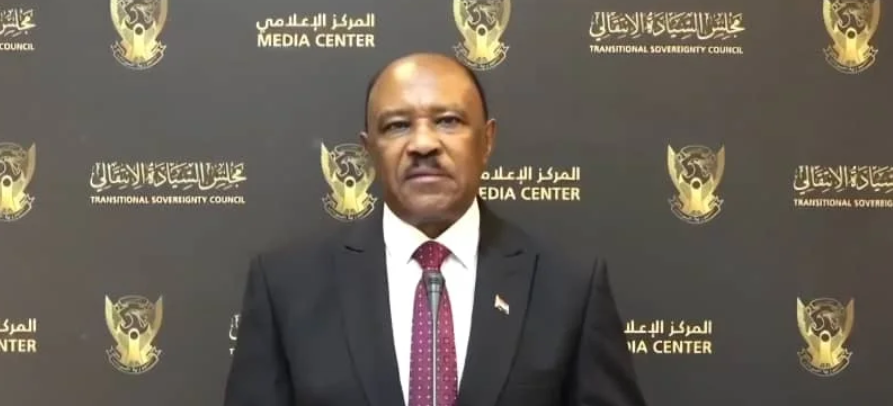
Sudan’s army-aligned government has rejected US criticism of the country’s war, saying any peace initiative must respect Sudan’s sovereignty, territorial integrity and national institutions.
The Foreign Ministry said on Wednesday that the government remains committed to engaging with Washington and other international and regional partners to end the conflict, but insisted that any political process must be Sudanese-led.
The statement followed comments on Tuesday by US State Department spokesman Thomas “Tommy” Pigott, who said Washington would seek to raise the cost of continued fighting for the Sudanese Armed Forces (SAF), the paramilitary Rapid Support Forces (RSF) and their supporters.
Pigott said neither force nor its leaders represent legitimate constitutional governance in Sudan. He called for an immediate humanitarian truce, followed by a permanent ceasefire and an inclusive political process leading to civilian government.
Khartoum said it “strongly rejects” the US position and urged Washington to engage with the Sudanese government.
The ministry said Sudan had participated constructively in peace talks in Jeddah, hosted by Saudi Arabia and the US, but accused the RSF of failing to honour commitments reached there and of continuing attacks.
It also accused unnamed foreign actors of supplying the RSF with weapons, financing and mercenaries, saying any credible peace effort should address external support that it says is prolonging the war.
Despite those objections, the ministry said the government had engaged with US-led diplomatic efforts under the Quad.
US entry visa dispute
The latest exchange comes amid a standoff over Washington’s decision not to issue a visa to Gen. Abdel Fattah al-Burhan, Sudan’s army chief and de facto leader, who was due to address the UN General Assembly in New York on Thursday.
Sudan has asked UN Secretary-General António Guterres to intervene. UN officials have said they raised the matter with US authorities.
Reuters, citing a Sudanese diplomatic source and a Western analyst familiar with US-Sudan relations, reported that the visa issue appeared to be linked to a US proposal for a 90-day ceasefire.
Call for Sudanese-led process
The Foreign Ministry said any peace initiative should address the causes of the conflict and should not legitimise what it described as political or military realities created by the RSF.
It called for an end to armed groups operating outside state institutions and for weapons to be held exclusively by state authorities.
According to the ministry, this would create conditions for a Sudanese-led political process aimed at democracy, peace and justice while preserving Sudan’s unity and sovereignty.
It said the government was ready to work with the US and regional and international partners, including Saudi Arabia, Qatar, Egypt, Russia, China, Turkey, Pakistan, the African Union, Arab League, Organisation of Islamic Cooperation and the Intergovernmental Authority on Development (IGAD).
It described peace as its “strategic choice and goal”, while insisting that international engagement should respect Sudan’s sovereignty and its institutions.
The war began in April 2023 after a power struggle between Gen. Burhan and RSF commander Gen. Mohamed Hamdan Dagalo, known as Hemedti.
The fighting has killed tens of thousands of people, displaced millions and created one of the world’s worst humanitarian crises.
The army-aligned government controls much of northern and eastern Sudan, while the RSF holds large parts of western Sudan and has established a rival administration with allied groups.

 and then