



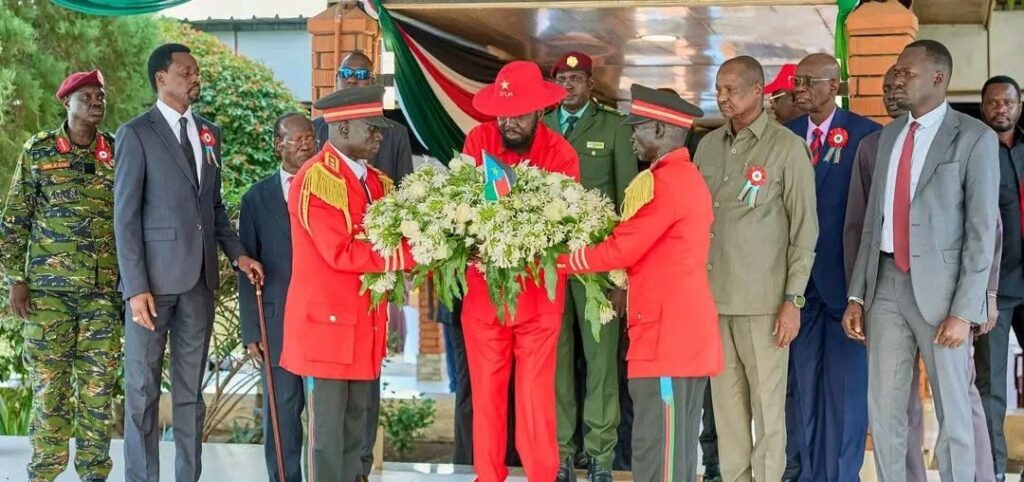
Every nation builds its identity around moments of sacrifice, courage, and collective suffering. These moments are preserved through national commemorations that remind citizens of the struggles that shaped their country’s history. In South Sudan, Martyrs’ Day holds profound significance. It is dedicated to remembering those who gave their lives during decades of struggle for freedom, dignity, and self-determination. It should represent a shared national memory that transcends political parties, ethnic identities, and individual leaders.
However, the continued association of Martyrs’ Day commemorations with the activities of the Sudan People’s Liberation Movement-in-Government (SPLM-IG) raises important questions about the ownership and meaning of national symbols in South Sudan. A day intended to unite citizens around a shared history risks being perceived as a platform for political messaging, party mobilization, and the promotion of a particular political establishment.
A National Day Should Belong to the Nation, Not a Political Party
The central issue is not whether members of the SPLM-IG participate in Martyrs’ Day commemorations. Many leaders and members of the SPLM played significant roles in the liberation struggle, and their contributions form an important part of South Sudan’s history. The concern arises when a national commemoration appears to be organized, controlled, or branded in a manner that suggests ownership by a single political organization.
South Sudan’s martyrs came from diverse backgrounds. They included members of the liberation movement, civilians who suffered during the conflict, and individuals from different communities who sacrificed their lives in pursuit of freedom, justice, and a better future. Their memory belongs to the entire nation—not to one faction, one government, or one political party.
When a ruling party dominates national commemorations, it risks creating the impression that the sacrifices of the martyrs belong primarily to those currently in power. Such an approach undermines the inclusive spirit that national remembrance is intended to embody.
The Difference Between Historical Legacy and Political Ownership
The SPLM’s role in South Sudan’s liberation cannot be denied. The movement led the long struggle that culminated in the country’s independence in 2011. However, historical contribution does not automatically translate into permanent political ownership of national institutions, symbols, or collective memory.
There is an important distinction between recognizing a liberation movement’s historical achievements and allowing a political party to monopolize the national narrative. A mature democracy acknowledges the contributions of liberation movements while ensuring that national identity remains inclusive and belongs equally to all citizens.
Many countries that emerged from liberation struggles have faced similar challenges. Former liberation movements often struggle with the temptation to equate their historic achievements with a permanent mandate to govern. Over time, such thinking can foster political exclusion, weaken democratic institutions, and reduce national symbols to instruments of political legitimacy.
Martyrs’ Day Should Encourage Unity, Not Political Division
A national day of remembrance should provide space for reflection, reconciliation, and unity. It should allow citizens to honor the fallen without feeling that they must belong to a particular political organization to participate fully.
South Sudan continues to grapple with political divisions, armed conflict, displacement, and widespread mistrust among communities. In such an environment, national commemorations should serve as bridges that promote healing rather than as instruments of political competition.
When Martyrs’ Day speeches focus primarily on defending the government, highlighting political achievements, or attacking opponents, the original purpose of the occasion becomes overshadowed. The sacrifices of the martyrs should not be invoked to justify present-day political disputes or shield leaders from public accountability.
The Need for an Inclusive National Commemoration
A more appropriate approach would be to transform Martyrs’ Day into a genuinely national event organized through inclusive state institutions rather than primarily through party structures. Representatives of all political parties, civil society organizations, traditional leaders, religious institutions, youth groups, and local communities should play meaningful roles in its organization and observance.
The government has a responsibility to safeguard the nation’s heritage, but it must do so in a manner that reflects the country’s diversity. Public ceremonies funded by state resources should represent all citizens, not only supporters of the ruling party.
A truly inclusive Martyrs’ Day would honor all those who lost their lives throughout South Sudan’s history, acknowledge the diverse contributions made during the liberation struggle, and promote reconciliation among communities.
The Danger of Turning Sacrifice into Political Capital
The greatest danger of politicizing national remembrance is that it transforms genuine sacrifice into political capital. The names and stories of those who died for freedom should inspire responsibility, humility, and a commitment to public service—not become instruments for preserving political power.
South Sudanese citizens must continue asking themselves: Are we honoring the martyrs by building the nation they envisioned, or are we using their memory to deepen political divisions?
The true legacy of the martyrs should be measured not by ceremonies, speeches, or symbols, but by whether South Sudan moves closer to justice, peace, democracy, equality, and respect for human dignity.
Conclusion
Martyrs’ Day belongs to the people of South Sudan. It is a sacred national remembrance that should unite citizens across political, ethnic, and regional divides. While the SPLM-IG and its members have a legitimate place in commemorating the liberation struggle, no political party should claim exclusive ownership of a history shaped by the sacrifices of countless South Sudanese.
The writer, Aldo Ben, is a South Sudanese political analyst and human rights advocate. He can be reached at: lokonyenaldo@hotmail.com.
The views expressed in ‘opinion’ articles published by Radio Tamazuj are solely those of the writer. The veracity of any claims made is the responsibility of the author, not Radio Tamazuj.

 and then