



Introduction
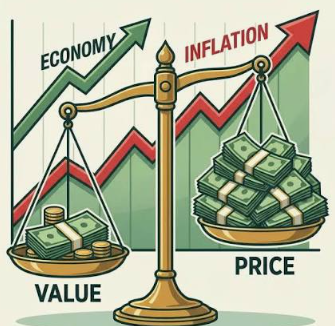
South Sudan’s monetary challenge can be understood primarily through the interaction between its oil-dependent economy, foreign-exchange shortages, exchange-rate depreciation, inflation, and monetary financing. The South Sudanese Pound has experienced substantial depreciation, while the country has also faced a significant gap between the official and parallel foreign-exchange markets. Therefore, the monetary problem is not simply a weak currency; it reflects deeper structural weaknesses in the economy.
The South Sudanese economy is highly dependent on oil. Oil exports generate much of the country’s foreign-exchange earnings and government revenue. Consequently, any disruption to oil production or exports reduces the supply of U.S. dollars in the economy. The International Monetary Fund (IMF) reported that damage to the pipeline carrying a large share of South Sudan’s oil through Sudan sharply reduced oil exports, foreign-exchange inflows, and fiscal revenue. This placed additional pressure on the South Sudanese pound and contributed to inflation.
The goal of monetary policy
The primary goal of monetary policy should be to maintain price and exchange-rate stability while supporting sustainable economic growth. In South Sudan, this requires controlling excessive money creation, managing liquidity in the banking system, maintaining adequate foreign-exchange reserves, and strengthening confidence in the currency.
The relationship between money supply and the exchange rate is particularly important. When the government finances expenditure by creating additional money, the supply of domestic currency increases. If this increase is not matched by growth in production or foreign-exchange earnings, it can contribute to currency depreciation and higher prices. The IMF found that the resumption of monetary financing in late 2023 contributed to sharp exchange-rate depreciation and increased inflationary pressures.
This creates a fundamental monetary challenge: the government needs sufficient resources to finance public expenditure, but excessive monetary financing can undermine the value of the currency and increase inflation.
Oil-oriented countries
Oil-producing countries often have stronger and more stable currencies because oil exports generate substantial foreign-exchange earnings, particularly in U.S. dollars. When a country sells oil in international markets, it receives foreign currency that can be used to pay for imports, build foreign exchange reserves, service external obligations, and support the stability of the domestic currency. As a result, countries with large and stable oil revenues generally face less pressure from foreign exchange shortages.
Saudi Arabia provides an important example. For decades, Saudi Arabia has maintained a fixed exchange-rate relationship between the Saudi riyal and the U.S. dollar. Its large oil-export revenues and substantial foreign-exchange resources have helped support this exchange-rate arrangement. Other oil-producing countries in the Gulf region have also maintained relatively stable currencies, although their exchange-rate arrangements differ. The important point is that their ability to maintain exchange-rate stability is supported by strong foreign exchange earnings, particularly from oil exports.
The relationship between oil exports and monetary stability can therefore be understood through the foreign exchange market. When oil exports are strong, the country receives more U.S. dollars and other foreign currencies. This increases the availability of foreign exchange and reduces pressure on the domestic currency. If the country also maintains fiscal discipline, controls inflation, and accumulates adequate foreign exchange reserves, it becomes easier to maintain a stable currency.
However, oil production by itself does not guarantee a strong currency. A strong and stable currency is more likely when oil revenues are stable, foreign exchange reserves are sufficient, inflation is controlled, and fiscal and monetary institutions are credible. The management of oil revenues is therefore as important as the existence of oil resources.
For South Sudan, oil creates a particularly strong connection between the external sector and monetary stability. When South Sudan successfully exports oil, it receives foreign currency, mainly U.S. dollars. This increases the availability of foreign exchange and can reduce pressure on the South Sudanese pound. However, when oil production or exports decline, the supply of dollars falls. The resulting foreign exchange shortage puts downward pressure on the SSP.
The relationship can therefore be summarized as:
Lower oil exports → lower dollar inflows → foreign-exchange shortage → SSP depreciation → higher import prices → inflation.
This relationship demonstrates why South Sudan’s monetary stability is highly vulnerable to shocks in the oil sector. A disruption to oil production, transportation, or exports can quickly become a monetary problem because it reduces both government revenue and the supply of foreign currency.
At the same time, South Sudan’s experience demonstrates that oil wealth does not automatically translate into monetary stability. Oil revenues must be supported by strong institutions, prudent fiscal management, adequate foreign-exchange reserves, and effective monetary policy. If oil revenues are poorly managed or government expenditure becomes heavily dependent on oil income, a decline in oil production can produce a fiscal crisis, foreign-exchange shortage, currency depreciation, and inflation.
The key lesson for South Sudan is therefore not simply that the country needs more oil production. Rather, it needs to manage oil revenues in a way that strengthens monetary stability while using oil income to develop other productive sectors of the economy. Building agriculture, manufacturing, infrastructure, and services would reduce the country’s dependence on oil and make the currency less vulnerable to oil-sector shocks.
Export-oriented countries
Export-oriented economies may sometimes pursue policies that maintain a relatively competitive exchange rate because a weaker domestic currency can make their goods and services less expensive in international markets. When exports become more competitive, foreign demand may increase, generating foreign-exchange earnings, supporting domestic production, and creating employment.
Japan provides an important historical example. During its period of rapid industrialization and export-led growth, Japan benefited from a competitive exchange rate that supported the international competitiveness of its manufacturing industries. Japanese companies became major exporters of automobiles, electronics, machinery, and other manufactured goods. The strategy contributed to Japan’s transformation into one of the world’s leading industrial economies.
China later developed a similar export-oriented model, although its exchange-rate policy and economic structure have been different from Japan’s. For many years, China maintained a managed exchange-rate system in which the government played an important role in determining the value of the renminbi. A relatively competitive exchange rate, together with low production costs, investment in manufacturing, infrastructure development, and access to global markets, helped Chinese producers compete internationally.
However, this approach has limitations for South Sudan. Unlike a diversified manufacturing-based export economy, South Sudan depends heavily on oil while importing many essential goods. Therefore, depreciation of the SSP can have a particularly damaging effect.
A weaker currency makes imported food, fuel, medicine, machinery, and other products more expensive. Consequently, although depreciation can theoretically improve export competitiveness, in South Sudan it can simultaneously generate imported inflation and reduce household purchasing power.
Therefore, South Sudan cannot rely on currency depreciation as an export strategy without considering its inflationary consequences. The benefits of a weaker currency are also limited when the country’s export base is narrow and dominated by a single commodity.
Implications of currency depreciation
The depreciation of the South Sudanese pound has several important economic implications.
First, it increases the cost of imports. Since many goods consumed in South Sudan are imported, depreciation immediately raises their domestic prices.
Second, it contributes to inflation and declining real incomes. When prices rise faster than wages, households can purchase fewer goods and services with the same amount of income. This reduces living standards and places particular pressure on low-income households.
Third, exchange-rate instability creates uncertainty for businesses and investors. Businesses have difficulty determining future costs, prices, and profits when the exchange rate changes rapidly. This uncertainty can discourage investment and make long-term economic planning more difficult.
Fourth, a large difference between the official and parallel exchange rates can encourage informal foreign exchange activity. This reduces confidence in the official market and makes monetary policy more difficult to implement.
The scale of the problem has been substantial. The IMF reported that South Sudan’s parallel exchange rate depreciated sharply during 2024, while inflation also increased significantly. The IMF linked these developments to reduced foreign exchange inflows, oil-export disruptions, and monetary financing.
The broader implication is that exchange-rate instability can become self-reinforcing. Currency depreciation raises the price of imports, higher import prices increase inflation, and higher inflation can further weaken confidence in the domestic currency. This creates additional demand for foreign currency and can place further pressure on the SSP.
The central monetary dilemma
South Sudan therefore faces a difficult policy dilemma. If the government allows the currency to depreciate, exports may become more competitive, but imported goods become more expensive. If the government attempts to defend the exchange rate by selling scarce foreign exchange reserves, it may quickly deplete those reserves.
Similarly, if the government finances its expenditures through money creation, it may temporarily provide resources for government spending. However, excessive monetary financing can increase inflation and accelerate currency depreciation.
The challenge is therefore to establish a balance between monetary stability, fiscal sustainability, exchange-rate flexibility, and economic growth.
This dilemma is particularly serious because monetary policy cannot solve a structural fiscal problem itself. If government expenditure consistently exceeds available revenue and the deficit is financed through monetary expansion, pressure on the currency and prices is likely to continue. Consequently, monetary reform must be accompanied by fiscal discipline.
Policy implications
An effective response requires more than simply attempting to make the SSP stronger. South Sudan needs to address the underlying causes of monetary instability.
The government should limit monetary financing of fiscal deficits, strengthen the independence and effectiveness of monetary policy, improve foreign exchange-market operations, and work toward a more unified exchange-rate system. The IMF has emphasized tight monetary policy, limiting monetary financing, liquidity management, and reducing the gap between official and parallel foreign-exchange markets.
South Sudan should also strengthen its foreign-exchange reserves when oil revenues permit. Adequate reserves can provide a buffer against external shocks and reduce the need for abrupt exchange-rate adjustments.
More importantly, the country needs to reduce its dependence on oil. Greater development of agriculture, livestock, manufacturing, mining, and services could create alternative sources of employment, exports, government revenue, and foreign exchange. Economic diversification would reduce the vulnerability of monetary policy to disruptions in oil production and transportation.
Conclusion
South Sudan’s monetary challenge is fundamentally a structural problem rather than simply an exchange-rate problem. The country’s dependence on oil makes foreign-exchange availability highly sensitive to disruptions in oil production and exports. When dollar inflows decline, the SSP comes under pressure; depreciation then raises import prices and contributes to inflation.
The central challenge is therefore to prevent a cycle in which declining foreign exchange earnings lead to currency depreciation, depreciation leads to higher inflation, and inflation further undermines confidence in the currency.
A sustainable monetary strategy should combine credible monetary policy, responsible fiscal management, a functioning foreign-exchange market, adequate foreign-exchange reserves, and economic diversification. In the long run, strengthening the productive capacity of the non-oil economy will be essential for improving monetary stability and reducing South Sudan’s vulnerability to external shocks.
The writer is a business executive, former Deputy Chief Administrator of the Government of the Greater Pibor Administrative Area (GPAA), and former mortgage banker at one of the largest banks in the United States. His professional experience spans public administration, banking, finance, and business leadership. He can be reached via pochalla@yahoo.com.
The views expressed in ‘opinion’ articles published by Radio Tamazuj are solely those of the writer. The veracity of any claims made is the responsibility of the author, not Radio Tamazuj.
References
Bank of South Sudan. (n.d.). Monetary policy and foreign exchange information. Bank of South Sudan.
International Monetary Fund. (2024a). South Sudan: 2024 Article IV consultation and second review under the Staff-Monitored Program with Executive Board involvement. IMF Country Report No. 24/327. International Monetary Fund.
International Monetary Fund. (2024b, November 22). IMF discusses third review of staff-monitored program and Board involvement with South Sudan. International Monetary Fund.
International Monetary Fund. (2024c). South Sudan: Staff report for the 2024 Staff-Monitored Program. IMF Country Report No. 24/160. International Monetary Fund.
International Monetary Fund. (2025, June 20). IMF and South Sudan reach agreement on a nine-month Staff-Monitored Program. International Monetary Fund.
Republic of South Sudan, Ministry of Finance and Economic Planning. (n.d.). Economic and fiscal reports. Government of the Republic of South Sudan.
World Bank. (2024). South Sudan Economic Update. World Bank.

 and then