



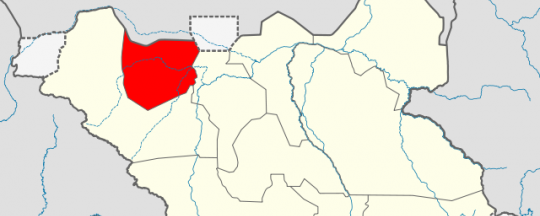
Residents of Northern Bahr el Ghazal State say they want to elect leaders who can improve public services and promote development after the country’s December elections.
The comments come as South Sudan prepares for presidential and parliamentary elections scheduled for Dec. 22, after President Salva Kiir dissolved the transitional government on Sept. 22 and appointed a caretaker administration.
Abraham Thuou, a resident of Northern Bahr el Ghazal, told Radio Tamazuj on Wednesday that voters want leaders who would focus on delivering services to local communities.
“In the upcoming elections, we want to elect politicians who will meet people’s interests because we need service-oriented officials at this time, not the ones who will occupy the offices without doing anything,” Thuou said.
“We don’t have good roads, hospitals and schools, and we strongly recommend the upcoming elected leaders to prioritise improvement of these issues,” he added.
Thuou also called on future leaders to extend government services beyond the capital, Juba, to communities across the country.
“We don’t want them also to cling to power later on and run everything at the Juba level, but they must extend the services to the grassroots,” he said, referring to the late South Sudanese leader John Garang’s policy of taking services to the people.
Awut Kuel Kuel, an SPLM member in the state, urged politicians seeking re-election to consider their record in serving their constituencies.
“Any former elected official knows whether they have achieved in favour of their constituencies or not, and the citizens will decide whether to vote them into office or not. If they did, they will be re-elected, and if not, they will go home,” she said.
Kuel Kuel also called for a smaller number of lawmakers at the state and national levels, saying this could allow more resources to be directed towards public services.
Ali Deng, a local analyst, said elections are a constitutional right but questioned what the country’s leaders had achieved since South Sudan gained independence from Sudan in 2011.
“The elections drive is a constitutional right in every country, but we have to ask ourselves what we have achieved for the people of South Sudan since our independence,” Deng said.
“There are no improvements in health, education, the economy or political and security stability,” he added.
 and then