



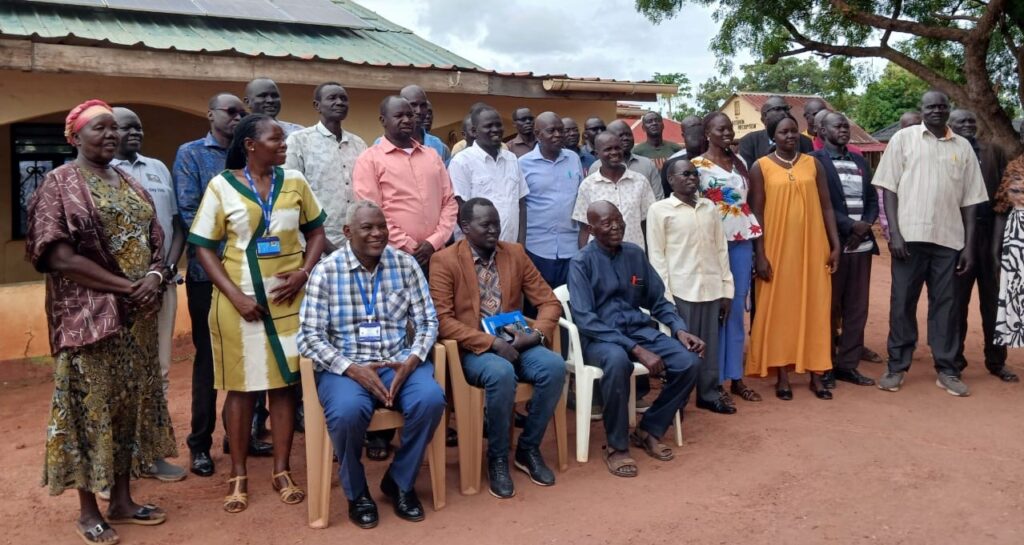
The United Nations Mission in South Sudan (UNMISS) has trained more than 50 government officials, civil society representatives, women and youth groups, faith-based organisations and other stakeholders in Lakes State on the implementation and oversight of Quick Impact Projects (QIPs).
The two-day training, which ended on Tuesday in Rumbek, focused on strengthening local ownership, accountability and sustainability in projects supported by UNMISS.
Henry Sambai of UNMISS’s Protection, Transition and Reintegration office said QIPs are an important tool for delivering services and peace dividends to communities.
“We are glad that we are part of the government endeavours and part of bringing joy and support to the communities,” Sambai said.
He said participants had agreed to establish an oversight committee chaired by the South Sudan Relief and Rehabilitation Commission (SSRRC) to monitor project implementation.
Agum Joseph Kuc, chairperson of the Lakes State Women’s General Association, said the training had improved her understanding of how groups could apply for QIP support.
“We did not understand it the way we understand it now. Otherwise, we would have implemented a lot of it,” she said.
Peter Gum Ater, director general of the state Ministry of Social Development and Child Welfare, said the training had clarified the roles of government and implementing partners.
Hakim Cipuounyuc Awur, executive director of the Disabled Association for Rehabilitation and Development, welcomed the creation of a locally led oversight structure.
“We as civil society organisations, as well as implementing partners, are very proud of this particular workshop,” Awur said.
Degur Makuac, executive director of Wulu County, said the training had helped government officials and partners better understand their responsibilities in implementing projects in local communities.
“Each and everyone now knows his or her role in any project that is going to be implemented in the community or in the county,” he said.

 and then