



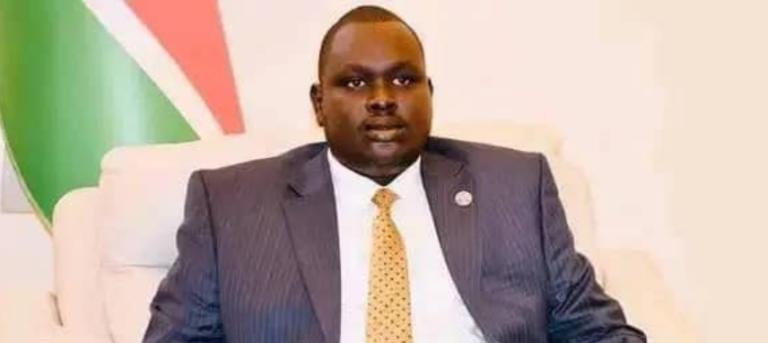
Recent remarks attributed to Dr. Akol Paul Kordit, Secretary General of the Sudan People’s Liberation Movement (SPLM), suggesting that communities could “survive without hospitals” as they did in earlier generations, have ignited intense debate across South Sudan. Framed as a reflection on resilience and historical survival, the comment has resonated far beyond political rhetoric. In a nation where healthcare remains fragile and heavily donor dependent, such statements raise deeper questions about leadership, national responsibility, and the future direction of South Sudan’s health system. With the country preparing for the long anticipated elections scheduled for 22 December 2026, the implications of these remarks deserve careful reflection.
Across the world, the trajectory of human progress has been closely linked to advances in medicine and public health. Before modern healthcare systems emerged in the twentieth century, life expectancy in many parts of the world rarely exceeded 40 years, largely due to infectious diseases, poor sanitation, and limited medical knowledge. The global picture today is very different. According to the World Health Organization, global life expectancy now averages about 73.5 years, although major disparities persist between regions. In Monaco, life expectancy is projected at 87 years, while in Nigeria it stands at around 55 years, representing a striking 30-year gap. Data from Eurostat shows life expectancy in the European Union reaching 81.5 years in 2024, while Japan leads the Asia Pacific region with a projected 85.15 years by 2026. Projections from the European Commission indicate that global life expectancy could rise further to 78.2 years by 2050, adding nearly five more years to the average human lifespan.
Much of this progress has been driven by breakthroughs in vaccines, antibiotics, sanitation systems, and modern hospital infrastructure. Joint assessments by the World Health Organization and the United Nations Children’s Fund in 2025 estimate that vaccination campaigns alone have saved more than 150 million lives over the past five decades. Early childhood immunization has been particularly transformative and has helped reduce global child mortality by more than 50 percent over the last 25 years. Annual child deaths have declined from around 11 million to approximately 4.8 million worldwide. Medical innovation continues to accelerate. Advances in mRNA vaccines, the introduction of respiratory syncytial virus maternal vaccines, and developments in genomic medicine are reshaping disease prevention and treatment throughout the human lifespan.
Despite these achievements, the benefits of modern healthcare remain unevenly distributed, particularly in fragile and developing states where health systems remain underfunded and overstretched. The world is also entering a new technological phase in which artificial intelligence driven medical platforms can diagnose diseases through mobile devices, expand telemedicine to rural communities, and help predict disease outbreaks before they spread. These innovations could prove especially important for countries with large rural populations and limited numbers of doctors, conditions that closely describe South Sudan.
Within this broader context, South Sudan’s healthcare situation remains deeply concerning. According to the World Health Organization Health Observatory and findings from the EQUAL Research Consortium, the country’s maternal mortality ratio stands at approximately 1,223 deaths per 100,000 live births in the latest 2025 to 2026 estimates, one of the highest levels recorded globally. Child survival indicators reveal a similarly troubling picture. Data from the United Nations Children’s Fund and the World Health Organization South Sudan Health Observatory indicate that the under five mortality rate is about 98.69 deaths per 1,000 live births. This means that nearly one in ten children dies before reaching their fifth birthday.
These outcomes reflect deep structural weaknesses within the national health system. Public investment remains critically low. Reports indicate that the Ministry of Health received only about 1.3 percent of the national budget in February 2026, a decline from the already modest allocation of approximately 2 percent during the 2022/2023 fiscal period. This falls dramatically short of the 15 percent target set under the African Union’s Abuja Declaration on HIV/AIDS, Tuberculosis and Other Related Infectious Diseases.
As a consequence, South Sudan’s healthcare sector has become heavily dependent on external assistance. Assessments by WomenLift Health estimate that donor partners finance roughly 85 percent of healthcare services nationwide. This dependence reflects a deeper structural vulnerability in which the survival of hospitals, clinics, and essential health programs is closely tied to the priorities and funding cycles of international partners. As global aid budgets tighten and geopolitical priorities shift, the fragility of this model becomes increasingly evident.
It is within this context that the remarks attributed to Dr. Akol Paul Kordit must be understood. Dr. Akol Paul may have been expressing frustration with long standing aid dependency. Many post conflict states face a similar dilemma. Humanitarian assistance saves lives but can also weaken domestic accountability if governments fail to gradually assume responsibility for essential public services. Countries such as Afghanistan and Somalia have struggled with the same challenge.
However, there is an important difference between encouraging national self-reliance and suggesting that societies can function without modern healthcare infrastructure. Communities did rely on traditional medicine before hospitals existed, and many indigenous practices still hold cultural value. History also demonstrates the limits of those systems. Before modern medicine, diseases such as malaria, cholera, and tuberculosis killed millions of people worldwide every year. Even today malaria remains the leading cause of illness and death in South Sudan, particularly among children and pregnant women.
The debate surrounding Dr. Akol Paul Kordit’s remarks reflects a larger leadership question. South Sudan is rich in oil resources, yet essential public services including healthcare, education, and water infrastructure remain chronically underfunded. The central issue should not be whether communities can survive without hospitals. The real challenge is whether the nation’s leadership is prepared to transform resilience into responsibility and ensure that citizens can live longer, healthier, and more dignified lives.
The writer, Bec George Anyak, is a former Deputy Minister of Finance and Planning of South Sudan. He is also a Ph.D. student at the University of Nairobi in Kenya and an associate researcher at The Sudd Institute.
The views expressed in ‘opinion’ articles published by Radio Tamazuj are solely those of the writer. The veracity of any claims made is the responsibility of the author, not Radio Tamazuj.

 and then