



As South Sudan marks its fifteenth anniversary of independence on July 9, 2026, the country stands at a crossroads. This is a time not only to reflect on its progress and failures but also to consider how to move forward by learning lessons and insights from other African countries that have faced similar challenges.
South Sudan’s journey since its independence in 2011 is neither a complete failure nor a convincing success. No doubt, independence brought sovereignty, but building a nation and a functioning state after more than two decades of civil war (1983–2005) requires more than raising a flag, adopting a national anthem, and gaining membership in regional and international organizations. It requires strong institutions, accountable leadership, national unity, and equal economic opportunities. These foundations should have been established through capable and visionary leadership that made bold choices to realize the aspirations of the people after a hard-fought independence.
South Sudan is often compared to countries with decades of stability and development, especially Western countries. A fairer comparison, however, is with African countries during their early years of independence. Botswana, Ghana, and Rwanda each faced significant challenges and followed different political and economic paths. While none offers a perfect blueprint for South Sudan, each provides valuable lessons.
For instance, Botswana gained independence in 1966 as one of the world’s poorest countries. Its leaders invested in strong institutions, upheld the rule of law, and managed natural resources with the country’s long-term interests in mind. Botswana’s greatest achievement was not simply discovering diamonds, but building institutions and a legal framework capable of managing that wealth responsibly for the benefit of its citizens.
Ghana’s experience shows that nation-building is rarely a straightforward process. Its independence in 1957 brought great hope, but it was followed by political instability, economic hardship, and military coups. Over time, however, political and economic reforms strengthened Ghana’s democratic institutions, demonstrating that early failures do not have to define a nation’s future.
Rwanda, on the other hand, offers a different lesson. After the 1994 genocide, the country rebuilt state institutions, restored public services, and promoted shared national principles and goals. While some aspects of Rwanda’s political system, particularly its model of governance, remain widely debated, few dispute its emphasis on competent leadership, a developmental vision, effective public administration, and long-term planning focused on improving people’s lives. These efforts helped the country recover, heal, and reconcile after the genocide.
South Sudan’s situation is different. It has been shaped by decades of civil war, political and ethnic divisions after independence, a lack of visionary leadership, inadequate economic and financial planning, and continuing political and security crises. These factors help explain many of the country’s difficulties, but they do not justify corruption, weak institutions, or the failure to provide basic services to ordinary South Sudanese.
The question, therefore, is not whether South Sudan should copy the models of Botswana, Ghana, or Rwanda. Every country must choose its own path. The real question is whether South Sudan is willing to learn from both the successes and failures of these countries.
The next fifteen years should be less about political competition and the struggle for power, state resources, and control, and more about institutional transformation. This means strengthening the rule of law, investing in education and healthcare, diversifying the economy beyond oil, creating employment opportunities for young people, empowering women, and building public institutions that serve citizens rather than the interests of political elites.
South Sudan’s greatest resource is not its oil, its land, or its rivers. It is its people. If the country can harness the talent and resilience of its people through strong institutions and accountable leadership, it can chart a different course over the next fifteen years. That story can be very different from the first fifteen years, which were largely consumed by conflict and struggles over who controls the country.
The future of South Sudan will not be determined by the struggles of its past. It will be determined by whether it has the courage to learn, the humility to reform, and the vision to build a country that future generations will be proud to inherit.
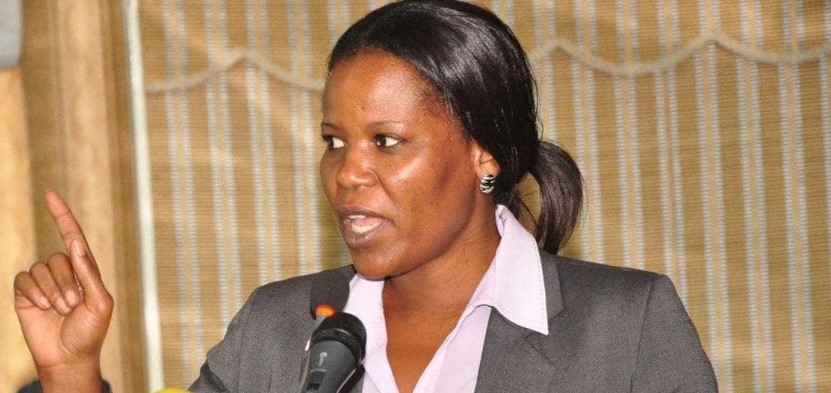
The author, Lilian Riziq is a renowned social justice activist and a leading figure in South Sudan’s women’s movement. Her work focuses on advancing gender equality, fostering peace, and promoting social justice throughout South Sudan.
The views expressed in ‘opinion’ articles published by Radio Tamazuj are solely those of the writer. The veracity of any claims made is the responsibility of the author, not Radio Tamazuj.

 and then