



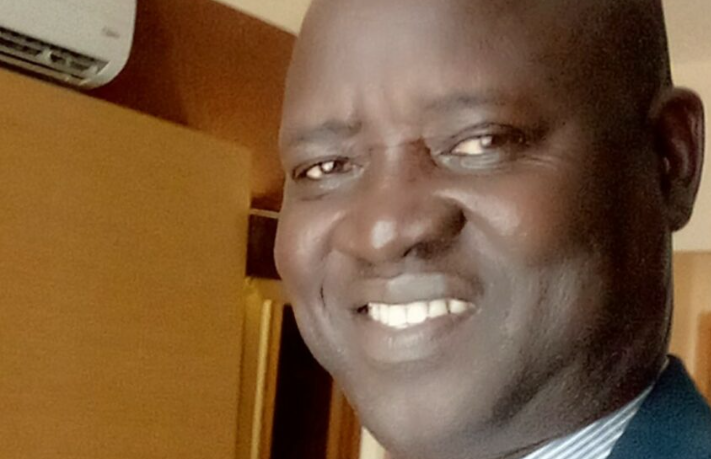
Tijwog Agwet, a senior founding member of the main opposition party, the Sudan People’s Liberation Movement/Army-In Opposition (SPLM/A-IO), has resigned, saying the movement has abandoned the democratic reform agenda on which it was founded.
Agwet’s departure comes as the SPLM-IO faces deep internal divisions following the detention of its leader and First Vice President, Riek Machar, and amid renewed tensions that have further strained the fragile 2018 peace agreement.
The SPLM-IO is a principal signatory to the 2018 Revitalized Agreement on the Resolution of the Conflict in South Sudan (R-ARCSS), which established the transitional unity government. Machar was suspended and detained in March 2025 and is being tried by a special court in Juba over allegations linked to the fighting in Nasir.
His detention triggered a split within the SPLM-IO. One faction based in Juba is led by Peacebuilding Minister Stephen Par Kuol, while another, operating largely from exile, is headed by the party’s deputy chairperson, Oyet Nathaniel Pierino.
Speaking to Radio Tamazuj on Tuesday, Agwet said he had resigned from the SPLM/A-IO with immediate effect after concluding that the movement had “steadily eroded” the principles that originally inspired its formation.
“I officially resigned from the SPLM led by Salva Kiir on Dec. 30, 2013, believing we were building a better SPLM that stood for democratic transformation, institutional reform, justice, accountability and a better future for South Sudan,” Agwet said.
He said he was among the senior politicians who helped establish the SPLM-IO in 2014 alongside Machar, Lado Gore, Gen. Taban Deng Gai and Gen. Gathoth Gatkuoth.
“Sadly, this movement has also drifted away from those ideals, becoming an ethnic and family property rather than a national movement,” he said.
Agwet, a former presidential adviser on religious affairs, said he had submitted his resignation to Machar despite the latter’s detention because he did not recognise either of the rival SPLM-IO factions.
“I supported the interim leadership believing it would serve for only 60 days as provided for in the party constitution, but it has evolved into what is effectively a one-man party,” he said, referring to the faction led by Stephen Par.
He accused the exiled faction led by Oyet of undermining peace efforts by supporting armed resistance while simultaneously demanding Machar’s release.
“As for Oyet, he is taking the country back to war while demanding the release of Machar from a government his forces are fighting. That is ironic,” Agwet said.
Agwet said he had not yet decided on his next political affiliation.
“My loyalty has always been to the people of South Sudan and to the principles of good governance. Remaining in a political organisation that has lost its ideological compass would amount to compromising my own convictions,” he said.
Asked whether his resignation was linked to renewed violence in Upper Nile State, Agwet said his decision stemmed from longstanding concerns over the movement’s direction rather than recent fighting.
He reiterated his support for Machar’s release and called for the full implementation of the 2018 peace agreement.
“My resignation is made in good faith, without bitterness or personal hostility toward any individual,” he said. “South Sudan deserves leaders and institutions that are visionary, democratic, accountable and responsive to the needs of its citizens.”

 and then