



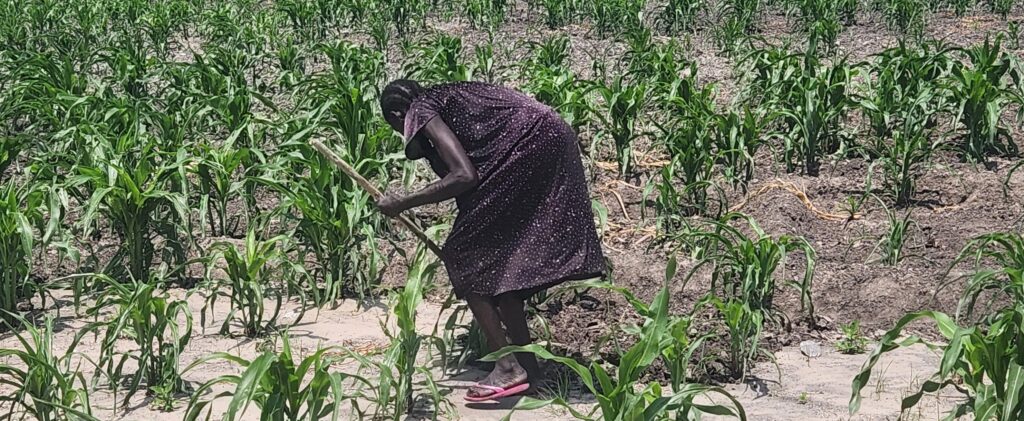
Nearly 5,000 people displaced for years by devastating floods have returned to their homes in Rubkona County, Unity State, after flood protection dikes reclaimed land that had remained submerged, allowing families to rebuild their lives and resume farming.
The returnees have gone back to Pakur Boma and neighbouring villages after the construction of protective dikes under the World Bank-funded Enhancing Community Resilience and Local Governance Project Phase II (ECRP-II), which also restored roads, schools, health facilities and water points.
William Kuon, a father of several children, told Radio Tamazuj that his family spent almost seven years displaced after floodwaters forced them from their home.
“When we fled because of the floods, we had nowhere to stay,” Kuon said. “We depended on relatives and humanitarian food assistance. Life was very difficult after the food ran out.”
Now back on reclaimed land, Kuon has resumed farming while his children attend school near their home.
“If we get a good harvest, we will no longer depend on aid,” he said. “We want to provide for our families again.”
South Sudan has endured years of severe flooding, particularly in Unity State, where recurring floods linked to heavy rainfall and rising water levels have displaced hundreds of thousands of people, destroyed farmland and livestock, and deepened humanitarian needs.
According to Riak Loang Wicyoak, chairperson of the Rubkona Payam Disaster Risk Management Committee, about 4,850 people have returned to Pakur and surrounding villages since the dikes were completed.
“The floods destroyed our homes, farms and livelihoods,” Loang said. “After the land was reclaimed, people started coming back because they could rebuild their lives.”
He said the project had also improved access to basic services by bringing roads, clean water, schools and a primary healthcare unit closer to communities that had previously travelled long distances to reach them.
The ECRP-II project, launched in 2022, is funded by the World Bank and implemented by the South Sudanese government in partnership with the International Organization for Migration (IOM). It aims to improve access to essential services while strengthening communities’ resilience to recurrent flooding and other climate-related shocks.
Pakur Boma chief Tutdel Jal Char said the area had been almost entirely submerged before the dikes were built.
“When the flooding came, this whole area was underwater,” Char said. “People fled because they had nowhere to live. After the dike was built, they returned.”
He said improved roads now allow farmers to transport produce more easily to markets in Rubkona and Bentiu, while children and patients have easier access to schools and health facilities.
Education has also improved, residents said.
Before new classrooms were constructed at Denjaak Primary School, pupils studied under trees and in temporary shelters, discouraging many parents from enrolling their children.
Head teacher Mead Dak Mead said enrolment had risen from fewer than 70 pupils before construction to 786.
“We now have proper classrooms, and attendance has improved significantly,” he said. “Parents are bringing their children back because they can see the difference.”
Mathiang Wadar Mead Gawar, a senior student at Naam Secondary School, said he previously travelled several hours to attend school in Bentiu but now walks about 30 minutes.
“We have classrooms and desks, and learning has become much easier,” he said.
Bentiu Mayor Nyachieng Biey Tuet said the investments were helping communities recover after years of conflict and repeated flooding.
“A community cannot develop without roads, schools, clean water and health facilities,” she said. “These projects are improving the lives of our people.”
Despite the progress, residents said large areas remain underwater, preventing more displaced families from returning. Community leaders are calling for additional flood protection works, agricultural support and further investment in schools and health facilities to sustain the recovery.
For Kuon, returning home represents more than rebuilding a house.
“It means our children can have a future here,” he said. “We have hope again.”

 and then