



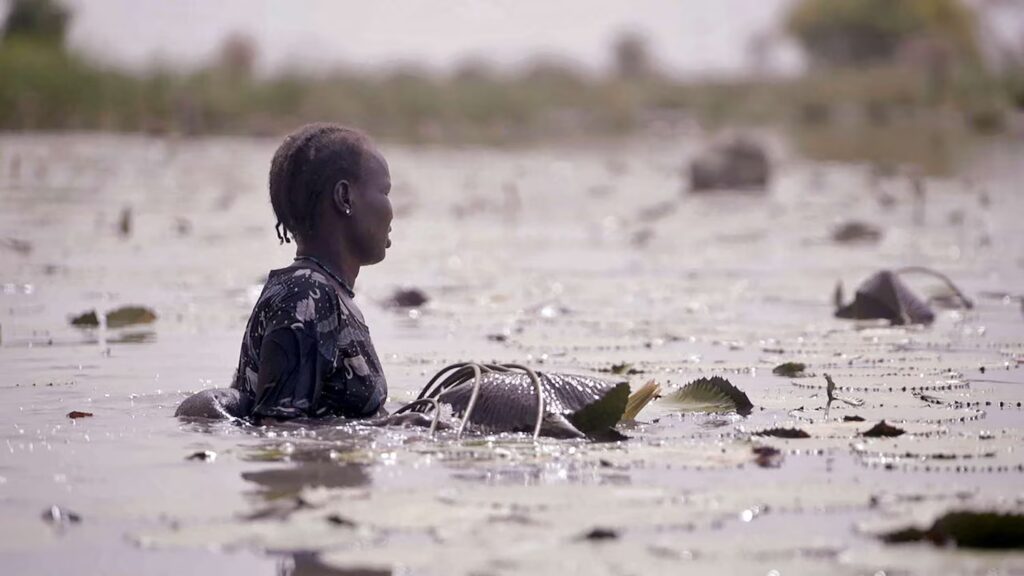
As the world marks World Environment Day 2026, humanity stands at a defining moment. Across continents, the warning signs of climate change are becoming impossible to ignore. Record-breaking temperatures, devastating floods, prolonged droughts, collapsing ecosystems, biodiversity loss, and increasingly extreme weather events are no longer distant forecasts discussed in scientific journals or international conferences—they are today’s reality. For South Sudan, they represent a daily struggle for survival.
While world leaders gather in climate summits to negotiate emissions targets and adaptation frameworks, millions of South Sudanese are confronting climate change in its harshest form: submerged homes, destroyed livelihoods, dying livestock, lost harvests, contaminated water sources, and entire communities displaced by forces beyond their control.
This is one of the greatest injustices of our time. South Sudan contributes less than 0.01 percent of global greenhouse-gas emissions, making it one of the least responsible nations for global warming. Yet, according to international climate vulnerability assessments, it remains among the countries most exposed to climate-related disasters. The people paying the highest price are those who contributed almost nothing to the crisis.
Across the vast floodplains of Jonglei, Unity, Upper Nile, Lakes, Warrap, and Northern Bahr el Ghazal States, climate change is radically reshaping lives, livelihoods, and landscapes. What were once seasonal floods have evolved into multi-year disasters. In communities such as Ayod, Fangak, Old Fangak, Canal/Pigi, Twic East, Pibor, Leer, Mayendit, Rubkona, Bentiu, and Malakal, floodwaters have remained for months—and, in some places, years.
The numbers are staggering. Humanitarian assessments indicate that recurrent flooding has affected between one and two million South Sudanese annually in recent years, making it one of Africa’s largest climate-induced displacement crises. Hundreds of thousands have been forced from their homes, vast tracts of agricultural land have become unusable, and entire communities have been turned into isolated islands.
Statistics, however, cannot capture the raw human reality behind this crisis. The lived experiences of those on the front lines paint a harrowing picture:
Mary Nyagatkuth (Unity State): “The floods that once arrived and receded with the seasons now dominate the landscape around our community. Farmland and grazing areas have vanished beneath rising waters. We survive on fish and water lilies. Every day we fear snake bites because the water is everywhere and they come into our living areas. We have learned to live with that fear because we have no alternative.”
Achol Makuach (Jonglei State): “I lost everything I had known—my cattle, poultry, goats, my house, my crops, and even the cereals I had already harvested. Everything was taken by the floods.”
In South Sudan, cattle are far more than economic assets; they are stores of wealth, sources of food security, symbols of social identity, and the foundation of rural life. Losing them means losing an entire economic future—similarly, the destruction of stored grain compounds the tragedy. For many households, harvested cereals determine whether a family survives the lean season. When floodwaters wash them away, hunger quickly follows.
“For six years, we have been living in water. We defecate in water. We fish in water. We bathe in water and sleep in water. We drink the same water because we have no choice. We are not living differently from wild animals.”
His words expose an environmental and humanitarian catastrophe that rarely receives sustained international attention. Children who should be learning are instead navigating floodwaters by canoe; mothers who should be cultivating crops are searching desperately for dry ground; and pastoralists watch helplessly as their herds succumb to disease, starvation, and drowning. For many communities, the flood season no longer ends.
The consequences of this crisis extend far beyond immediate humanitarian suffering. Floodwaters contaminate drinking-water sources, driving outbreaks of cholera, malaria, and diarrheal diseases. Schools and health facilities have become inaccessible. Humanitarian agencies are increasingly forced to rely on expensive air operations and river transport to reach isolated populations, spending millions of dollars annually responding to emergencies that proactive climate adaptation measures could have prevented.
Yet, flooding represents only one chapter of South Sudan’s environmental crisis. Away from the floodplains, another disaster is unfolding across the country’s forests.
South Sudan possesses some of East Africa’s most vital natural resources, including approximately 71,570 square kilometers of forest cover, with broader woodland ecosystems extending across more than 207,000 square kilometers. More than 90 percent of the population depends directly on these forests for food, medicine, shelter, and income.
Forests in South Sudan are not luxuries; they are life-support systems. Fuelwood and charcoal account for nearly 80 percent of the country’s energy consumption. Every day, millions depend on trees simply to cook meals and sustain their families.
However, these forests are disappearing at an alarming rate due to unsustainable charcoal production, illegal logging, agricultural expansion, population pressures, and weak environmental governance.
Deforestation, therefore, is not merely an environmental issue. It is a development issue, a public health crisis, a driver of poverty, a gender inequality issue, and increasingly, a national security threat.
Ironically, South Sudan remains one of the most ecologically significant countries on the African continent. In 2024, scientific surveys confirmed that the Boma-Badingilo ecosystem supports the largest known terrestrial mammal migration on Earth. Approximately six million white-eared kob, tiang antelope, and Mongalla gazelle move across this vast landscape every year—a migration that rivals and, by some measures, surpasses the world’s most celebrated wildlife spectacles.
This remarkable discovery elevated South Sudan’s global conservation importance. The Boma-Badingilo ecosystem is not merely a national treasure; it is a global environmental asset whose protection matters to humanity as a whole. Yet, this extraordinary ecosystem faces mounting threats from habitat fragmentation, infrastructure expansion, illegal hunting, and chronic underinvestment in conservation. Without urgent intervention, one of the planet’s greatest natural wonders could be lost.
South Sudan is not without the legal and policy frameworks designed to protect its natural heritage. The nation’s commitment to environmental stewardship is explicitly outlined on paper:
- The Transitional Constitution: Obliges the State to safeguard the environment for present and future generations.
- The Land Act of 2009 provides a legal framework for sustainable land governance and community resource management.
- The Forest Policy of 2015 promotes sustainable forestry practices and conservation.
- National Frameworks: Includes the National Biodiversity Strategy and Action Plan alongside targeted climate adaptation policies.
In practice, however, implementation remains a monumental challenge. Decades of conflict, institutional fragility, inadequate financing, shortages of technical expertise, and competing national priorities have severely weakened environmental governance. Environmental agencies frequently lack the personnel, equipment, transport, monitoring systems, and operational resources necessary to protect vast landscapes and enforce regulations.
The result is a widening, dangerous gap between environmental commitments and environmental realities—and climate change is making that gap increasingly perilous.
Scientific projections suggest that East Africa will continue to experience greater climate variability, including more intense rainfall events, prolonged dry spells, and rising temperatures. For South Sudan, where the vast majority of citizens depend directly on climate-sensitive livelihoods, the stakes are existential.
Climate change has become a threat multiplier. It magnifies every existing vulnerability: environmental shocks deepen food insecurity; resource scarcity exacerbates localized tensions; climate-induced displacement strains fragile systems of governance; and widespread livelihood loss fuels regional instability.
This reality must command the attention of the international community. South Sudan’s experience exposes a profound moral contradiction within the global climate system: countries that contributed the least to atmospheric carbon accumulation suffer the most severe consequences, while the nations that benefited from centuries of carbon-intensive industrialization possess the wealth and resources to adapt.
Climate justice cannot remain a slogan repeated in conference halls; it must become a measurable, actionable commitment. It must manifest as:
- Targeted climate finance and technology transfers.
- Robust adaptation investments and functional loss-and-damage mechanisms.
- Scaled-up funding for flood-control infrastructure and climate-resilient agriculture.
- Expanded investments in renewable energy, ecosystem restoration, and community-led adaptation.
The cost of action is undeniable, but the cost of inaction is far greater. Every village swallowed by floodwaters, every forest lost to degradation, every child displaced from school, and every livelihood washed away are not isolated tragedies. They are warning signals from a planet under profound stress.
As the world observes World Environment Day 2026, South Sudan offers a powerful reminder that climate change is not tomorrow’s problem—it is today’s emergency. The resilience of the South Sudanese people has been extraordinary; communities have constructed dykes with their bare hands, relocated settlements, and adapted with extremely limited resources. But resilience is not an infinite resource. Communities cannot be expected to endlessly adapt to a crisis they did not create.
The waters continue to rise. The forests continue to shrink. The risks continue to grow. The question facing humanity is no longer whether climate change is real, but whether the world is prepared to act with the urgency, solidarity, and justice that this crisis demands. For South Sudan, the answer cannot come soon enough.
Stephen Dhieu Kuach, PhD, is a South Sudanese governance and public policy expert, researcher, environmental advocate, and author. His work focuses on climate change, environmental governance, sustainable development, humanitarian resilience, peacebuilding, and public policy in fragile and conflict-affected settings across East Africa. Contact: dr.stephen.dhieu@gmail.com
The views expressed in ‘opinion’ articles published by Radio Tamazuj are solely those of the writer. The veracity of any claims made is the responsibility of the author, not Radio Tamazuj.

 and then