



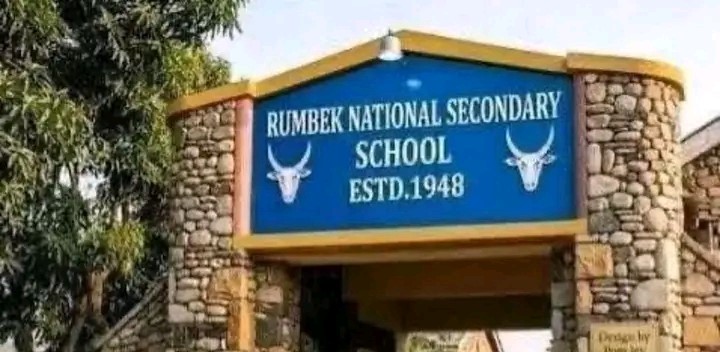
Rumbek’s current uproar over Vice President Hussein Abdelbagi’s remarks is not merely a local dispute over buildings and land; it is a struggle over how history is understood and how national narratives are preserved. The announcement at Freedom Square that the iconic Rumbek Senior Secondary School has been “donated” to Rumbek University and will be relocated and rebuilt elsewhere shows how easily the past can be treated as a negotiable asset rather than a shared national legacy.
For many South Sudanese, particularly those from Rumbek, this is not an abstract debate. Rumbek Senior Secondary School is the symbolic DNA of a nation.
Founded by the British in 1948, Rumbek Senior Secondary School was the first secondary school in what is now South Sudan. It became a crucible in which much of the country’s political elite and liberation leadership were formed. The school has often been likened to the “Eton of South Sudan,” having educated a generation of leaders who shaped the liberation struggle from Anyanya I commanders such as Joseph Lagu, Gordon Muortat, Samuel Aru Bol, William Deng Nhial, Joseph Oduho and James Tombura, to later SPLM/A figures including Dr John Garang, Vice President James Wani Igga, the late military strategist Makur Aleyou, Dr Riek Machar, Dr Lam Akol, Simon Kuon Puoch and many others. To erase or displace such a place is to tamper with the symbolic DNA of the nation.
Dr John Garang reportedly said that two events were decisive in the emergence of the SPLM/A: the founding of Rumbek Senior Secondary School, which brought together bright young men from across South Sudan, and the New Sudan vision associated with William Deng Nhial. If this account is accurate, then the school is not simply an educational institution; it is one of the key sites where the idea of South Sudan as a political project was incubated. In that sense, Rumbek Senior is not only a campus but also a living historical narrative. And narratives, once disrupted, are difficult to rebuild.
Against this background, the Vice President’s unilateral declaration, allegedly made in the name of the presidency, appears not only unpopular but deeply reckless. A place so embedded in South Sudan’s historical memory should not be reassigned by decree without meaningful consultation with its board, alumni and the wider community. When a government claims the authority to relocate such an institution as though it were a movable asset, it raises a fundamental question: who owns the past and who has the power to redefine it?
What makes the situation more troubling is that the decision appears unnecessary. There is already a large tract of land allocated to Rumbek University. The more rational approach would be to develop the university on its existing site rather than displacing the country’s oldest secondary school. A society committed to progress does not have to choose between memory and development. It can expand its educational infrastructure without dismantling the institutions that shaped its leaders and its political consciousness.
I write this not as a detached observer but as someone whose own life has been shaped by Rumbek Senior Secondary School. I studied there and later returned as a teacher. For me, the school is not an abstraction; it is a lived reality, a place of friendship, discipline, intellectual formation and service. To hear that it may be relocated in the name of “development” feels less like progress and more like collective amnesia.
The debate over Rumbek Senior is therefore a test of what kind of nation South Sudan aspires to become. One approach treats history as an obstacle to be removed in pursuit of modernity. The other recognises that meaningful development grows from institutions that embody collective memory and lived experience. If Rumbek Senior is uprooted, it will send a message that no institution, however central to the national story, is safe from short term political expediency.
Nations are held together not only by borders and institutions but also by shared stories and the places where those stories began. Rumbek Senior Secondary School is one of those places. The question now is simple but profound: do we preserve this living symbol of our past while building our future, or do we sacrifice it and risk a nation that forgets where it came from?
The writer, Puorach Maker Mabor, is an alumnus of Rumbek Senior Secondary School.
The views expressed in ‘opinion’ articles published by Radio Tamazuj are solely those of the writer. The veracity of any claims made is the responsibility of the author, not Radio Tamazuj.

 and then