



Introduction
Education in South Sudan is not only a social service; it is a constitutional right, a national development priority, and a foundation for peace, citizenship, and state-building. The Transitional Constitution of the Republic of South Sudan, 2011, as amended, provides that “education is a right for every citizen” and requires all levels of government to provide access to education without discrimination. It further obliges the government to ensure free and compulsory primary education and to promote education at all levels. The General Education Act, 2012 reinforces this commitment by declaring that primary education shall be free and compulsory for all citizens and by establishing the legal framework for the management, financing, quality assurance, and accountability of general education.
Despite these strong legal commitments, South Sudan’s education system remains severely constrained by underfunding, delayed payment of teachers, insecurity, displacement, poverty, weak supervision, limited school infrastructure, shortage of learning materials, and persistent exclusion of girls, children with disabilities, pastoralist children, displaced learners, and children from poor households. The central policy challenge is therefore not the absence of legal commitment, but the gap between law, financing, and implementation.
This policy document sets out a concise direction for inclusive and quality education in South Sudan. It is grounded in the Constitution, the General Education Act, and the country’s development aspiration towards Vision 2040. Its core argument is that education must be treated as a national recovery and transformation priority, backed by predictable financing, teacher motivation, strong accountability, inclusive access, and improved learning outcomes.
Legal and policy foundation
The constitutional and statutory basis for education in South Sudan is clear. Article 29 of the Transitional Constitution establishes education as a right for every citizen and requires the government to provide access without discrimination on grounds such as religion, race, ethnicity, health status, gender, or disability. The Constitution further requires all levels of government to ensure free and compulsory education at the primary level and to provide free illiteracy eradication programmes. This means that education is not optional charity; it is a public obligation.
The Constitution also connects education to national development. Article 38 requires the government to promote education to create qualified cadres for development and to mobilize public, private, and communal resources for education and scientific research. It further calls on the National Government to avail financial resources to make secondary, higher, technical, and vocational education affordable. This gives a broad policy mandate for investing not only in primary schooling, but also in skills, innovation, technical training, and human capital formation.
The General Education Act, 2012 operationalizes these constitutional obligations. It provides that primary education shall be free and compulsory for all citizens without discrimination. It requires education to promote gender equity, special needs education, literacy, national unity, quality, innovation, and continuous school improvement. The Act also defines government responsibility for financing public schools, paying teachers, allocating funds to state ministries, maintaining accounting procedures, auditing education accounts, and ensuring that resources are used for their intended purposes.
Most importantly, the Act provides that the government shall allocate 10 percent of the total annual national budget to General Education for the development, management, and maintenance of education programmes. It also requires monthly allocation of funds to State Ministries of Education to cover salaries, operational costs, and capital costs. These provisions give South Sudan a clear legal basis for predictable and accountable education financing.
Current policy problem
The education sector faces a severe implementation deficit. While the law guarantees free and compulsory education, many children remain out of school or attend schools that lack classrooms, trained teachers, textbooks, sanitation facilities, and basic safety. For many families, the cost of uniforms, materials, transport, food, and informal payments makes schooling difficult, even where education is legally declared free. The result is a continuing exclusion of the most vulnerable children.
Teacher welfare is one of the most urgent challenges. The General Education Act requires State Ministries of Education to pay teachers’ salaries and allowances as prescribed by law, and it further recognizes the need for additional allowances to attract and retain teachers. In practice, however, delayed salaries, low remuneration, weak payroll systems, and poor working conditions have undermined teacher morale and performance. No education reform can succeed if teachers are unpaid, underpaid, unsupported, or absent from classrooms because of economic hardship.
Financing is another major constraint. Education has not received the level of domestic investment required to meet the needs of a young and growing population. Underfunding affects teacher salaries, school construction, textbooks, teacher training, inspection, school grants, inclusive education, school feeding, and emergency response. The legal requirement of allocating 10 percent of the national budget to General Education must therefore be treated as a minimum statutory obligation, not an aspiration.
The system also suffers from weak supervision and accountability. The General Education Act requires inspection, proper accounting, transparency, annual audits, and accountability for funds transferred from national to state and county levels. Yet many education offices lack transport, operational funds, trained personnel, and reliable data. This weakens school monitoring, teacher attendance, curriculum implementation, financial accountability, and protection of learners.
Insecurity, displacement, climate shocks, and poverty further deepen the crisis. Conflict, communal violence, floods, and humanitarian emergencies disrupt learning, close schools, displace teachers and learners, and expose children to trauma, exploitation, early marriage, child labour, and recruitment into violence. Education policy must therefore be designed not only for normal development conditions, but also for emergency, recovery, and resilience contexts.
Policy direction
South Sudan should adopt a national policy direction that places education at the centre of recovery, peacebuilding, and Vision 2040. This requires moving from legal commitment to practical implementation through five priorities: financing, teachers, access, quality, and accountability.
First, education financing must be increased, protected, and made predictable. The Government should comply with the General Education Act by allocating at least 10 percent of the annual national budget to General Education. These funds should prioritize teacher salaries, school grants, textbooks, classroom construction, teacher training, supervision, school feeding, inclusive education, and emergency education. Funds should be transferred to State Ministries monthly, as required by law, and disbursed to counties and schools in a transparent manner. Education financing must be tracked from the national level to schools, with public reporting and annual audits.
Second, teacher welfare and professionalism must become the foundation of education reform. The Government should clear teacher salary arrears, guarantee regular salary payments, review teacher remuneration, and provide hardship allowances for teachers in remote, insecure, and underserved areas. Payroll systems should be cleaned and digitized to remove ghost names and ensure timely payment. Teacher training, certification, licensing, promotion, and continuous professional development should be strengthened. A motivated and accountable teaching force is essential for improving learning outcomes.
Third, South Sudan must bring out-of-school children and youth back into learning. A national back-to-learning campaign should identify excluded children and provide flexible education pathways. This should include accelerated learning programmes, community schools, mobile schools for pastoralist communities, re-entry opportunities for pregnant girls and young mothers, inclusive education for children with disabilities, and targeted support for displaced and returnee learners. School feeding, cash transfers, uniforms, learning materials, and protection services should be used to reduce the financial burden on poor households.
Fourth, the quality and relevance of education must be improved. Access without learning is not enough. The education system should focus on foundational literacy and numeracy, adequate textbooks, effective curriculum implementation, learner assessment, teacher competence, and school leadership. The curriculum should prepare learners for peace, citizenship, productive work, gender equality, environmental responsibility, digital literacy, agriculture, entrepreneurship, technical skills, and national development. Secondary education and technical and vocational education must be expanded to connect schooling with employment, productivity, and Vision 2040.
Fifth, supervision, inspection, and accountability must be strengthened. Education managers at national, state, county, payam, and school levels should be resourced to monitor schools regularly. Inspectors need transport, operational funds, clear standards, and digital reporting tools. Supervision should focus on teacher attendance, learner attendance, teaching quality, school safety, inclusion, financial management, and learning outcomes. Accountability should apply to teachers, headteachers, education managers, finance officials, and political leaders responsible for implementing education commitments.
Inclusion, protection, and equity
An education policy for South Sudan must deliberately target those most likely to be excluded. Girls, children with disabilities, displaced children, returnees, pastoralist children, children affected by conflict, and children from poor households require specific support. Legal provisions on non-discrimination, gender equity, special needs education, and free primary education must be translated into practical measures at the school level.
Schools must be safe, inclusive, and protective. This requires gender-sensitive sanitation facilities, menstrual hygiene support, prevention of gender-based violence, psychosocial support, child protection systems, disability-friendly infrastructure, learning materials in accessible formats, and recruitment of more female teachers. The right of pregnant learners to remain in school or re-enter after delivery should be fully implemented. Education should also promote peace, tolerance, reconciliation, respect for diversity, and national unity.
Education policy should also be linked with social protection. Many children are out of school because their families are poor, displaced, food insecure, or unable to meet indirect school costs. School feeding, cash transfers, health services, nutrition, WASH, birth registration, livelihood support, and child protection should therefore be integrated into education planning. This will reduce dropout, improve attendance, and protect children from harmful coping mechanisms.
Governance and implementation
Implementation requires strong coordination between the Ministry of General Education and Instruction, the Ministry of Finance, State Ministries of Education, county education departments, schools, communities, and development partners. The national ministry should lead policy, standards, curriculum, planning, budgeting, inspection frameworks, and national accountability. State ministries should manage teachers, supervise schools, disburse funds to counties, and report on implementation. Counties should provide frontline support to schools and communities.
The Ministry of Finance should ensure predictable and timely release of education funds. The National Legislature should exercise budget oversight and ensure compliance with the legal requirement for education financing. Communities and Parents Teachers Associations should support school planning, promote enrollment, protect schools, and monitor local accountability. Development partners should align support with national priorities and strengthen government systems rather than replacing them.
A phased implementation approach is necessary. In the immediate term, government should pay teacher salary arrears, ensure regular salary payments, provide essential learning materials, expand school feeding, support non-functional schools, finance supervision, and launch a national campaign for out-of-school children. In the medium term, the government should expand school infrastructure, strengthen teacher training, institutionalize school grants, improve education data systems, and increase domestic financing. By 2040, South Sudan should aim to achieve universal access to quality basic education, a professional teaching force, expanded secondary and vocational education, and a resilient education system capable of withstanding conflict, displacement, climate shocks, and economic crises.
Conclusion
South Sudan’s education crisis is a national development crisis. It affects peace, social cohesion, economic growth, democratic governance, gender equality, and the future of the country’s young population. Yet the country already has a strong legal foundation. The Constitution guarantees education as a right, and the General Education Act provides clear obligations on free primary education, teacher payment, public school financing, monthly transfers, financial accountability, and a minimum budget allocation for General Education.
The urgent task is implementation. Education must be financed, teachers must be paid and supported, schools must be supervised, vulnerable learners must be included, and public funds must be transparently managed. If South Sudan places education at the centre of national recovery and Vision 2040, it can transform its young population into a generation of skilled, peaceful, productive, and responsible citizens.
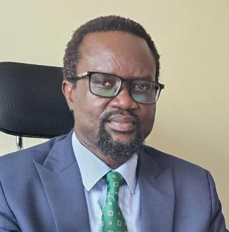
The author, Dr. Ador Riak Nyiel, is the National Coordinator at the National Education Coalition (NEC), a network of over 180 CSOs supporting advocacy on the right to education for all across South Sudan. He is also an Assistant Professor of Education at the Faculty of Education at Upper Nile University. He can be reached via adorr86@gmail.com.
The views expressed in ‘opinion’ articles published by Radio Tamazuj are solely those of the writer. The veracity of any claims made is the author’s responsibility, not Radio Tamazuj’s.

 and then