



South Sudan is unexpectedly described by international observers as a failed state, a fragile nation, or a country on the verge of collapse. Such descriptions often arise from the country’s persistent economic difficulties, recurring conflicts, substandard functionality of governance institutions, and declining social services. While these challenges are real and cannot be ignored, the conclusion that South Sudan is a failed nation oversimplifies a far more complex reality.
South Sudan is not merely experiencing a governance crisis; it is undergoing the difficult and unfinished process of nation formation. The country’s current challenges should therefore be understood not only as signs of institutional failure but also as symptoms of an incomplete transition from liberation struggle to nationhood.
The crisis of ethnic politics and resource mismanagement
One of the greatest challenges facing South Sudan is the persistent manipulation of ethnic and tribal identities for political and economic gain. Rather than serving as sources of cultural diversity and national strength, ethnic affiliations have increasingly been used as instruments for acquiring, exercising, and protecting power.
Political actors frequently mobilize communities along ethnic lines to advance personal ambitions and protect individual interests. In many cases, conflicts are initiated and sustained not because of genuine ideological differences or national objectives but because of struggles over power, wealth, and influence. Violence becomes a tool for defending selfish interests, while communities are drawn into conflicts that offer them little benefit and impose enormous suffering.
To justify these conflicts, political organizations and alliances are often created without clear ideological foundations or national development agendas. Such arrangements create the appearance of political competition while masking struggles for access to state resources. The result is a proliferation of political formations whose primary objective is participation in government rather than nation-building.
Alongside political fragmentation, South Sudan has also experienced widespread mismanagement of financial, human, and natural resources. Resources that should be directed toward development, infrastructure, healthcare, education, and economic growth are frequently diverted toward activities that serve narrow interests. This weakens public institutions and undermines confidence in government.
The rise of parallel financial systems
A particularly dangerous development has been the emergence and growth of parallel financial systems operating outside the formal banking sector.
The formal financial system is the foundation of any modern economy. It provides accountability, regulates financial transactions, supports investment, and enables governments to deliver public services. In South Sudan, however, formal banking institutions have increasingly been undermined by informal and unregulated financial networks.
Funds that should circulate through banks and official channels are diverted into black-market transactions and informal financial structures. Large sums of money are withdrawn from formal circulation and stored privately rather than invested productively in the economy. Public financial resources are often depleted while parallel markets continue to flourish.
This situation creates a dangerous contradiction. The informal economy continues to generate private wealth for a few individuals, while government institutions become increasingly unable to finance public services. Schools deteriorate, healthcare systems weaken, infrastructure projects stall, and public servants face delayed or irregular payments.
As confidence in formal financial institutions declines, the economic foundation of the state becomes increasingly fragile. The continued destruction of formal financial systems and the promotion of unregulated financial practices threaten not only economic stability but also the long-term viability of the government itself.
Governance under the R-ARCSS: Shared responsibility and collective failure
The Revitalized Agreement on the Resolution of the Conflict in South Sudan (R-ARCSS) was intended to create a framework for peace, power-sharing, and institutional reform. However, implementation has been marked by persistent delays, mistrust, and political competition.
Both government and opposition actors often engage in a continuous exchange of blame regarding the shortcomings of implementation. Yet the structure of the agreement itself does not place exclusive authority or responsibility on any single party. Decision-making under the agreement requires cooperation, negotiation, and collective commitment.
A careful examination of the implementation process reveals that most parties have focused more on protecting political positions than fulfilling their obligations under the agreement. Progress has been uneven, with some state-level arrangements showing relative advancement while many national-level reforms remain incomplete.
At the national level, political attention frequently shifts toward personal interests rather than institutional transformation. Public disagreements become most visible when financial interests are threatened or political positions are at risk.
In response to poor performance, leadership changes often occur through repeated cycles of appointments and dismissals. Yet these changes rarely produce the expected results because they address symptoms rather than underlying structural problems. Replacing individuals without reforming systems merely reproduces the same failures under different actors.
Surrounding this process is a growing class of political influencers and opportunists who benefit from instability. These individuals often position themselves as indispensable advisers while seeking access to public resources and influence. Their interests are tied not to reform but to the continuation of a system that allows personal enrichment.
Nation formation: The unfinished task
Despite these challenges, South Sudan’s crisis should not be viewed solely through the lens of governance failure. It should also be understood as part of the unfinished process of nation formation.
Unlike many African states whose borders were established through colonial administration, South Sudan emerged from a prolonged liberation struggle. Independence was achieved through sacrifice, resistance, and the collective aspirations of its people. However, while independence created a sovereign state, it did not automatically create a unified national identity, shared political culture, or agreed constitutional order.
At independence, South Sudan inherited many institutional structures from Sudan. It possessed the symbols of statehood but had not yet completed the deeper task of defining itself as a nation.
The essential questions remained unanswered.
Who are the owners of South Sudan?
What is the collective identity of its people?
What national values should unite diverse communities?
How should resources be managed and distributed?
What constitutional order should guide governance?
What vision should define the future of the nation?
These questions cannot be answered by political elites alone. They belong to the people of South Sudan.
A durable nation can only emerge when citizens collectively define their identity, establish their constitutional framework, determine their governance system, and agree on a shared national vision.
The missed opportunity before the 2013 conflict
The crisis that erupted in December 2013 represented a significant setback to nation-building.
Rather than prioritizing the national conversation required to define the country’s future, political leaders became increasingly focused on political competition and preparations for elections. In doing so, they assumed ownership of a process that properly belonged to the people.
The rush toward political competition occurred before fundamental nation-building questions had been resolved. Instead of facilitating broad civic participation in defining national identity, institutions, and constitutional arrangements, political elites concentrated power within party structures and leadership circles.
The resulting conflict produced devastating consequences. Thousands lost their lives, millions were displaced, and the social fabric of the nation suffered severe damage. Furthermore, the conflict encouraged the emergence of numerous political organizations whose primary objective was participation in power-sharing arrangements rather than contributing to a coherent national vision.
Two attempts at addressing the nation-building question
Following the conflict, two major initiatives sought to address South Sudan’s political crisis and nation-building challenge.
The first was the R-ARCSS peace agreement. While the agreement created a framework for ending armed conflict and sharing political power, it was signed amid significant reservations and competing interpretations regarding its implementation.
The second was the National Dialogue initiative. Unlike the peace agreement, the National Dialogue sought to place citizens at the center of discussions about the country’s future. Its purpose was to create a platform through which South Sudanese could collectively examine the causes of conflict and chart a path toward national reconciliation.
However, these two processes failed to complement one another effectively. Political competition and mistrust prevented the emergence of a unified national process capable of combining peace implementation with broader nation-building efforts.
As a result, the underlying questions of national identity, ownership, governance, and constitutional order remain unresolved.
Fear as a driver of political instability
At the heart of many of South Sudan’s political and security challenges lies a powerful but often overlooked factor: fear.
Many South Sudanese fear uncertainty about the future. Political leaders fear losing power. Communities fear marginalization. Young people fear unemployment and exclusion. Citizens fear insecurity and economic hardship.
This collective anxiety creates fertile ground for political manipulation.
Fear can be used to mobilize communities, deepen ethnic divisions, and justify violence. It can persuade citizens to support leaders who promise protection rather than transformation. It can encourage political actors to prioritize short-term survival over long-term nation-building.
Before the 2013 conflict, fears about political competition, succession, and access to power contributed significantly to rising tensions. Instead of encouraging citizens to participate in defining the future of their country, political actors increasingly focused on securing positions, influence, and access to resources.
In some cases, influential individuals isolated national leadership from broader public engagement, presenting citizens as threats rather than partners in nation-building. This weakened trust between leaders and the people and created opportunities for conflict entrepreneurs to pursue personal gain.
The path toward durable peace
South Sudan does not merely need an end to armed conflict. It needs a durable peace.
Durable peace is more than the absence of war. It is the presence of justice, inclusion, accountability, and shared national purpose.
The transition toward durable peace requires several critical steps.
First and foremost, South Sudanese must collectively reclaim ownership of their nation-building process. The future of the country cannot be determined solely by political parties, government institutions, or individual leaders. It must be shaped by the people themselves.
Second, the country needs an inclusive constitutional process that allows citizens to define their national identity, governance system, and long-term vision.
Third, economic reforms must restore confidence in formal financial institutions, strengthen accountability, and ensure that national resources are managed transparently for public benefit.
Fourth, justice and fairness must become central principles of governance. Every citizen must feel protected by the law and confident that opportunities and resources are distributed equitably.
Fifth, diversity should be embraced as a source of national strength rather than political division. South Sudan’s many cultures, languages, and communities should be recognized as components of a single national identity.
Finally, political leadership must shift from competition for power toward stewardship of the nation. Leaders must see themselves not as owners of the state but as custodians of a trust entrusted to them by the people.
In conclusion, South Sudan’s challenges are serious, but they should not be mistaken for evidence that the nation has failed. Rather, they reveal a country still struggling to complete the difficult transition from liberation movement to durable nationhood.
The greatest obstacle is not the absence of resources or potential. It is the unresolved question of nation formation and the fear that accompanies uncertainty about the future.
The solution lies not in more political competition, more ethnic mobilization, or more power-sharing arrangements alone. It lies in empowering the people of South Sudan to define their nation, establish a shared vision, and build institutions that serve all citizens.
Only through such a process can South Sudan achieve durable peace—a peace founded on unity in diversity, justice for all, accountable governance, and shared prosperity. Such a peace would not merely end conflict; it would complete the journey of nation-building and secure the future of generations to come.
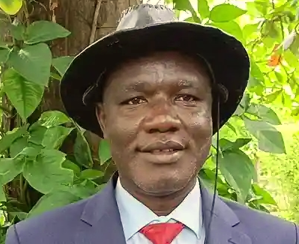
The writer is a South Sudanese politician and former commissioner of Yei River County.
The views expressed in ‘opinion’ articles published by Radio Tamazuj are solely those of the writer. The veracity of any claims made is the responsibility of the author, not Radio Tamazuj.

 and then