



As South Sudan advances toward the December 2026 elections, campaign colours are already reshaping public spaces. Red SPLM T-shirts, caps and slogans fill crowds from Juba to rural market towns in Twic, Wunrok and Ajak Kuach. The air is thick with cries of “Oyee!” Yet amid that political pageantry, a sharper voice cuts through, not from a party hall but from a community that has waited too long for basic services.
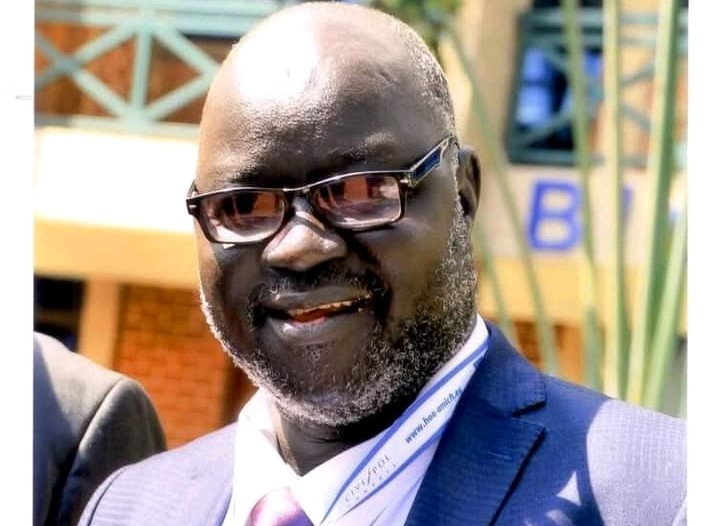
Willy Angok Ngor, former chairperson of Amiol Youth, expressed his community’s concerns. Eye Radio translated his remarks into English and published them as its “Quote of the Day”:
“Our ‘Oyee’ is not just shouting ‘SPLM Oyee!’ It is for whoever will stock our hospitals with medicines, revive and equip our schools, provide electricity, and link our communities with roads. If a campaign is only about handing out red T-shirts and caps, that is not our ‘Oyee’.”
This statement is not merely a grievance from one locality. It is a clear articulation of how South Sudanese voters increasingly assess political legitimacy. Appeals to a movement’s historic mission no longer suffice. Since independence, communities across the country have endured understocked clinics, schools without teaching materials, prolonged darkness where electricity should exist, and roads that remain unpaved for years.
In Twic, Angok’s words make the point unmistakable: voters will reward leaders who deliver functioning hospitals, schools that teach, roads that connect markets and families, and public servants who receive their salaries on time. The delivery of essential services, not slogans or party symbols, will play a decisive role in determining the outcome of the 2026 elections.
This shift in voter sentiment is not confined to Twic. Across South Sudan, people who cannot afford basic clothing often accept red T-shirts not as expressions of loyalty but as protection from the sun. Crowds dressed in red do not necessarily support the SPLM; many simply lack the means to purchase new garments. This reality turns campaign paraphernalia into a reflection of deeper poverty rather than genuine political enthusiasm.
The SPLM should therefore view Angok’s remarks as a policy challenge rather than a political threat. If the party wishes to continue governing, it must act before December 2026 to address the concerns he identifies: timely payment of public sector salaries, functioning health services, adequately equipped schools, and infrastructure that connects communities.
Failure to do so risks deepening public disillusionment and forcing voters to make a simple choice: support a party that relies on historical legitimacy or a candidate who delivers tangible results.
Angok’s first demand is straightforward: stock hospitals with medicines. In many parts of South Sudan, clinics exist in name but lack the drugs and supplies required to treat common illnesses. Patients arrive with fever, infection or complications from chronic conditions only to be told that nothing is available. In such circumstances, the presence of a health facility becomes symbolic rather than functional.
For voters, the availability of medicines is a direct measure of government performance. When a clinic can treat a child with malaria, a mother with postnatal complications or an elderly person with diabetes, the state becomes visible in a meaningful way. When it cannot, confidence in public institutions erodes. The SPLM led government must therefore make medicine procurement a priority by ensuring transparent supply chains, reliable funding and accountability for diversion or delay.
The second pillar of Angok’s message concerns education: reviving schools, equipping them properly and providing electricity. Many schools in rural areas operate with inadequate classrooms, no furniture and few teaching materials. Teachers struggle to deliver lessons without textbooks, chalk or other basic learning aids. In some areas, schools lack electricity, limiting study time and access to digital resources.
Education is not merely a social service; it is a long term investment in the nation’s future. A generation deprived of quality education will lack the skills needed to rebuild the economy, manage public institutions and sustain peace. The government must ensure that schools receive books, furniture, teachers and basic infrastructure, including electricity where feasible. This requires budgetary commitment, sound planning and effective oversight to prevent resources from being lost or misused.
Angok’s third demand focuses on roads, particularly routes linking Wunrok to Ajak Kuach, Toch Ajuath and Toch Achel. Roads are more than physical pathways; they are economic arteries that connect communities to opportunity. They enable farmers to bring goods to market, students to reach schools, patients to access hospitals and traders to expand their businesses. Without roads, communities remain isolated and economic activity stagnates.
Investing in rural road networks is a visible demonstration of commitment to development. It signals that the government sees these communities as integral parts of the national economy rather than peripheral populations. The SPLM led government must prioritize road construction and maintenance, working with local authorities, engineers and development partners to deliver projects that are visible, measurable and sustainable.
Beyond health, education and infrastructure, Angok’s broader message highlights the issue of public sector salaries. Delayed or unpaid salaries erode trust in government and undermine the functioning of public institutions. Teachers, health workers, police officers and civil servants who cannot afford food, clothing or transportation are less able to perform their duties effectively.
The payment of salaries is not only a financial obligation; it is a demonstration of respect for public service. When salaries are paid regularly, it affirms that the state values its workers and their contribution to national development. The government must ensure timely salary payments, strengthen payroll systems and eliminate bottlenecks that delay the transfer of funds to employees.
Angok’s remarks echo a lesson articulated by the late Dr. John Garang, who warned that rhetoric without service delivery risks losing public support. Garang observed that communities may prefer a government that provides basic necessities, even something as simple as salt, over one that offers only slogans. That observation remains relevant today. Where families struggle to access medicines, education and income, party identity becomes less important than the ability of government to meet basic needs.
The SPLM’s liberation legacy remains a powerful asset, but it cannot substitute for effective governance. Voters today are increasingly pragmatic. They evaluate leaders based on measurable outcomes rather than historical narratives. The party must therefore balance its historical legitimacy with concrete performance in delivering services.
Angok’s statement also reflects a broader shift in the nature of political legitimacy in South Sudan. The appeal that characterized the 2010 era, supporting a movement to complete its mission of achieving independence, no longer serves as the primary source of electoral support. Today’s voters, shaped by experiences of war, displacement and prolonged state fragility, are increasingly focused on practical outcomes. They are likely to reward leaders who demonstrate competence in improving everyday life.
This shift is not a rejection of politics. Rather, it is a demand for accountability. It signals that citizens want to participate in governance not as passive recipients of slogans but as active stakeholders who expect results. Political parties must respond by designing policies that address real needs, communicating clearly about progress and building trust through consistent performance.
The countdown to December 2026 offers an opportunity for course correction. If the SPLM and other political actors respond with seriousness and tangible action, the campaign season can become a chance to restore public confidence and advance development outcomes. If not, the electorate has made its position clear: the next vote will be cast not for party colours but for concrete proof that government delivers.
The people of South Sudan will not vote this time as they did in the 2010 elections, when they were asked to support a movement seeking to complete its mission of independence. They will not vote for parties alone; they will vote for candidates based on their record of service delivery. The time has come for the SPLM led government to address the issues that matter most to voters, including payment of public employees’ salaries, access to health services, functioning schools and an end to social injustice.
Willy Angok Ngor’s words are not hate speech. They are a democratic expression protected by the national constitution and by regional and international human rights law. The SPLM must take this message seriously and act swiftly to address the development concerns raised ahead of the elections. If the party fails to do so, it risks losing the very people who once carried its struggle to independence.
May God bless South Sudan.
The writer, William Sunday D. Tor, is an academic and policy analyst specializing in international migration, disaster risk reduction, governance and security studies in South Sudan and Africa. He can be reached at williamtor2011@gmail.com.
The views expressed in ‘opinion’ articles published by Radio Tamazuj are solely those of the writer. The veracity of any claims made is the responsibility of the author, not Radio Tamazuj.

 and then