



These days, many government-aligned Nuer politicians do not function as genuine representatives of the Nuer people, nor do they reflect the voices of the communities they claim to speak for. Some describe themselves as “pragmatic peacemakers,” yet their main function has been to justify the administration’s atrocities and deflect blame for its destructive policies. That is not pragmatism; it is political flattery in its lowest form. In reality, these politicians are opportunists and apologists for President Salva Kiir’s violent regime.
The recent event in Maiwut County was nothing more than a staged performance—a display of sellouts, hired speakers, and paid entertainers.
It does not surprise me to see one of the government’s top apologists eagerly asking why residents are not planting mangoes and bananas, as if these crops were the solution to problems created by the regime itself. This reflects how some J1-managed Gaatjaak sons and daughters within Kiir’s regime have, knowingly or unknowingly, transformed themselves into complete political pawns with permanent membership in the bloody, destructive, and kleptocratic regime of the Awan Achan section of Warrap State.
Just imagine: a person who calls himself a prophet even accused Dr. Riek Machar of being responsible for all the problems, including the alleged killing of General Chayot Manyang. Gen. Chayot was both a national and Gaatjaak hero who stood firm with his people until his untimely passing. His life was taken by disease, not Machar. I wonder where the self-proclaimed prophet got his information.
The self-proclaimed prophet even volunteered to serve as a judge in the ongoing politically charged court cases against the suspended First Vice President and opposition leader, Dr. Riek Machar, along with seven other accused individuals. He went further, vowing to sentence Dr. Machar to prison for life.
At what point does a leader stop serving the people and instead begin to profit from their suffering while calling it governance?
There is a saying that “money talks.” If this is true, then, in my view, money does not make people speak normally; it exposes the brain’s hidden irrational side. One of the paid mini-prophets was behaving like someone with 30 years of faith in God (or a god) who then suddenly becomes a believer in a half-dead tree in the middle of the bush merely because he was given material things.
The people of Maiwut and Longechuk counties do not want to be baptized by mangoes or bananas. They want leaders who represent them in national institutions and work for their interests. Innocent civilians were burned alive in Longechuk County, and the regime poisoned their water sources.
In another symbolic assertion, the regime’s officials also claimed at the Maiwut event that the construction of the Pagak–Maiwut–Mathiang–Paloch road will begin as early as June 2026 and that the funds for its construction are a donation from President Kiir. This is a misleading assertion. The Paloch-Mathiang-Maiwut-Pagak road project was initially agreed upon by South Sudan and Ethiopia on May 19, 2023, and reaffirmed by both sides in November 2024, allowing the contracted companies to commence construction in 2025. The claim that Kiir funded the project appears to be a political fabrication designed to win public support ahead of the staged December 2026 elections. The Ethiopian government is financing the project with an investment of at least $738 million. The project has been in planning for years, and Kiir’s administration has been responsible for delaying the start of construction, preferring to continue plundering the national coffers rather than allocating resources to developing the country’s infrastructure.
Against this backdrop, one fundamental question remains: do those politicians—including those who recently descended on Maiwut County and who tirelessly defend, excuse, and protect the regime—ever pause to ask themselves what moral principle, political conviction, or human conscience can justify such loyalty when the same regime they praise is accused of burning their own mothers, children, relatives, and neighbors alive in Longechuk and Nasir Counties between early March and August 2025, and of systematically and deliberately poisoning their communities’ water sources between late 2024 and May 2026? At what point does political allegiance cease to be leadership and become the abandonment of one’s own people? At what point does loyalty to power outweigh loyalty to truth, justice, and the memory of those who suffered? And if they cannot answer these questions honestly before the families of the victims, by what moral authority do they claim to speak for the very communities that endured those tragedies?
For politicians aligned with J1 and their money-driven prophets to present mangoes and bananas as solutions to deep political and security crises—and as a pathway to winning support for Kiir—is, at best, a profound misreading of reality. Handouts cannot substitute for justice, representation, or accountability. The people of Greater Gaatjaak will not be convinced by symbolism while the underlying wounds remain unaddressed, nor by leaders who cannot even secure meaningful support within their own communities. In the end, no amount of staged generosity can replace the demand for truth, dignity, and genuine political responsibility.
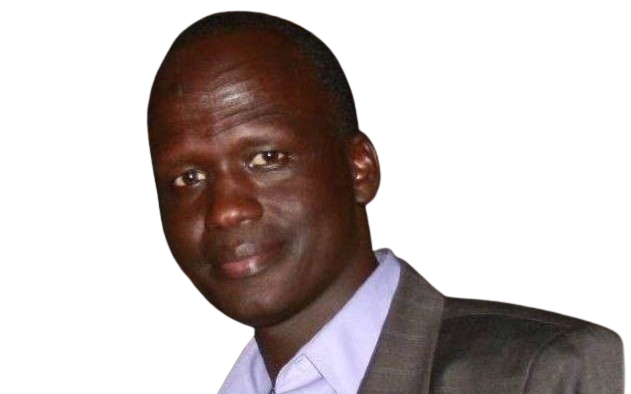
Duop Chak Wuol is an analyst, critical writer, and former editor-in-chief of the South Sudan News Agency. He is a graduate of the University of Colorado; his work focuses on geopolitics, security, and social issues in South Sudan and the broader East African region. His writing has appeared in leading regional and international media outlets. He can be reached at duop282@gmail.com.
The views expressed in ‘opinion’ articles published by Radio Tamazuj are solely those of the writer. The veracity of any claims made is the responsibility of the author, not Radio Tamazuj.

 and then