



A constitution does not have to be suspended by soldiers to be overthrown. It can also be displaced from within, through legislation and presidential assent used to remove the procedural legitimacy and restraints that make government constitutional and the powers of a government lawful and legitimate.
That is what has now happened in South Sudan. On 21 September 2026, President Salva Kiir assented to amendments to the National Elections Act. On 22 September, he announced the dissolution of the Revitalised Transitional Government of National Unity, or RTGoNU, three months before elections scheduled for 22 December. The new arrangement keeps the President in office with full powers while removing the First Vice President and the other Vice Presidents from the power-sharing Presidency.
The government may call this an electoral transition. Legally, the problem is deeper. The constitutional amendment on which the arrangement depends was not adopted through the procedures required by the Transitional Constitution and the 2018 Revitalised Agreement on the Resolution of the Conflict in the Republic of South Sudan, the R-ARCSS. An amendment made outside mandatory procedures is unconstitutional and ultra vires, beyond the legal power of those who purported to make it. It cannot validly rewrite the constitutional settlement or become the source of presidential authority.
The legal argument is that South Sudan has experienced a constitutional or incumbent coup: public power retained through the unlawful dismantling of the constitutional and peace-agreement order from within.
The amendment procedure was not optional
The R-ARCSS contains its own rules for changing the transitional settlement. Article 1.9.4 requires amendments to the Transitional Constitution and the R-ARCSS to be properly initiated within the Presidency and agreed by the other members. Article 8.4 then requires approval by at least two-thirds of the Council of Ministers, consent by at least two-thirds of RJMEC voting members, and only thereafter legislative ratification through the constitutional amendment procedure.
These are conditions of legal competence, not political courtesies. They prevent one party to a post-conflict settlement from rewriting the bargain unilaterally. RJMEC itself stated in 2026 that these procedures govern amendments during the Transitional Period. Yet the amendment process proceeded to Parliament without the consent required under Article 8.4.
The Constitution imposes its own requirements. Article 199 prescribes the special parliamentary threshold and timing for constitutional amendment. On the legal case advanced here, those requirements were not satisfied either. Presidential assent could not cure the defects. Assent can complete a validly made law. It cannot create constitutional authority where the Constitution and peace agreement withheld it.
The consequence is fundamental. The amendment was not merely irregular. It was incapable of producing the constitutional consequences claimed for it. If the instrument altering the transitional order was void, anything resting on that alteration must be tested against the lawful constitutional order that remained in force.
An Elections Act cannot amend the Constitution or the peace agreement
The same defect applies to the amended National Elections Act. An Elections Act is ordinary legislation. Its function is to regulate elections. It cannot amend the Transitional Constitution or the R-ARCSS by implication, and it cannot do indirectly what the superior legal order requires to be done through constitutional and peace-agreement amendment.
The R-ARCSS did not create a President surrounded by five optional assistants. Article 1.5 constituted the President, First Vice President and four Vice Presidents collectively as “the Presidency”. It distributed executive responsibility among the peace-agreement parties and embedded consultation and shared decision-making in the transitional executive until authority could be transferred to the people through elections.
The 2023 amendment to the Elections Act reflected that same architecture. Section 16(4) expressly provided that the President, First Vice President and four Vice Presidents would remain in office during the election period until the next President took over. South Sudan therefore already had a legal continuity mechanism. It preserved the whole Presidency.
The 2026 Elections Act amendment cannot replace collective continuity with presidential continuity alone unless superior law first authorises the change. It cannot abolish offices created by the constitutional settlement, redistribute their powers, or turn shared authority into unilateral presidential authority. Such a change requires a valid constitutional and R-ARCSS amendments. Since the constitutional amendment said to enable that transformation was itself ultra vires, ordinary legislation cannot rescue it. A subordinate statute cannot validate an invalid amendment to superior law.
Put simply: a void constitutional amendment cannot authorise an Elections Act, and an Elections Act cannot repair a void constitutional amendment.
Article 6.11 does not authorise dissolution of the RTGoNU
Article 6.11 of the R-ARCSS cannot provide the missing authority. Its subject is specific. It provides for the Transitional National Legislature to be transformed into a Constituent Assembly for the purpose of adopting the Permanent Constitution, after which that legislature would be dissolved before elections.
That sequence has not taken place. The legislature has not been transformed into the Constituent Assembly contemplated by Article 6.11 for the adoption of a Permanent Constitution. More importantly, Article 6.11 concerns the legislature. It is not a power to dissolve the RTGoNU, abolish the power-sharing Presidency or preserve the President alone as a solitary executive.
Transformation of the legislature for constitution-making and dissolution of the executive are different constitutional acts involving different institutions, purposes and legal consequences. A clause dealing with one cannot simply be converted into an implied power over the other.
The President cannot keep the benefits of an order he has dissolved
President Kiir did have a constitutional basis for serving within the extended transitional order. But that authority existed inside a defined constitutional architecture. The 2024 extension did not create a free-standing presidency detached from the RTGoNU, the R-ARCSS and the restraints accompanying his transitional office.
If the transitional order continues sufficiently to keep the President in office, its other constituent institutions and restraints cannot simply disappear. If the RTGoNU and that architecture have legally ended, the President requires a separate and valid constitutional basis to continue exercising full executive authority after dissolution.
There is no constitutional bridge between those two positions. The government cannot rely on the survival of the transitional order to preserve the President while relying on the supposed end of the same order to remove the other components of the Presidency. Constitutional continuity cannot operate as both sword and shield.
The issue therefore goes beyond whether an incumbent may remain during an election. It is whether President Kiir has a valid constitutional basis for exercising full powers in the new post-dissolution arrangement. If the constitutional amendment was void, the peace-agreement amendment procedure was not followed, Article 6.11 does not authorise executive dissolution, and the Elections Act cannot amend superior law, then the legal instrument capable of creating a solitary Presidency does not exist. On that analysis, the President has no valid constitutional basis for the full powers claimed under the new arrangement.
This is why the AU threshold is crossed
The African Union framework does not limit unconstitutional changes of government to soldiers seizing presidential palaces. Article 23 of the African Charter on Democracy, Elections and Governance, ACDEG, expressly addresses illegal means of “accessing or maintaining power”. Article 23(5) includes amendments or revisions of constitutions or legal instruments that infringe the principles of democratic change of government.
Not every unconstitutional law is an unconstitutional change of government. The additional question is whether the unlawful measure alters how power is held, contested or transferred. Here the constitutional order was changed outside the prescribed procedure, the power-sharing Presidency was dismantled, and the President alone retained full executive power immediately before an election intended to end the transition.
The law has therefore ceased merely to regulate democratic change. It has become the instrument through which the incumbent retains and concentrates power after the constitutional restraints surrounding that power have been removed. That is precisely the kind of unconstitutional maintenance of power to which Article 23(5) speaks.
The coup is therefore against three sources of authority at once: the Constitution, the peace agreement and the people of South Sudan. The Constitution was bypassed, the negotiated settlement was unilaterally reconfigured, and the people are being asked to enter an election after the constitutional distribution of power has already been altered in favour of the incumbent.
The Constitution imposes a duty to defend constitutional order
Article 4 of the Transitional Constitution now becomes central. It provides that no person or group of persons may take or retain control of State power except in accordance with the Constitution. It further provides that every citizen has a duty to resist any person or group seeking to overthrow constitutional government or to suspend or abrogate the Constitution.
That provision is not ceremonial language. On the legal analysis set out above, the constitutional order has been displaced through invalid legal instruments. South Sudanese citizens therefore have a constitutional duty to defend the Constitution and insist that public power return to a lawful basis.
That duty is not a call to violence or a licence for military intervention. Constitutional defence must remain lawful and civilian. It includes judicial challenge, peaceful civic action, public accountability, independent journalism, documentation of unconstitutional acts, protection of electoral institutions and sustained demands that every exercise of executive power identifies its lawful constitutional source.
Nor would a military takeover cure what has happened. A military seizure of power could create a second unconstitutional change of government. The first illegality would not legalise the second, and the second would not retrospectively cure the first. The constitutional objective is restoration of lawful civilian order, not replacement of one unconstitutional arrangement with another.
The African Union must address the act that has already occurred
The Peace and Security Council should therefore assess South Sudan as a completed constitutional-order question, not only a preventive case. The issue is whether the cumulative acts constitute unconstitutional maintenance of power under Article 23(5) of ACDEG. That assessment should examine the amendment procedure, the missing peace-agreement consent, Constitutional Amendment No. 13, the 2026 Elections Act amendment, the dissolution instrument and the claimed source of presidential authority after dissolution.
If the PSC determines that an unconstitutional change of government has occurred, Article 25 supplies the continental framework for restoring constitutional order, including diplomatic measures and, where its conditions are met, suspension and further sanctions. The objective is not indefinite restoration of particular office-holders. It is a lawful civilian arrangement capable of conducting credible elections and transferring authority to the people.
South Sudan does need to end an extended transition. It does need elections. But neither urgency nor electoral necessity creates powers that the Constitution does not grant. Elections cannot be built on an unconstitutional alteration of the very institutions and rules that determine who controls the state while those elections are organised.
A coup does not become constitutional because it is written into legislation. Presidential assent cannot give a void amendment legal force. An Elections Act cannot rewrite a Constitution or peace agreement. A clause about transforming the legislature cannot become a power to dissolve the executive. And an incumbent cannot dissolve the architecture that created and constrained his authority, then claim its benefits without its limits.
A coup d’état has taken place in South Sudan. It was carried out not by suspending the Constitution in name, but by displacing it in operation. It is a coup against the Constitution, against the R-ARCSS and against the sovereign people whose authority both instruments are meant to protect.
A constitutional order can be overthrown by a gun. It can also be hollowed out by a pen. The method is different. The constitutional injury is not.
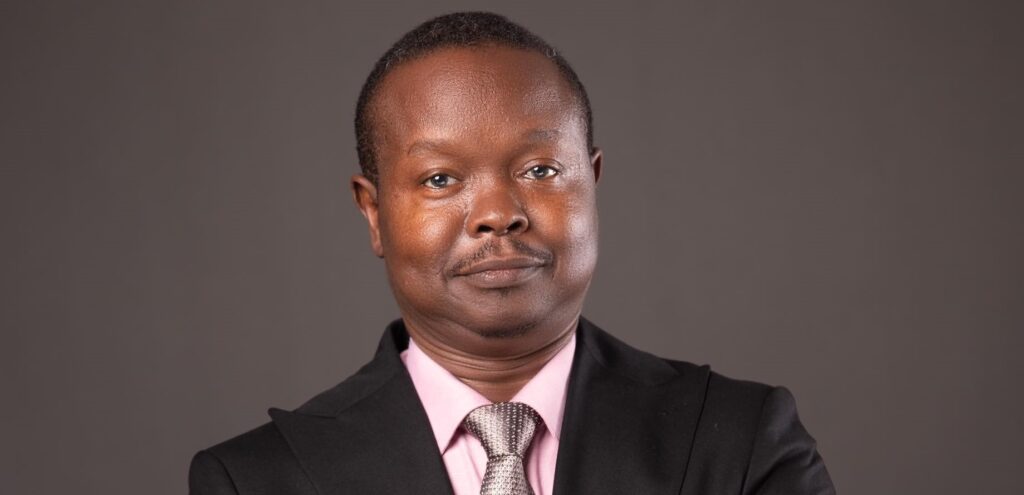
The writer, Dr. Remember Miamingi, is a human rights lawyer, governance specialist, and advisor to the Reclaim Campaign. He has worked extensively across Africa on transitional justice, human rights, and civic engagement.
The views expressed in ‘opinion’ articles published by Radio Tamazuj are solely those of the writer. The veracity of any claims made is the responsibility of the author, not Radio Tamazuj.

 and then