



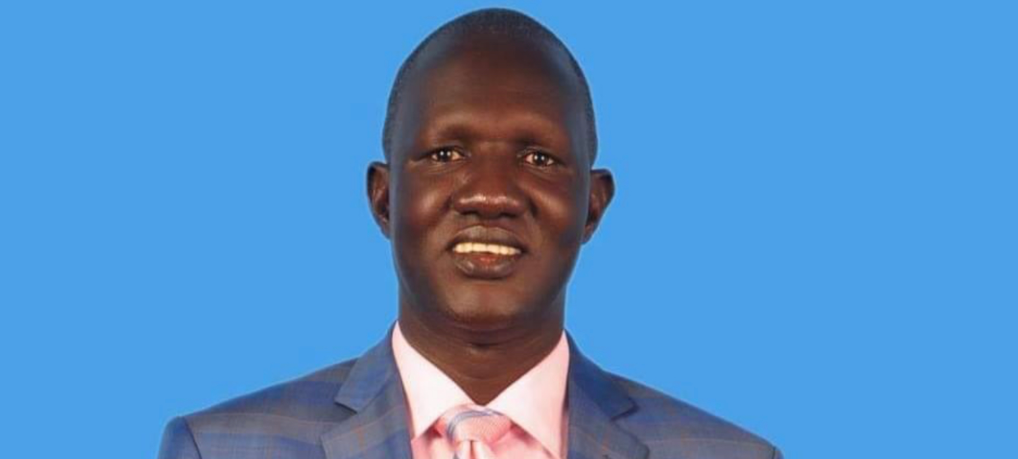
South Sudan’s parliament has effectively dismantled the power-sharing arrangements underpinning the country’s transitional government by passing controversial amendments to the election law, political analyst Abraham Awolich said, describing the move as a “parliamentary coup” that could usher in one-man rule.
Parliament passed the National Elections Act amendment on Monday, and President Salva Kiir signed it into law hours later. The changes allow the incumbent president to remain in office with full constitutional powers throughout the election period and empower him to relieve the first vice president and other vice presidents and dissolve the transitional government within three months of the December 22 election.
Awolich, a former managing director of the Sudd Institute and co-founder of the People’s Coalition for Civil Action (PCCA), said the changes undermined the power-sharing structure established by the 2018 peace agreement that brought opposition leader Riek Machar and other political groups into government.
“What the parliament did yesterday, they have inaugurated what we could describe as a parliamentary coup,” Awolich told Radio Tamazuj in an interview.
“They have created a new government headed by the president without parliament and without the cabinet and, of course, without the collegial presidency that was conceived by the peace agreement.”
The amended law provides that the president will remain in office throughout the election period until an elected president assumes office. It also removes previous links between elections, the permanent constitution-making process and a national census.
The 2018 Revitalized Agreement on the Resolution of the Conflict in South Sudan established a power-sharing transitional government and provided for elections as part of a transition towards a permanent constitutional order.
Awolich argued that the latest changes were part of a broader process of weakening or abandoning the 2018 peace agreement.
“This dissolution or impending dissolution of the government is the culmination of a slow-motion process of abrogation of the revitalized agreement,” he said.
He said the government had bypassed important preparatory processes, including the permanent constitution and census, which he argued were intended to provide a broader political and institutional foundation for elections.
Awolich, a PhD student in Sustainable Development Policy at the University of Vermont, also questioned the constitutional basis for allowing the president to remain in office while removing the vice presidents.
Under the 2018 peace agreement, he said, the executive leadership was conceived as a collective “presidency” comprising the president and vice presidents.
“If the law requires that these offices be dissolved, then you dissolve the entire presidency,” he said. “That includes the president himself losing his job. If you want to retain it, you have to retain the whole presidency.”
He said changing the constitutional structure through an amendment to the election law amounted to an indirect constitutional amendment.
Awolich further questioned whether the changes would lead to general elections or instead consolidate presidential power.
“The intention is really not to go for elections,” he said, arguing that the changes were intended to remove the power-sharing burden imposed on Kiir by the 2018 peace agreement.
Awolich warned that the removal of the vice presidents and the weakening of the transitional arrangements could create a constitutional and security crisis.
He also criticised parliament’s handling of the legislation, alleging that lawmakers rushed the amendments without sufficient debate. He alleged that lawmakers were offered vehicles or equivalent cash in exchange for supporting the bill.
Awolich said transitional monitoring bodies such as the Reconstituted Joint Monitoring and Evaluation Commission (RJMEC) and the Ceasefire and Transitional Security Arrangements Monitoring and Verification Mechanism (CTSAMVM) had already struggled to enforce the peace agreement and that their continued existence would have limited meaning without political commitment to the peace deal.
Awolich also dismissed the planned inter-party dialogue as unlikely to resolve the crisis unless it includes broader political actors and addresses the underlying constitutional and political settlement.
“Dialogue should have preceded the decisions that have been made,” he said.
He called for an inclusive political process involving opposition groups and civil society, rather than a dialogue limited to parties already represented in the transitional government.
The analyst also criticised the heightened security presence and closure of government ministry compounds in Juba ahead of the expected dissolution of the transitional government. He said such measures risk disrupting state services, arguing that the dissolution of a government should not mean the suspension of the civil service.
Awolich said the latest developments could deepen political tensions and increase the risk of confrontation among rival political and armed groups.
“What we have just witnessed,” he said, “is the inauguration of a new political order.”

 and then