



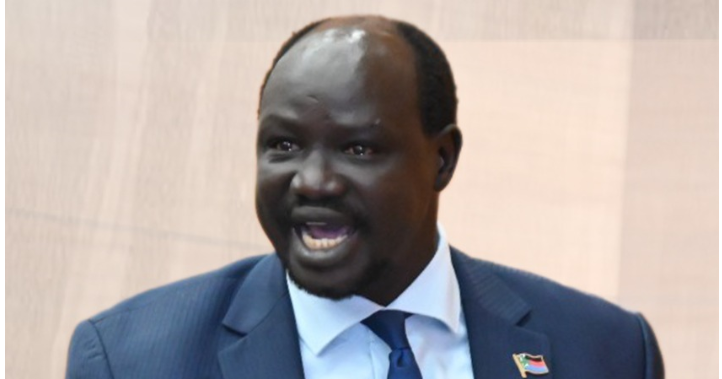
A South Sudanese lawmaker has criticised a presidential directive to hand over the premises of Rumbek Secondary School to Rumbek University of Science and Technology, arguing the move was made without consultation and risks undermining one of the country’s oldest educational institutions.
Rumbek Secondary School was established in 1948 during the Anglo-Egyptian colonial period. It is one of the oldest secondary schools in present-day South Sudan and is located in Rumbek, Lakes State. The school is widely regarded as a historic institution that played a key role in educating many political, military, and professional leaders.
Bol Joseph Agau, a member of the Transitional National Legislative Assembly (TNLA) representing Yirol West County in Lakes State under the National Democratic Movement (NDM), raised the issue during a parliamentary sitting on Monday, urging lawmakers to reconsider the decision.
Agau said the directive was announced during a recent graduation ceremony attended by senior officials, including the vice president and the head of the service cluster, Hussein Abdelbagi Akol.
“In a graduation ceremony, an announcement was made that I have a special communication from His Excellency the President that he donates Rumbek Secondary School premises fully to the administration of the University of Rumbek,” he told parliament.
Under the plan, the government intends to relocate the secondary school to a newly constructed site, while the existing premises would be allocated to the university.
Agau opposed the proposal, saying the school carries deep historical significance and has contributed to the country’s political and intellectual development.
“Rumbek Secondary School is not just buildings to be donated. It is history. It is a living museum. It is a national heritage,” he said.
The lawmaker questioned the rationale for relocating an existing school instead of developing new facilities for the university, noting that land had already been allocated for expansion.
He also criticised what he described as a lack of consultation with the Ministry of General Education and Instruction and local stakeholders.
Agau called on parliament to intervene and reverse the directive, saying it was “not logically sound” and risked undermining the education sector.
In response, Speaker Joseph Ngere Paciko referred the matter to the relevant parliamentary committees for review.
“I am presenting this issue back to the committee so that they see it and then bring it back to us,” he said, adding that committees on general education and higher education would examine the issue and report back within two weeks.

 and then