



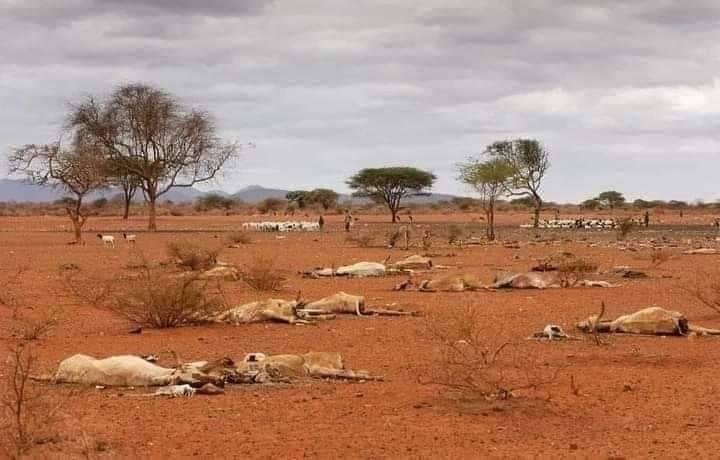
Several livestock owners across Sudan’s Darfur region have reported disease outbreaks among their herds that have resulted in the deaths of large numbers of cattle, amid growing concerns over shortages of pasture and water due to low rainfall this year.
Mohamed Nassir Ahmed, a veterinarian and director of the southern livestock sector in the Buram area, told Radio Tamazuj that the health of livestock herds had been affected by several diseases, resulting in the deaths of some animals.
“Diseases including Abu Zagala and haemorrhagic septicaemia have caused the deaths of several cattle,” he explained. “Some livestock in the area have been vaccinated against Abu Zagala and haemorrhagic septicaemia, with coverage reaching approximately 50 percent of the herd, with support from the Nomads Commission and Médecins Sans Frontières’ veterinary programme.”
“There is concern that nomadic herders travelling from northern areas towards the south will bring diseases with them,” Nassir added.
He acknowledged that vaccines for diseases including haemorrhagic septicaemia and Abu Zagala are unavailable in some parts of Sudan, including areas controlled by the Sudanese army and those controlled by the Rapid Support Forces.
He said efforts were underway by the Founding Government to restart the Nyala veterinary laboratory in order to produce or provide vaccines that are currently unavailable.
Nassir called on the Founding Government to provide water for livestock in areas of southern South Darfur where pasture is available, but water is scarce. He said livestock owners are facing severe hardship this year because of the acute shortage of water.
In East Darfur, livestock owner Maren Jabran Hajar said several diseases had recently emerged among cattle, resulting in the deaths of large numbers of animals.
“Although the East Darfur Livestock Department has provided vaccines, including the Abu Zagala vaccine, the majority of livestock have not benefited from the vaccination campaign, while other diseases continue to affect animals,” he said.
Jabran called for urgent intervention to provide vaccines against Abu Qunait, Abu Iqal, tick-borne fever and Um Dradam before the diseases spread further.
He also complained of a shortage of pasture due to inadequate rainfall this year. He said the vegetation that had grown was not suitable as animal feed, attributing the problem to environmental factors including desertification and shifting winds.
Jabran said the vaccination campaign launched by the Livestock Department had not covered the entire pastoral and livestock sector, which he described as very extensive.
He appealed to humanitarian organizations and other relevant actors working in the sector to intervene and help provide fodder and grazing areas for livestock.

 and then