



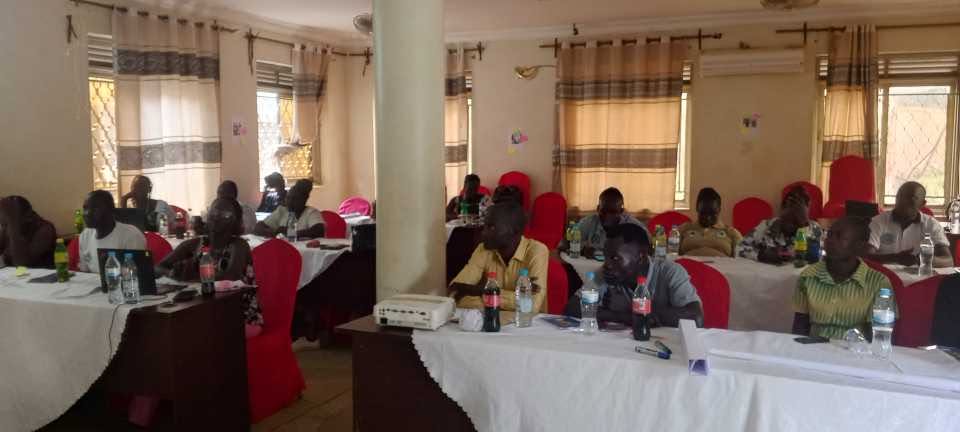
A two-day training programme aimed at strengthening community responses to gender based violence concluded in Torit on Wednesday, bringing together representatives of women led and youth led organizations from across Eastern Equatoria State.
The training, organized by CARE South Sudan, sought to strengthen the capacity of grassroots organizations to support survivors of gender based violence and connect them with appropriate services.
Participants received training on GBV prevention, survivor centred approaches, referral mechanisms, risk mitigation and community awareness strategies aimed at improving protection for women and girls.
Speaking at the closing session, participant Magdalene Nandege Lokoro said visual materials could help make awareness campaigns more effective, particularly among people with limited literacy.
“Pictures communicate powerful messages. Even people who cannot read or write can understand what is happening through images. Visual tools are very important in simplifying awareness messages within communities,” she said.
Lokoro also called for greater involvement of traditional leaders in efforts to prevent gender based violence, saying chiefs often play a central role in resolving disputes before cases reach formal institutions.
“We have realized that chiefs, block chiefs and boma chiefs play a significant role in resolving issues at the community level. It is important that they receive training on the GBV Pocket Guide and referral pathways so they know where and how to refer survivors for appropriate support,” she said.
She urged organizations to extend awareness programmes to schools, churches, youth groups and community associations, warning that exposure to harmful online content, substance abuse and other social challenges was contributing to growing protection concerns among young people.
“Children and young people are increasingly exposed to harmful content online. Combined with drug and alcohol abuse, this can contribute to cases of violence and abuse. We need to strengthen awareness in schools, churches and communities to address these challenges,” Lokoro added.
Another participant, Achire John Okook, described the training as a valuable learning opportunity and said it had equipped participants with practical skills to support their communities.
“This is my first time attending a GBV training, and I have learned a lot. The facilitators used simple language that everyone could understand. In just two days, we are leaving with practical knowledge that we can use to educate and support our communities,” he said.
Okook said changing attitudes that tolerate violence against women would require sustained community engagement and awareness raising efforts.
“For many years, people accepted violence against women as normal. But this is the time for change. GBV should not continue to be treated as part of our culture. Through commitment and continuous awareness, we can help bring positive change to our communities,” he said.
CARE South Sudan’s Women and Girls Protection Programme Manager, Amoi Ferida Vitale, said the training was part of broader efforts to strengthen community based protection systems, improve referral pathways and promote safer environments for women and girls across Eastern Equatoria State.
She praised participants for their active engagement and stressed the value of shared learning.
“I always say that training is not about one person passing information to others. We all bring different experiences and knowledge, and when we share them, we learn something meaningful that can help our communities,” she said.
Vitale said CARE and its partners had witnessed growing understanding of gender and protection issues among participants over the years, reflecting the impact of continued training and engagement.
“I have seen remarkable progress among many participants. People who attended our earlier trainings are now demonstrating a deeper understanding of GBV prevention and response. That is encouraging because it shows that learning is translating into action,” she said.
She added that preventing gender based violence should be integrated across all areas of an organization, including administrative and financial departments.
“Creating safer programming is not only the responsibility of protection officers. When finance and support staff understand GBV risks, they can budget for activities that promote the safety and protection of women and girls. This ensures that gender sensitive programming is integrated across all sectors,” Vitale said.

 and then