



She grabbed my wrist before I saw her coming.
I was still wet from the river, my rugged clothes clinging to my small frame, the coolness of the Pariak water lingering on my skin, when her hand closed around my right wrist like a door shutting. I looked up to see a woman standing in the shade of an enormous tamarind tree at the riverbank, its branches spreading over the water like an elder extending his arms over a crowd of children he is trying to protect. Her name, I would later learn, was Achol. The way she looked at me, not with cruelty or mockery but with a sorrow that had learned to wear the mask of laughter, is something I have never forgotten. Not in all the years since. Not once.
“What is your name?” she asked.
“Sunday,” I replied.
She laughed, a loud, full sound, like the laughter of people who find something both amusing and unbearable at once. But then her laughter softened into something more serious, and she asked me the question she had been leading up to:
“Are you the kind that can reach Bilpam?”
Bilpam. The word hung in the air between us, heavy with significance. Even at my age, I grasped what it represented: it was not merely a location. It was a challenge. It was a passage. It was the realm beyond all things perilous, where boys either returned transformed or did not return at all. I had heard adults whisper about it, much like people speak of things they both yearn for and fear.
Achol did not wait for my response. She spoke in our language, the one that resides in the chest before it reaches the mouth, and said what she truly meant: the people of Bahr el Ghazal were toying with children. Someone had looked at boys like me, small enough that my wrist fit easily in a woman’s hand, and decided we were soldiers. She asked, “How can you send a good child like this one into the wilderness?”
“I want you to be my friend,” she said, gently pulling me closer. “I will take you to my mother. She will care for you as if you were her own.”
I stood very still, feeling a mix of emotions wash over me.
Inside me, something rose, not anger, not fear, but a clarity that surprised me. I thought of my grandmother. I did not need to close my eyes to see her; she was always there, just beyond everything, like the horizon always is. I thought of my aunt and my uncles, the particular way I was held in that family, not perfectly, but held nonetheless, even through hardship. My mother had died before I could know her face. I had been told this truth the way children are told difficult things: plainly, and too early. Yet her absence had not left me empty; instead, it filled the space she left with the love of those around me.
I looked at Achol and said, “I have a family: a wonderful grandmother, an aunt, and uncles who care about me. I do not need a new home here by this river.”
I continued, “I am going to Bilpam, and I will return alive. I will find them again.”
The silence that followed carried a heavy weight. Achol stared at me, this small, dripping boy who had just turned her down with the calmness of someone three times his age, and a series of emotions flickered across her face. Disbelief. Recognition.
Then, unexpectedly, something resembling pride.
“Eei! Ye ke do ke nyic jam?” she asked softly. This one truly knows how to speak.
Her gaze then shifted to my left wrist.
On my wrist was a bangle carved from elephant tusk, TUNG-AKOON, as we called it, curved in the style worn by girls, smooth and pale like river sand. Around my neck hung a string of special beads, Majong-Athut, rare ones that catch the light and hold it.
Achol gazed at the ornaments as one does at cherished things just out of reach. Then she smiled, a smile that hinted at a joke but was underpinned by deep, genuine fear.
“Give them to me,” she urged. “You will not need them. Before you reach Murle land, you will be finished. By the time you get to Gumuruk, it will all be over. Why let a beautiful bangle end up buried in the ground?”
She said it lightly, but I sensed the weight beneath her words. She was not mocking me; she was terrified for me. She had likely heard about the fate of those on the road to Pibor, the recruits ambushed between Kolnyang and Pibor, the ones who never arrived, their names fading into whispers and then silence. She was a woman sitting beneath a tamarind tree on a riverbank, watching children march toward a war that would not thank them for their sacrifice. In that moment, she was doing the only thing she knew how to do: trying to save at least one of us.
I pulled my wrist free and held the bangle against my skin for a moment, feeling its cool weight. Then I turned and walked away.
Akot, who was older, always nearby, and watchful in the easy way of someone who has accepted responsibility without making a show of it, stood a few steps back, witnessing everything. He stepped forward, whispered something to Achol that I could not hear, and then we left together, walking back to our camp on the other side of the road. Neither of us spoke. The sound of the river flowed behind us, and the tamarind tree remained rooted in place.
I did not look back, yet I sensed her gaze upon me.
Before all of that, before Achol, before the wrist grab, before the question about Bilpam, there had been the fish.
That was how the afternoon began, and it is the moment I often revisit when I want to remember what happiness felt like on that road. Akot had taken me to the riverbank, as he frequently did. He appreciated having me by his side; I was useful and eager, a small, strong boy who could be relied upon to thread each catch cleanly onto the fish stringer while he baited the next hook. There was pride in that, in being helpful to someone who knew what he was doing. We made a good team, the two of us.
On that particular afternoon, the river was generous. Akot pulled fish from the water one after another, and each time the line tightened, I was ready. Together, we filled the stringer until it was heavy with our catch. Afterwards, we walked to our usual spot, a place away from camp that felt like our own, claimed through repetition and habit. There, we roasted the fish over a fire and ate.
We ate until we were full. Truly full. The kind of fullness that feels like a small miracle after days of surviving on dry fruits called “Anyetuek” from the Nyieth tree, each fruit counted as a blessing because there was nothing else to eat. On ordinary days of hunger, Anyetuek was everything. But on that afternoon, there was fish, fire, and the river nearby, and it was enough to make you forget, for an hour, that you were a boy marching toward war, or even death.
After we ate, we returned to the water and played in the shallows. We splashed our feet in a game we called Malotha, laughing until our sides ached. The sun moved across the sky above us without our noticing, for that is what good hours do: they refuse to be counted.
Those were the hours that held us together: the afternoons spent fishing, the games of Malotha. Beny Bullen Kot Beny Adhiac, his brothers Makuei and Machiek, and I ran through Pariak with the carefree spirit of boys who had momentarily escaped the weight of history. Karlo, the soldier in our escort and a skilled hunter, sometimes returned to camp with a duiker or a bushbuck draped over his shoulders, or with guinea fowl, turning the whole camp into a brief celebration around his catch. Those evenings felt like a reward from the world for something we could not quite define.
Pariak held us for a season. Outside, the war advanced according to its own logic: the SPLA had taken Gemeiza, Gut-Makur, Kor Englisi, and Torit, tightening its grip around Juba. We children understood the situation in the way only children in wartime can: in fragments, through overheard conversations, and by observing the subtle changes on adults’ faces when certain words were mentioned.
Then the road opened once more, and we resumed our journey.
The route to Pibor had been closed by something too dark to discuss openly; recruits were ambushed between Kolnyang and Pibor, boys who had taken the same road we were meant to travel but had not emerged on the other side. So instead, we went to Torit. Then we moved on to Kiala, a town spoken of in hushed tones as a place that had endured devastating war, the very place where Commander Nyacigak Nyaciluk had fallen. His name was spoken with the special reverence reserved for those who die in service of something greater than themselves.
From Kiala, we moved on to Kapoeta, which felt like an entirely different world.
We stayed in a suburb called Hela Tarawa, where senior Jesh-Amer fighters had dug deep trenches in the earth, waiting for Taposa fighters who sometimes came under cover of night. There was a palpable sense of danger in Kapoeta; it hung in the air like the anticipation of an approaching storm. Yet life thrived there as well. Dr. Achol Marial Deng, whose house was already full of guests, generously opened the remaining space to us without hesitation. Older boys like Mabor Muorwel Reech guided us through the town, and we engaged in the usual territorial disputes boys have always fought, scrapping with children from Hela Rei as we established our presence in this new place.
We were children caught in the midst of war, and in some way, we remained just children.
The lorry was called Ok-Abuosh, a large blue Isuzu that arrived one day like a promise, carrying us out of Kapoeta toward Mogos. We climbed aboard with the excitement of boys who had been walking for months, finally having a machine to carry them. For a brief moment, the road moved beneath us rather than beneath our feet, and the wind rushed through the open sides of the lorry, making it feel almost like flying.
Then Ok-Abuosh broke down.
It broke down again.
And then we continued on foot.
The sun at Jebel Arian offers no apologies. The mountain rises abruptly from the flat landscape, tall, its crown stripped of trees and shrubs, a geological monument laid bare to the elements. There is no refuge from what descends upon you there. The heat rose from the earth through the soles of our feet while it beat down from the sky onto the tops of our heads, meeting in the middle of us. We walked through it because there was no other way forward. One foot. Then the other. Then again.
Mogos was a remote outpost on the edge of the Kosongor Desert, a name that still feels as though it should be whispered. Michael Ater Deng was there with his soldiers. When they saw us approaching, this weary column of boys and men moving through the heat haze, parched and exhausted, they rushed toward us. Not to ask questions. Not to check papers. They came to find us water.
Water. There is no more honest currency in the world.
Beyond Mogos lay the desert crossing to Kor-Agerep, and beyond that, Boma. The journey twisted back on itself again and again; “tortuous” is the precise word. Yet we kept walking. The journey itself was the work. This was what it meant to want a country so fiercely that you were willing to carry that desire across deserts and mountains, ambush roads and grief.
I survived Murle land. I survived Gumuruk. I did not go into the ground before crossing any of the places Achol had named. The bangle remained on my wrist, and the Majong-Athut beads stayed around my neck. I returned, not immediately, not easily, but eventually, to my grandmother, my aunt, and my uncles, who cared for me and had always cared for me.
I kept my promise. I came back alive.
Everything, the fish Akot pulled from the river, the Malotha games in the shallow waters, the woman beneath the tamarind tree who grabbed a boy’s wrist to stop him from walking toward death, the dry fruits, the broken lorry, the pitiless mountain, and the soldiers who ran for water, served one purpose: we deserved a country. Our people, scattered and diminished, were told their lives were worth less than others. Nevertheless, we deserved to plant a flag somewhere on this earth and claim it as ours.
We were not wrong.
We were not wrong to believe in our right to a future. We were not wrong to march toward it. We were not wrong to be children on that road, adorned with bangles and beads, relishing afternoons filled with fish, our small hearts ignited by what the adults called liberation, while we simply called it going home.
Now, new oppressors have emerged, and this time they wear our faces. They speak our languages and travelled the same roads we once walked. Some even fought against us, while others voted in the referendum against what they now call their country. In the stillness of a night that should feel peaceful, I find myself deep in thought, holding the bangle on my wrist and wrestling with questions that offer no easy answers:
What has happened to our resilience? Did we cross deserts and harsh terrain, prepare ourselves, and return to confront the enemy only for opportunists to seize our land, exploit it, and oppress us? Have we surrendered our country to people consumed by pride, addicted to excess and pleasure, squandering our dollars on foreign companions? Will their children flourish while they are raised in wealth built on the blood of martyrs, whose own children are left to endure abandonment, poverty, illness, and hunger?
What have we done to the country we once built with the hopes and dreams of our children?
Till then, yours truly,
Mr. Teetotaler!
To be continued.
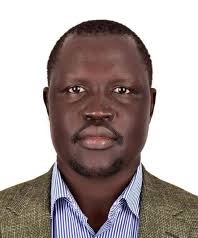
The writer, Dr. Sunday de John, holds an MBA and a Bachelor of Medicine and Bachelor of Surgery (MBChB) from the University of Nairobi, Faculty of Business and Management Sciences and Faculty of Medicine, respectively. He is the current Chairman of the South Sudan United Front-Progressive and can be reached via drsundayalong4@gmail.com
The views expressed in ‘opinion’ articles published by Radio Tamazuj are solely those of the writer. The veracity of any claims made is the responsibility of the author, not Radio Tamazuj.

 and then