



South Sudan’s government urged citizens on Thursday to remain vigilant and follow preventive health measures after Ebola outbreaks were reported in neighbouring Uganda and the Democratic Republic of Congo (DRC).
The World Health Organization (WHO) said 600 suspected Ebola cases and 139 deaths had been reported in Ituri and North Kivu provinces in eastern Congo as of Wednesday. Uganda has also confirmed two cases linked to the regional outbreak.
South Sudan shares borders with both Uganda and Congo.
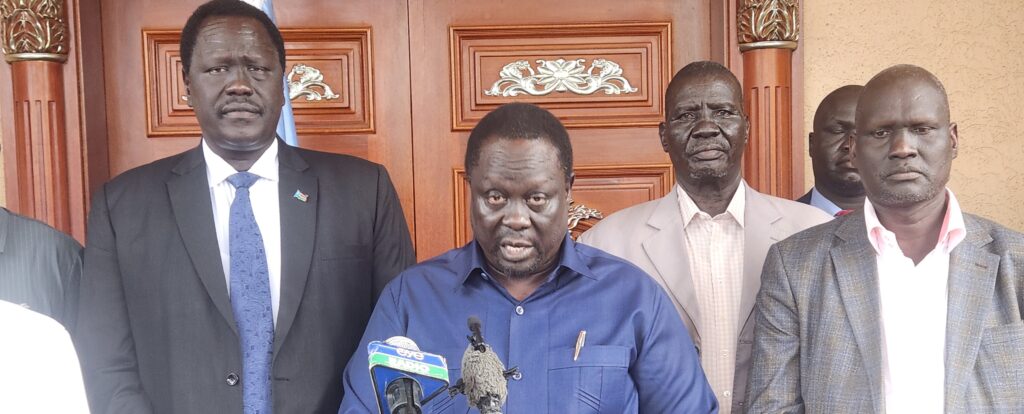
Speaking at a press conference in Juba, Vice President Hussein Abdelbagi Akol, who oversees the Service Delivery Cluster, said authorities were closely monitoring the situation because of continued cross-border movement.
“Given the movement of people across borders, there is a need for high-level vigilance and public cooperation to prevent the spread of this dangerous disease into our communities,” he said.
Ebola Virus Disease is a severe and often fatal illness spread through direct contact with infected people, bodily fluids or contaminated materials. Symptoms include fever, vomiting, diarrhoea, bleeding and sudden weakness.
Abdelbagi said no Ebola case had been confirmed in South Sudan but urged citizens to remain alert and observe preventive measures in homes, schools, markets, places of worship and public transport.
He advised the public to wash hands regularly with soap and clean water, use alcohol-based sanitisers, avoid unnecessary physical contact such as handshakes, and report suspected symptoms to the nearest health facility.
He also called on the public to cooperate with health screening teams deployed at border entry points, airports and public places, and urged state governors and local administrators to intensify public awareness campaigns.
Dr Oromo Francis, undersecretary in the health ministry, said emergency preparedness and response mechanisms had been activated following the Ebola outbreaks in neighbouring countries.
“When the declaration of Ebola was made last week, our team in-country activated the emergency preparedness and response, including all the pillars involved in the response,” Francis said.
Francis said surveillance systems, contact tracing teams, laboratories, infection prevention and control measures, and isolation centres had been activated, although operational challenges remained.
He added that South Sudan was working with international partners including the World Health Organization, UNICEF and the International Organization for Migration to strengthen preparedness and response capacity.
Officials also urged the public not to spread rumours or misinformation about Ebola and to rely on official communication channels for updates and guidance.

 and then