



Drone strikes killed about 1,100 civilians in Sudan in the first six months of this year, accounting for most of the civilian deaths documented by the United Nations during the period, a senior U.N. official told the Security Council on Monday.
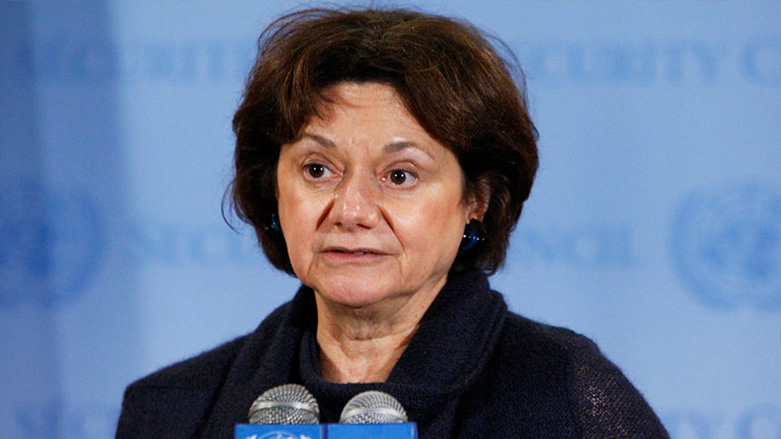
Rosemary DiCarlo, U.N. under-secretary-general for political and peacebuilding affairs, said the U.N. human rights office had documented about 1,400 civilian deaths from January to June, including around 1,100 people killed by drone strikes.
The figures cover only deaths the United Nations has been able to document. The overall death toll since Sudan’s war began in April 2023 remains uncertain because of the conflict and difficulties accessing affected areas, but is likely to be in the hundreds of thousands, DiCarlo said.
Drones operated by both sides have repeatedly struck markets, schools, fuel stations and water infrastructure, she said.
“Drones launched by both sides have repeatedly struck markets, schools, fuel stations, water infrastructure,” DiCarlo told the council.
Fighting has continued on multiple fronts, with heavy drone use and localized ground combat concentrated in areas less affected by seasonal rains, particularly North Kordofan, West Darfur, North Darfur and Blue Nile states.
In North Kordofan, drone attacks have continued in and around El Obeid as the Sudanese army and the paramilitary Rapid Support Forces compete for control of strategically important territory.
Sudanese armed forces advanced along the northern axis of El Obeid in late July, retaking strategic towns including Bara, Umm Sayala and Jabra al-Sheikh after two days of heavy fighting, DiCarlo said.
Drone strikes near Tina, a strategic town on Sudan’s border with Chad, have also affected civilians fleeing the conflict and communities in Chad, she said. The influx of refugees is placing further pressure on scarce land, water and basic services.
Fighting near Sudan’s border with Ethiopia in Blue Nile state is also raising concerns about wider regional instability, further displacement and refugee flows, DiCarlo said.
The conflict has also become increasingly fragmented, with sophisticated weaponry pointing to continued external support for both sides, while numerous armed movements and local militias pursue their own territorial, political and security interests, she said.
The war has displaced about 13 million people, including around 8.7 million who are internally displaced across all 18 states, according to the United Nations.
DiCarlo said the U.N. human rights office had documented 838 victims of sexual violence since the start of the conflict, almost all women and girls, but warned that the figure was likely only a fraction of the true number.
The United Nations is supporting efforts by the United States, Saudi Arabia, Egypt and the United Arab Emirates to secure a humanitarian truce, while also working with the African Union, Intergovernmental Authority on Development, Arab League and European Union to advance a political process.
The next round of in-person talks involving Sudanese political and civilian stakeholders is scheduled to take place in Addis Ababa in September, DiCarlo said.
She urged the Security Council to send strong and unified messages to the warring parties to abandon what she described as a “zero-sum military logic” and return to meaningful negotiations.
“The Sudanese people cannot wait any longer,” DiCarlo said.

 and then