



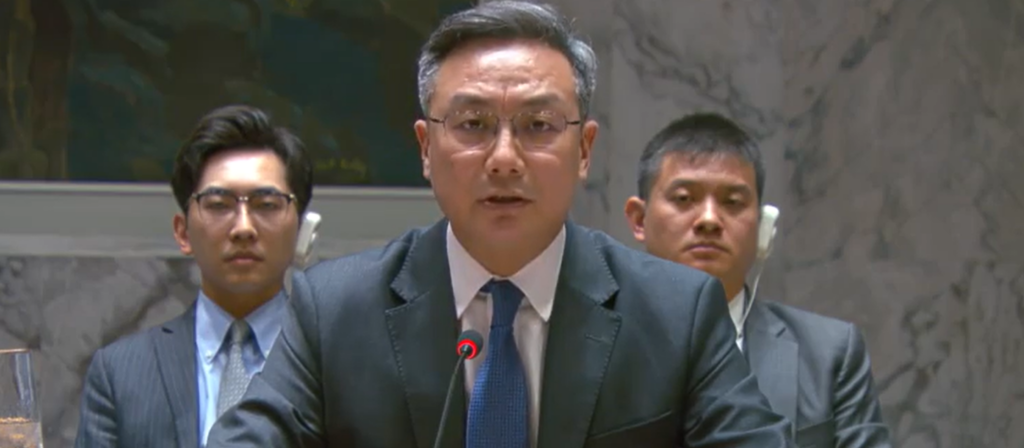
China called on the international community to respect South Sudan’s sovereignty and avoid “unwarranted interference,” as the U.N. Security Council reviewed the country’s fragile political and security situation on Friday.
Sun Lei, China’s deputy permanent representative to the United Nations, said efforts to support South Sudan must recognize “the prerogative of the government and the people in managing their internal affairs” and reflect the country’s “actual national conditions.”
He warned against external pressure as the country navigates a slow political transition, persistent insecurity and a worsening humanitarian crisis.
Sun said maintaining stability should be the top priority, citing recent clashes in Jonglei and Upper Nile states that have displaced civilians and caused casualties. He urged all parties to adhere to the ceasefire and protect civilians and aid workers under international humanitarian law.
“The various ethnic groups in South Sudan share the same land and ought to coexist peacefully,” he said, encouraging the government to strengthen intercommunal dialogue.
On the political process, Sun said implementing the 2018 revitalized peace agreement remains essential for lasting peace. He welcomed regional and international mediation efforts and expressed support for preparations toward elections, describing them as a shared aspiration of the government and the people.
At the same time, he stressed that international engagement should be guided by respect for South Sudan’s sovereignty and avoid interference in its domestic affairs.
China’s position comes as the United States and its allies step up pressure on Juba to end violence, fully implement the 2018 peace agreement, release political detainees and open an inclusive dialogue involving all parties, including detained opposition leader Riek Machar.
Sun also called for increased humanitarian and development assistance, warning that the spillover from the conflict in neighboring Sudan, along with flooding and disease risks, could further worsen conditions.
He said China would continue providing aid, including infrastructure support, food and medical assistance, and cooperation with U.N. agencies on livelihood projects.
On the U.N. peacekeeping mission, UNMISS, Sun said it remains critical to maintaining stability and protecting civilians. He urged continued cooperation between the mission and the South Sudanese government and cautioned against reductions that could weaken its capacity.
South Sudan is set to mark the 15th anniversary of its independence in July. Sun said the international community should work together to support the country’s development while respecting its sovereignty.
“Let us help South Sudan unlock its potential and become a land of hope,” he said.
China has a long-standing presence in South Sudan, driven mainly by oil investments. State-owned firms including China National Petroleum Corporation are key players in the sector, which accounts for most of the country’s revenue.
Beijing has expanded its role to infrastructure and aid, funding roads, hospitals and providing food and medical support.

 and then