



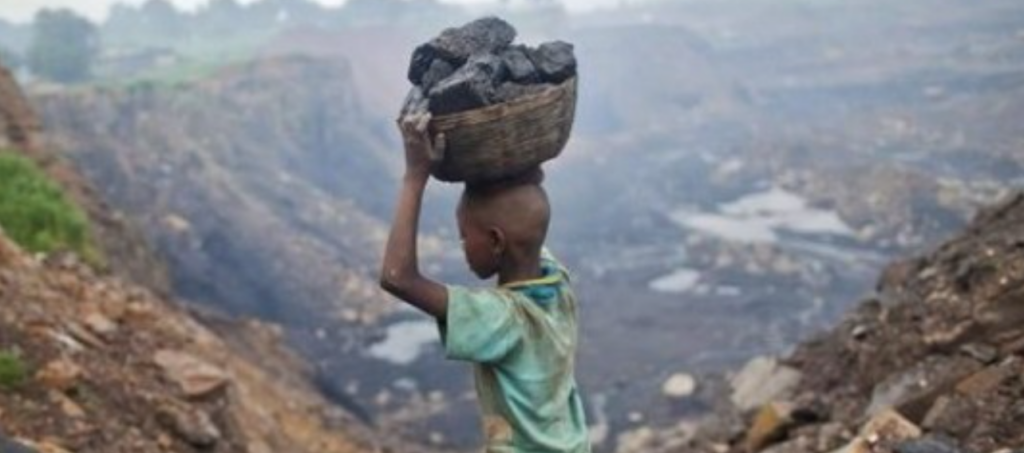
Children in Sudan’s Blue Nile region are working to help support their families as displacement, the war and worsening economic conditions make it harder for some households to meet their basic needs.
In markets in the state capital, Damazin, some children work long hours, according to local child-protection officials and activists.
They say the work can affect children’s ability to attend school and expose them to risks including exploitation, violence and injury.
Zahraa Ahmed Al-Sanousi, secretary of the Child Welfare Council, told Radio Tamazuj on Friday that the loss of parents, deteriorating economic conditions and conflict are among the factors contributing to child labour in the region.
She said tackling the problem requires a better understanding of its causes, stronger child-protection measures and a safe environment for children.
The council works with social workers to provide children with guidance and support and to identify alternatives to work.
But Al-Sanousi said the council had limited funding and resources, with donor support reduced because of the war.
She called on humanitarian organisations and other partners to increase their support for child-protection programmes.
Al-Sanousi said the industrial area of Damazin had a high concentration of working children. Some, she said, are involved in chopping firewood and operating wood-processing machinery.
She said such work had resulted in serious injuries, including cases in which children lost limbs.
Zahraa Ali Abdullah, a child-friendly-space supervisor with the Supreme Council for Culture and Information and a child-protection activist, said more support is needed for children at greatest risk.
She called for programmes to address school dropouts and help children return to education.
Abdullah said the war, displacement and economic crisis had made it difficult for some families to provide food and other basic necessities, leading some children to work to help their households.
She called on the authorities to fulfil their responsibility to protect children.
One child interviewed by Radio Tamazuj said his family had been forced to rely on his earnings because no one in the household had a job.
“I am currently responsible for my siblings at home. Whatever money I earn, I use it to buy flour, bread and other household necessities.”
The child said he sometimes collects empty bottles to sell, wash cars or take other casual jobs to earn money for his family.
The accounts come as Blue Nile faces continued displacement and humanitarian pressure. The International Organization for Migration said nearly 100,000 people had been displaced within the state between January and August 2026, with children accounting for 47% of those displaced.
Blue Nile has been affected by armed conflict for more than a decade. Fighting between the Sudanese government and the Sudan People’s Liberation Movement-North (SPLM-N) began in the state in 2011. The wider war that began in April 2023 between the Sudanese Armed Forces (SAF) and the Rapid Support Forces (RSF) has further destabilised the region, with fighting also involving the SPLM-N.

 and then