



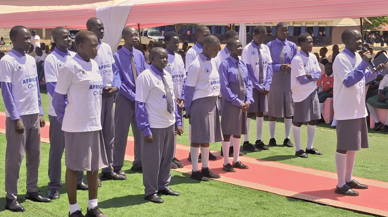
As South Sudan joined the rest of Africa in commemorating the Day of the African Child, concerns were raised about the plight of children in flood-affected areas, particularly in Unity and Jonglei states, where many continue to face significant challenges, including disruptions to their education.
Naome Momone, former speaker of the Children’s Parliament, who spoke during the event, called on the government and partners to pay more attention to water, sanitation, and hygiene (WASH) challenges affecting children across the country.
“We are all here today to celebrate the day, and it is under the theme of WASH, but we are sitting here healthy, while kids are suffering in Unity State and other states,” she said. “Let us not talk about the other states, but about Central Equatoria State, where if you go to the hospital right now, you will find children suffering because of these issues of WASH.”
While acknowledging the importance of celebrating the Day of the African Child, she urged participants to reflect on the realities facing vulnerable children.
Observed annually on 16 June, the Day of the African Child honors the courage of the children who took part in the 1976 Soweto Uprising in South Africa and serves as a platform to advocate for the protection, welfare, and rights of children across the continent.
Nunu Rhoda Rudolf, the Minister of Gender, Child and Social Welfare, acknowledged that sanitation and hygiene services across the country, particularly in flood-affected states, continue to face serious challenges.
“The effects of flooding, displacement, economic hardship, and disease outbreak continue to affect children’s health, education, protection, and dignity,” she said. “Sanitation is very important. When you do not do proper sanitation, you will not live long. Learn to wash your hands frequently so that you do not get diseases.”
The minister noted that access to clean water and sanitation remains limited in many parts of the country, particularly outside the capital. She cited data showing that only about 36 percent of households have access to improved water sources, while many schools and health facilities lack adequate sanitation and handwashing facilities.
“Girls are particularly affected when schools lack safe and private sanitation facilities, while children in vulnerable communities face increased risk of diseases and school absenteeism,” Nunu said. “As the ministry responsible for children and social welfare protection, we emphasize that access to water, sanitation, and hygiene is not only a development issue, but also a child rights and protection issue. All children deserve an environment that enables them to grow, learn, and thrive safely.”
Meanwhile, Health Minister Luke Thompson Thoan said access to health, education, sanitation, and water should be treated as fundamental human rights and remain a top government priority.
“When you talk about sanitation, education, health, they are not an integral part of human rights, but they are called human rights,” he said. “Providing them to our kids or to the population should and must always be a cardinal and primary responsibility of the government,” he stated. “We hope, through the cabinet, that we will deliver a good budget, especially on health, education, and water, because these are necessities that must be provided by every government.”
He warned that failing to invest in education, health, and sanitation could have long-term consequences for society.

 and then