



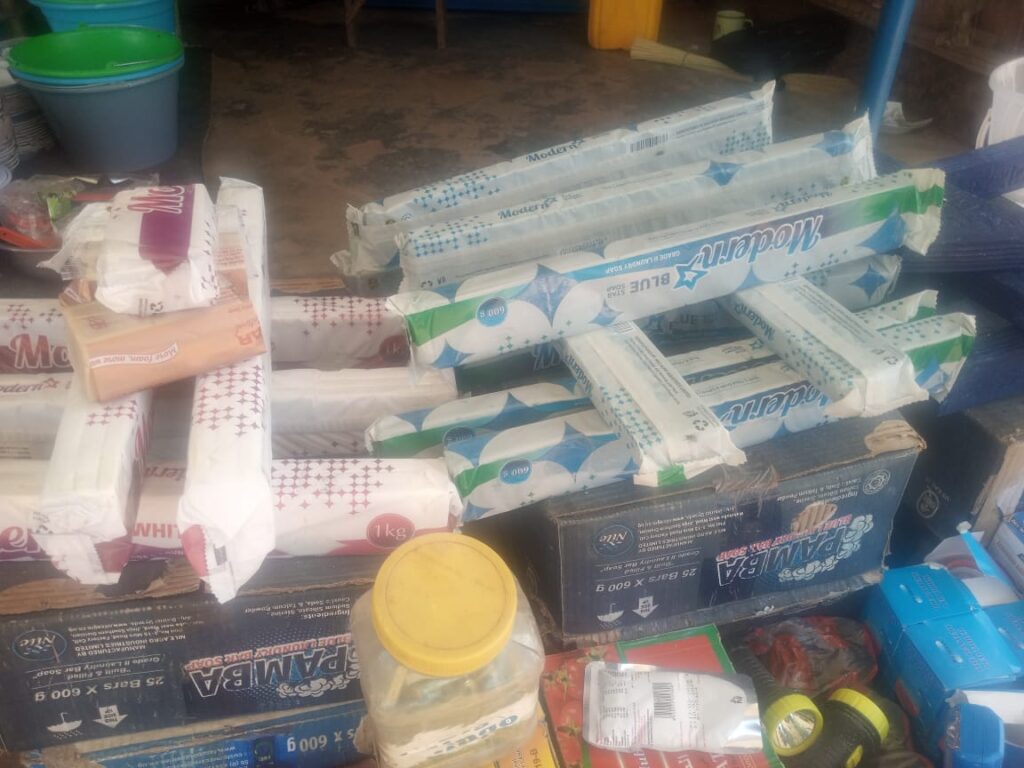
Retailers in Yei River County have appealed to the government to intervene as persistent increases in the prices of basic commodities erode profits and threaten the survival of small businesses.
Traders at Yei Main Dar-es-Salaam Market told Radio Tamazuj that they are struggling to cope with rapidly rising wholesale prices, forcing them to spend more to restock goods while earning little or no profit.
“We buy goods at one price and sell them with a small margin, but when we return to replenish our stock, wholesalers have already increased their prices,” said Teib Anur, a retailer at the market.
He said the price of a carton of washing soap had risen from 100,000 South Sudanese pounds (SSP) to 160,000 SSP, while a 50-kg sack of sugar increased from 275,000 SSP to 360,000 SSP. A jerrican of cooking oil has also climbed from 230,000 SSP to 275,000 SSP.
“Prices are no longer stable as they used to be. We are suffering because of these fluctuations, and we urge the government to intervene and stabilize the market,” Anur said.
Susan Kiden, who sells beans, dried fish and coffee, said the rising cost of commodities is making it increasingly difficult for small traders to remain in business.
She said a basin of beans now costs 175,000 SSP, up from 150,000 SSP, while the price of dried fish has increased from 100,000 SSP to 120,000 SSP.
Kiden blamed the depreciation of the South Sudanese pound against the U.S. dollar for driving up import costs.
“If possible, the government should address the rising exchange rate because it is affecting our businesses,” she said.
Clement Duku, a retailer who transports goods using a wheelbarrow, said many small businesses have been unable to grow because of constant price increases.
He also accused some wholesalers of selling directly to consumers, saying the practice puts small retailers at a disadvantage.
“There are no profits. Our businesses have remained the same for years. The government should stop wholesalers from competing with retailers,” Duku said.
Another retailer, Frazer Lemi, said traders are increasingly relying on personal savings to keep their businesses afloat as wholesale prices continue to rise alongside the dollar exchange rate.
“Many traders are now operating at break-even point with no savings. If prices continue rising, many retail businesses are likely to collapse because we depend on wholesalers,” he said.
Justin Luate Rafael, chairperson of the Yei Chamber of Commerce, acknowledged the sustained price increases, attributing them to inflation, the weakening local currency and multiple layers of taxation imposed by national, state and county authorities.
He also cited external factors, including conflicts affecting global markets.
“I acknowledge the fluctuations in prices due to inflation, the weakening local currency and increased taxation by the national, state and county governments,” Rafael said. “Some factors are beyond our control, including international developments such as the conflict in the Middle East.”
He advised retailers to monitor market prices closely and adjust their prices accordingly.
Yei county officials could not immediately be reached for comment.

 and then