



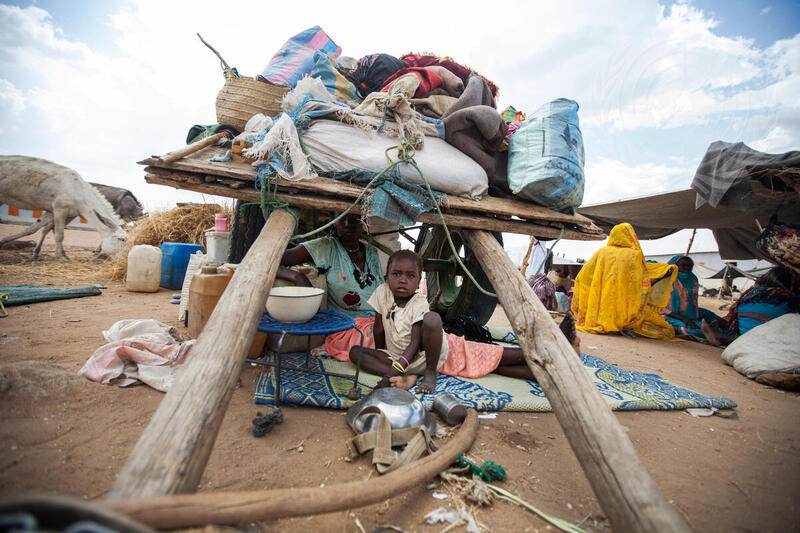
The Ministry of Social Affairs in Sudan’s South Darfur State has begun preparations for the voluntary return of people displaced from El Fasher who are currently living in Nyala, following assurances that essential services are available and that neighborhoods in El Fasher are suitable for habitation.
Social Affairs Minister Halima Al-Mahdi told Radio Tamazuj that her ministry had designed and distributed a registration form among displaced people from El Fasher in Nyala to determine how many wished to return to their home city.
She said discussions about the return of displaced people from El Fasher began after military operations in the city came to a halt, given that El Fasher is a historic city and the capital of the Darfur region that should, she said, be rebuilt by its own people.
“The idea of voluntary return entered the implementation phase after security was restored in the city and organizations arrived to help prepare the environment for return,” Al-Mahdi said.
She said registration forms had been made available at five centres in Nyala: Al-Safana, which hosts 500 displaced people; Al-Khair, with 125; Al-Jair, with 110; Al-Miqdad and Al-Manar, with 180; and Al-Humaira, with 210.
The registration process will continue for three weeks, after which the ministry plans to visit El Fasher to assess the neighbourhoods with the largest concentrations of returning residents, determine the level of available services, and identify areas able to receive returnees.
The assessment will be conducted in coordination with the governments of North and South Darfur states, she said.
Al-Mahdi appealed to humanitarian organizations to support the reintegration and stabilization of returnees in their areas of origin.
She also highlighted the assistance provided to displaced people during their stay in Nyala, including food, clothing and medicines. She said kindergartens had been opened for displaced children, and that school-age children had been enrolled in local schools, with some achieving excellent results in their middle-school examinations.
The ministry had also supported women through small livelihood projects designed to help them generate income and meet their families’ needs, she added.

 and then