



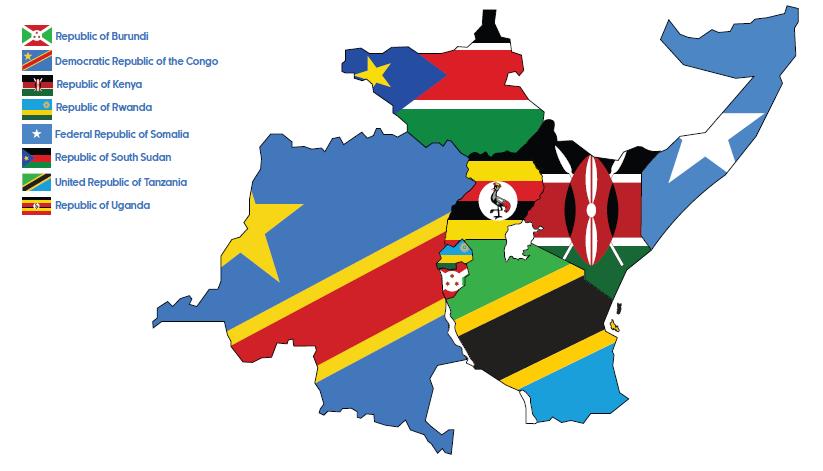
The Government of South Sudan is set to begin national consultations on the proposed political confederation of the East African Community (EAC), with citizens expected to give their views on the structure, governance and powers of a future confederation.
Addressing journalists on Friday, Kawaja Kaw Madol, Undersecretary in the Ministry of East African Community Affairs, said the consultations are expected to begin in Juba on September 23 before moving to selected states.
“The purpose of me calling you here is to pass this message to the people that the Republic of South Sudan is going to conduct the National Consultation on Political Confederation for the EAC,” he told journalists.
According to Kaw, the consultation will focus on several key issues, including the structure of a possible confederation and how member states would cooperate under a confederal leadership.
“We will discuss what the structure will look like in a would-be confederated East African community. Second is the area of cooperation. How are we going to cooperate as members of the EAC with the confederal leadership?” he said. “Then another area is decision-making. The other one is the authority of the confederated leadership.”
Kaw added that participants will also discuss the constitution, governance and funding arrangements for a future confederated East African Community.
According to the ministry official, experts from EAC member states will seek the views of South Sudanese on the different areas under discussion.
“These are the areas that the experts from all member states of the EAC will ask South Sudanese to contribute their opinion on the areas I have already mentioned,” Kaw said.
The consultation will first bring together South Sudan’s political leadership in Juba, alongside representatives of civil society, youth, women and academia.
“Now, this consultation is going to start in Juba with the political leadership of the Republic of South Sudan a then we will also go to the states,” he said. “But the political leadership in Juba will be consulted alongside the civil society groups, the youth, the women, the academia.”
Kawaja described the process as inclusive and said consultations will also be conducted in selected states.
“We will also be involved. So it is an inclusive process that there will be nobody left behind. We will also go to states,” he said.
“We will start with Central Equatoria, then go to Jonglei, Western Bahr Ghazal, and then we will go to Lakes State. These are selected states where we are going to conduct public consultations. But we will also generate participants from the other states that are left out among the ten states and three administrative areas,” he said. “I ask South Sudanese to take this opportunity to come out and express their opinion during the consultations because it is something that we are already part of. We need to express our opinion on what we want the East African Community to look like.”
Kawaja said the consultation should help South Sudanese contribute to discussions on the kind of East African Community they want to see.
He also called on the media to actively participate in the consultation process and help make information about the exercise available to the public.

 and then