



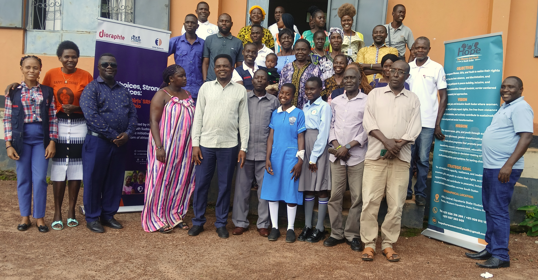
Government officials, community leaders, civil society organizations and students in Western Equatoria State have called for stronger community efforts to prevent early marriage and teenage pregnancy and improve access to sexual and reproductive health information for girls.
More than 35 people attended a community dialogue in Yambio on Wednesday organized by Hope for Women and Youth, with support from SIHA South Sudan.
The dialogue brought together government officials, traditional leaders, teachers, parents and caregivers, students and civil society representatives to discuss sexual and reproductive health and rights, early marriage and early pregnancy.
Christine Faida, Executive Director of Hope for Women and Youth, said the organization organized the dialogue after identifying challenges affecting adolescents, including limited information about puberty, early pregnancy and marriage.
“Discussing sexuality and reproductive health remains difficult because of traditional norms and cultural sensitivities,” she stated. “Limited funding and community expectations for material support can make it difficult for civil society organizations to conduct regular awareness activities.”
Faida said the project has received a positive response from communities, adding that Hope for Women and Youth is currently implementing the only programme in Yambio focused specifically on sexual and reproductive health and rights.
She said other organizations address some reproductive health issues, but comprehensive programmes remain limited because of a funding gap affecting humanitarian and development work in South Sudan.
“It is very important that we should be nearer to our girls,” Faida said, adding that parents should be among the first people to provide children with accurate information and guidance as they enter adolescence.
Amida Cosmos Dungura, a learner at ABC Academy, YMCA Nursery and Primary School in Yambio, said the dialogue helped her learn more about puberty, protecting herself from sexual violence and making informed decisions during adolescence.
“I learned more about puberty, how a girl can control herself through adolescence and how to avoid sexual violence,” she said.
Jacob Ginaba, a headman in Yambio, called on families to protect children from entering marriage at a young age.
He said parents and community leaders have a responsibility to help children grow and develop before taking on the responsibilities of marriage.
Michael Dakpari Peter, Executive Director of Care for Humanity Organization and Yambio County Civil Society Organizations Coordinator under the Network for Civil Society, called for greater cooperation among parents, traditional leaders, government and civil society organizations.
He encouraged parents to closely guide adolescents, particularly children between the ages of 10 and 16, and provide them with appropriate information to help them make informed decisions.
“Stakeholders should take the discussions beyond Yambio Town and reach communities across the county,” Dakpari said.
Tereza Dominic Dabi, Director for Reproductive Health at the Western Equatoria State Ministry of Health, said continued community awareness is needed to address early pregnancy, early marriage, gender-based violence and misconceptions surrounding family planning.
Dabi said some communities have already responded positively to reproductive health awareness activities.
She cited Bazungua, Gangura and Saura, where awareness activities have been conducted, and communities have spoken against early marriage and early pregnancy.
Dabi said misconceptions about family planning remain a challenge because some people do not clearly understand what family planning means.
She urged implementing organizations and government authorities to continue taking reproductive health information to communities that were not represented at the Yambio dialogue.
She said sustained community engagement could help families and young people better understand sexual and reproductive health and make informed decisions.

 and then